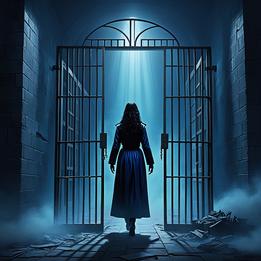
Penal System
Represents societal structures of justice, punishment, and rehabilitation, often reflecting personal feelings of guilt, control, or moral judgment.
Penal System Dream Meaning
Represents societal structures of justice, punishment, and rehabilitation, often reflecting personal feelings of guilt, control, or moral judgment.
Interpretive Themes
Social Justice
highMay reflect personal moral judgments.
Control and Authority
highOften indicates power dynamics.
Guilt and Atonement
mediumCan signal unresolved guilt.
Rehabilitation and Transformation
mediumSuggests growth possibilities.
Systemic Oppression
lowMay reflect societal constraints.
Mythological Resonance
Hades
GreekGod of the underworld who judges souls and presides over the afterlife, symbolizing the finality and judgment inherent in penal structures.
The Scapegoat
ChristianA ritual where communal sins are placed upon a goat driven into the wilderness, representing the transfer of guilt and punishment onto an individual or group.
Cultural Lenses
Jungian Perspective
View Context →Represents the Shadow archetype—unconscious aspects of personality that society deems unacceptable and must be contained. The prison symbolizes the psyche's attempt to control repressed desires and impulses.
Freudian Perspective
View Context →Symbolizes the Superego's punitive function, punishing the Ego for Id-driven desires. The penal system represents internalized parental authority and societal taboos enforcing moral restrictions.
Gestalt Perspective
View Context →Represents parts of self that dreamer has imprisoned or disowned. Each element (prisoner, guard, cell) symbolizes different aspects of personality in conflict, needing integration for wholeness.
Cognitive Perspective
View Context →Reflects mental schemas about justice, fairness, and social contracts. May indicate cognitive distortions about punishment or rigid thinking patterns that limit personal growth and problem-solving.
Evolutionary Perspective
View Context →Represents ancient social mechanisms for maintaining group cohesion through punishment of norm-violators. Taps into deep-seated instincts about social hierarchy, reciprocity, and threat of ostracism.
Modern Western Perspective
View Context →Often reflects contemporary debates about criminal justice reform, systemic racism in incarceration, and the tension between punitive approaches versus restorative justice models in society.
East Asian Perspective
View Context →In Confucian-influenced cultures, represents societal harmony maintained through proper conduct. Historically associated with shame-based social control, where imprisonment brings dishonor to family and community.
South Asian Perspective
View Context →Connected to concepts of karma and dharma—punishment as consequence of past actions. In Hindu and Buddhist traditions, represents the cycle of samsara where suffering results from moral transgressions.
Middle Eastern Perspective
View Context →Historically tied to Islamic concepts of justice (qisas) and forgiveness. Represents divine judgment balanced with mercy, where punishment serves both retributive and corrective purposes in society.
African Perspective
View Context →In many traditional societies, emphasizes restorative justice and community reconciliation over punitive isolation. The penal system represents broken relationships needing repair through communal processes.
Latin American Perspective
View Context →Often reflects colonial legacies of social control and contemporary struggles with corruption. Symbolizes both state power and resistance, with prisons as sites of political oppression and social inequality.
Global/Universal Perspective
View Context →Cross-culturally represents humanity's attempt to balance individual freedom with social order. Universal themes of justice, redemption, and the human capacity for both cruelty and rehabilitation across societies.
Historical Authorities
Want a deeper analysis?
Get a personalized interpretation of your entire dream including this symbol.
Interpret My DreamThe Oracle's Prediction
Combine multiple symbolsYou may face a situation where you feel unfairly judged or constrained by external rules or authority.
Timeframe
Immediate (Next 48h)
Intensity
Deep
Common Appearances & Contexts
| Context | Emotion | Interpretation |
|---|---|---|
| Context Being imprisoned | Emotion Fear | Interpretation Feeling trapped personally. |
| Context Working as guard | Emotion Power | Interpretation Exercising control over others. |
| Context Visiting prison | Emotion Anxiety | Interpretation Confronting past mistakes. |
| Context Escaping prison | Emotion Liberation | Interpretation Breaking free from constraints. |
| Context Building prison | Emotion Determination | Interpretation Creating personal boundaries. |
| Context Judging others | Emotion Superiority | Interpretation Moral judgment of peers. |
| Context Being judged | Emotion Shame | Interpretation Feeling morally condemned. |
| Context Reforming system | Emotion Hope | Interpretation Seeking personal redemption. |
| Context Prison riot | Emotion Chaos | Interpretation Internal conflict erupting. |
| Context Solitary confinement | Emotion Isolation | Interpretation Emotional withdrawal from others. |
| Context Parole hearing | Emotion Anticipation | Interpretation Seeking second chance. |
| Context Prison release | Emotion Relief | Interpretation Freedom from past burdens. |
Interpret Your Full Dream
Beyond this symbol, every dream carries a unique story. Share your dream for a personalized AI-powered interpretation.