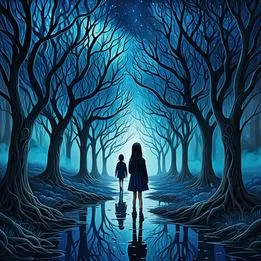
Abstract & Philosophy

Patterns of Existence Dream Meaning

Patterns of existence signify the interconnected and cyclical nature of life, symbolizing how experiences and events are recurrent and interrelated.

Common Appearances & Contexts

Context Emotion Interpretation
Observing seasons change Awe Represents the cycles of life and the beauty of transformation.
Walking a looping path Frustration Indicates feelings of being stuck in repetitive habits or situations.
Experiencing déjà vu Contemplation Triggers thoughts about the nature of memory and past experiences affecting the present.
Witnessing a communal event Joy Highlights shared human experiences and interconnectedness.
Finding patterns in dreams Curiosity Encourages exploration of one’s subconscious influences.
Seeing a spiral Intrigue Symbolizes growth and the layered nature of experience.
Revisiting childhood places Nostalgia Reflects how past experiences shape current identity.
Engaging in a traditional ritual Connection Emphasizes cultural patterns that bind and influence communities.
Encountering repeated symbols Elation Suggests hidden messages and insights from the psyche.
Navigating a maze Tension Represents the complexity of life’s decisions and choices.
Hearing recurring music Melancholy Triggers reflections on lost moments and unfinished business.
Finding cycles in nature Serenity Brings a sense of peace and acceptance of life’s rhythms.
Connecting dots in a web Insightful Indicates moments of clarity about relationships and life patterns.
Reviewing a timeline of life events Reflective Encourages assessment of personal growth and lessons learned.

Interpretive Themes

Cultural Lenses

Jungian Perspective

Full Hub →

Represents archetypal structures of the collective unconscious. Mandalas and sacred geometry reveal universal psychological patterns. Historically linked to individuation processes. Ritually used in active imagination. Emotionally signifies wholeness and self-discovery. Modernly applied in depth psychology.

Freudian Perspective

Full Hub →

Manifestation of repressed unconscious conflicts and childhood experiences. Patterns symbolize defense mechanisms and wish fulfillment. Historically rooted in psychoanalytic theory. Ritually analyzed through free association. Emotionally tied to anxiety and desire. Modern relevance in therapeutic dream analysis.

Gestalt Perspective

Full Hub →

Represents the whole being greater than parts in consciousness. Patterns symbolize unfinished business and existential polarities. Historically from Perls' therapy. Ritually explored through empty chair technique. Emotionally signifies integration. Modern use in experiential therapy.

Cognitive Perspective

Full Hub →

Reflects schemas and mental models organizing experience. Patterns represent problem-solving and memory consolidation. Historically from information processing theory. Ritually examined through dream journals. Emotionally tied to adaptation. Modern application in cognitive-behavioral therapy.

Evolutionary Perspective

Full Hub →

Adaptive mechanisms for threat simulation and memory processing. Patterns represent survival strategies from ancestral environments. Historically from evolutionary psychology. Ritually seen in threat rehearsal dreams. Emotionally linked to preparedness. Modern relevance in understanding dream functions.

Global/Universal Perspective

Full Hub →

Cosmic order and interconnectedness across traditions. Historically seen in creation myths worldwide. Ritually represented in mandalas, labyrinths, and sacred geometry. Emotionally evokes awe and belonging. Modernly appears in global spirituality movements and systems thinking.

East Asian Perspective

Full Hub →

Manifestation of Dao (the Way) and cosmic harmony. Historically from Taoist and Buddhist philosophies. Ritually represented in yin-yang symbols and mandalas. Emotionally signifies balance and flow. Modern relevance in mindfulness practices and traditional medicine systems.

South Asian Perspective

Full Hub →

Expression of Dharma (cosmic law) and karma. Historically from Hindu and Buddhist traditions. Ritually represented in mandalas and yantras. Emotionally tied to liberation (moksha). Modernly appears in meditation practices and philosophical discourse.

Middle Eastern Perspective

Full Hub →

Divine order and predestination (qadar). Historically from Islamic and Zoroastrian traditions. Ritually represented in geometric patterns in sacred architecture. Emotionally signifies submission to divine will. Modern relevance in Islamic art and philosophical discussions.

European Perspective

Full Hub →

Platonic forms and rational order. Historically from Greek philosophy and Hermetic traditions. Ritually represented in alchemical symbols and sacred geometry. Emotionally tied to enlightenment. Modernly appears in Western esotericism and philosophical discourse.

African Perspective

Full Hub →

Ancestral connections and cosmic balance. Historically from traditional religions like Yoruba and Akan. Ritually represented in adinkra symbols and divination patterns. Emotionally signifies community continuity. Modern relevance in diaspora spirituality and cultural preservation.

Modern Western Perspective

Full Hub →

Systems thinking and emergent properties. Historically from complexity theory and postmodern philosophy. Ritually appears in data visualization and network analysis. Emotionally tied to understanding complexity. Modern relevance in science, technology, and interdisciplinary studies.

AI-Powered

Interpret Your Full Dream

Beyond this symbol, every dream carries a unique story. Share your dream for a personalized AI-powered interpretation.