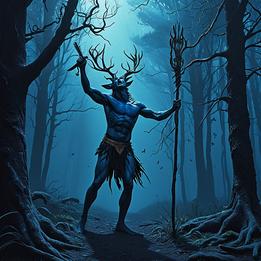
Pan
The Greek god of nature, rustic music, and wildness, representing untamed instinct and primal joy.
Pan Dream Meaning
The Greek god of nature, rustic music, and wildness, representing untamed instinct and primal joy.
Interpretive Themes
Mythological Resonance
Pan
GreekGod of shepherds, forests, and wild mountains, whose sudden appearances caused 'panic' in travelers, yet whose pipes brought rustic joy and connection to nature's untamed essence.
Faunus
RomanRoman counterpart to Pan, prophetic deity of forests and fields who spoke through rustling leaves, representing nature's wisdom and wild prophetic voice.
Cultural Lenses
Jungian Perspective
View Context →Archetype of the Trickster and embodiment of the shadow self, representing untamed instincts and creative chaos that must be integrated for wholeness.
Freudian Perspective
View Context →Symbol of the id and primal sexual energy, representing repressed desires and libidinal drives seeking expression through creative or chaotic outlets.
Gestalt Perspective
View Context →Projection of the dreamer's wild, untamed aspects or creative potential that needs acknowledgment and integration into conscious awareness.
Cognitive Perspective
View Context →Mental schema representing chaos, creativity, or nature, activated during dreams to process emotions related to freedom, fear, or uninhibited expression.
Evolutionary Perspective
View Context →Primordial symbol tapping into ancient human fears of wilderness and predators, while also representing adaptive traits of creativity and social bonding through music.
European Perspective
View Context →Greek god of shepherds and wild places, historically feared for causing panic, now romanticized as symbol of pastoral freedom and artistic inspiration in Western culture.
Modern Western Perspective
View Context →Contemporary symbol of environmental consciousness, LGBTQ+ identity (from pansexual), and counterculture rejecting modern constraints in favor of natural authenticity.
Global/Universal Perspective
View Context →Cross-cultural trickster figure representing the tension between civilization and wilderness, appearing in various forms as nature spirits worldwide.
East Asian Perspective
View Context →Similar to mountain spirits or trickster figures in Shinto and folklore, representing unpredictable natural forces that demand respect and ritual appeasement.
African Perspective
View Context →Parallel to nature deities like Legba or Eshu, serving as mediators between worlds and embodiments of chaotic creative energy in traditional spiritual systems.
Latin American Perspective
View Context →Blended with indigenous nature spirits and Catholic imagery, representing syncretic forces of wilderness that both threaten and sustain rural communities.
Middle Eastern Perspective
View Context →Echoes of ancient wilderness deities like Enki or Pazuzu, representing uncontrolled natural forces that ancient civilizations sought to ritually manage.
Historical Authorities
Want a deeper analysis?
Get a personalized interpretation of your entire dream including this symbol.
Interpret My DreamThe Oracle's Prediction
Combine multiple symbolsA profound reconnection with your instinctual nature and authentic self.
Timeframe
Seasonal (~3 Months)
Intensity
Deep
Impulsive decisions driven by unchecked instincts may create chaos.
Timeframe
Immediate (Next 48h)
Intensity
Deep
Common Appearances & Contexts
| Context | Emotion | Interpretation |
|---|---|---|
| Context Playing panpipes | Emotion Joy | Interpretation Creative inspiration flowing. |
| Context Chasing through woods | Emotion Fear | Interpretation Feeling pursued by instincts. |
| Context Dancing wildly | Emotion Ecstasy | Interpretation Release of inhibitions. |
| Context Causing panic | Emotion Anxiety | Interpretation Uncontrollable fear emerging. |
| Context Guiding lost traveler | Emotion Hope | Interpretation Instinctual wisdom guiding. |
| Context Transforming into goat | Emotion Confusion | Interpretation Identity merging with nature. |
| Context Playing music for nymphs | Emotion Desire | Interpretation Seductive creative energy. |
| Context Angry confrontation | Emotion Rage | Interpretation Wild nature erupting. |
| Context Sleeping in forest | Emotion Peace | Interpretation Harmony with environment. |
| Context Mocking order | Emotion Defiance | Interpretation Rebelling against structure. |
| Context Fleeing civilization | Emotion Longing | Interpretation Yearning for simplicity. |
| Context Teaching music | Emotion Inspiration | Interpretation Sharing creative gifts. |
Interpret Your Full Dream
Beyond this symbol, every dream carries a unique story. Share your dream for a personalized AI-powered interpretation.