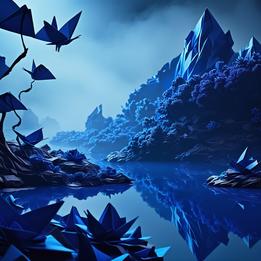
Origami Paper
Embodies the art of transformation and creativity through careful manipulation.
Origami Paper Dream Meaning
Embodies the art of transformation and creativity through careful manipulation.
Interpretive Themes
Transformation
highOrigami symbolizes the potential for inner change and outside appearance.
Creativity
highEach creation tells a story about imagination and innovation.
Patience
mediumOrigami requires focus and commitment to the process.
Control
mediumEngaging with origami reflects a desire for order amidst chaos.
Mindfulness
highOrigami can serve as a meditative exercise that enhances mental clarity.
Mythological Resonance
Tsuru (Origami Crane)
JapaneseThe thousand paper cranes legend where folding becomes a ritual of healing and hope, transforming paper into sacred intention.
The Philosopher's Stone
AlchemicalLike base metal transformed to gold, ordinary paper becomes extraordinary through precise, intentional manipulation.
Cultural Lenses
East Asian Perspective
View Context →Origami has a deep-rooted history in Japanese culture, representing artistry and discipline. Often used in ceremonies and as traditional gifts. [Japanese] Origami is integral to Japanese aesthetics and philosophy.
East Asian Perspective
View Context →Known as 'Zhezhi', origami has historical significance, reflecting philosophical and cultural values. Used in celebrations and educational contexts. [Chinese] Represents transformation and harmony.
Modern Western Perspective
View Context →Increasingly popular in art education, promoting creativity and engagement. Found in schools, arts and crafts, and workshops. [American] Widely appreciated as a form of interactive art.
Historical Authorities
Want a deeper analysis?
Get a personalized interpretation of your entire dream including this symbol.
Interpret My DreamThe Oracle's Prediction
Combine multiple symbolsA creative breakthrough or innovative project opportunity will emerge.
Timeframe
Lunation (~29 Days)
Intensity
Deep
You will experience a moment of clarity about a personal transformation.
Timeframe
Immediate (Next 48h)
Intensity
Deep
Common Appearances & Contexts
| Context | Emotion | Interpretation |
|---|---|---|
| Context Folding intricate origami designs | Emotion Delight | Interpretation Indicates joy in the creative process and personal expression. |
| Context Struggling with a complex fold | Emotion Frustration | Interpretation Represents challenges in problem-solving and creative roadblocks. |
| Context Giving an origami piece as a gift | Emotion Affection | Interpretation Symbolizes the intention of sharing one’s creativity and feelings. |
| Context Receiving an origami gift from someone special | Emotion Gratitude | Interpretation Reflects emotional connections and appreciation of personal touches. |
| Context Attending an origami workshop | Emotion Excitement | Interpretation Indicates eagerness to learn and grow in artistic expertise. |
| Context Transforming paper into various shapes | Emotion Wonder | Interpretation Represents a perspective shift and discovery of new possibilities. |
| Context Losing an origami piece made with great effort | Emotion Loss | Interpretation Suggests anxiety about losing something important that took time to create. |
| Context Exhibiting origami creations with pride | Emotion Confidence | Interpretation Reflects a sense of accomplishment in one’s artistic journey. |
| Context Experiencing a paper storm where origami is scattered | Emotion Chaos | Interpretation Symbolizes overwhelming situations where creativity feels lost. |
| Context Collaboration on origami pieces with others | Emotion Connection | Interpretation Highlights shared creative energies and the joy of working with others. |
Interpret Your Full Dream
Beyond this symbol, every dream carries a unique story. Share your dream for a personalized AI-powered interpretation.