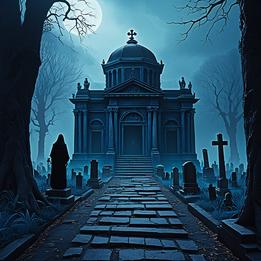
Necropolis
A journey into a city of the dead, representing confrontation with mortality, ancestral connections, and profound transitions between states of being.
Necropolis Dream Meaning
A journey into a city of the dead, representing confrontation with mortality, ancestral connections, and profound transitions between states of being.
Interpretive Themes
Cultural Lenses
Global/Universal Perspective
View Context →Universally represents the threshold between life and death, often seen as a place where the living can communicate with ancestors or confront their mortality across all human cultures.
Jungian Perspective
View Context →The collective unconscious's repository of ancestral memories and archetypes. Visiting represents confronting the personal and collective shadow, and integrating wisdom from humanity's psychic heritage.
Freudian Perspective
View Context →Symbolizes repressed death wishes, unresolved parental conflicts (particularly with deceased parents), or a return to the womb/tomb equation representing unresolved psychosexual development.
Gestalt Perspective
View Context →Represents parts of the self that feel 'dead' or neglected. Each tomb or monument symbolizes an unexpressed aspect of personality needing acknowledgment and integration.
Cognitive Perspective
View Context →The brain's metaphorical processing of mortality awareness, memory consolidation, or problem-solving related to endings and transitions using death-related schema.
Evolutionary Perspective
View Context →An adaptive mechanism for practicing mortality awareness, ancestor veneration (which promoted group cohesion), and navigating dangerous spaces in ancestral environments.
East Asian Perspective
View Context →In Confucian-influenced cultures, represents filial piety and ancestral worship. In Buddhist contexts, symbolizes impermanence (anicca) and the cycle of rebirth. Modern interpretations include honoring tradition while progressing.
South Asian Perspective
View Context →Connected to samsara (cycle of rebirth) and moksha (liberation). Cremation grounds (shmashana) are places of spiritual transformation where ascetics meditate on impermanence to transcend worldly attachments.
Middle Eastern Perspective
View Context →In Islamic tradition, represents barzakh (the barrier between physical and spiritual worlds). Ancient Egyptian necropolises like Giza symbolized pharaonic journey to afterlife, blending death with eternal continuity.
European Perspective
View Context →Medieval memento mori traditions emphasized mortality contemplation. Victorian era created garden cemeteries as spaces for reflection. Modern secular views often associate with historical tourism and heritage.
African Perspective
View Context →Many traditions view necropolises as active spaces where ancestors mediate between living and spiritual realms. Burial sites are often consulted for guidance, with death seen as transition rather than end.
Modern Western Perspective
View Context →Often represents 'digital graveyards' (old social media profiles), corporate cultures that feel soulless, or environmental concerns about overpopulation. Also appears in gothic and horror media as aesthetic.
Want a deeper analysis?
Get a personalized interpretation of your entire dream including this symbol.
Interpret My DreamCommon Appearances & Contexts
| Context | Emotion | Interpretation |
|---|---|---|
| Context Walking through silently | Emotion Peaceful | Interpretation Acceptance of mortality. |
| Context Lost among tombs | Emotion Anxious | Interpretation Fear of being forgotten. |
| Context Reading inscriptions | Emotion Curious | Interpretation Seeking ancestral wisdom. |
| Context Building a tomb | Emotion Purposeful | Interpretation Preparing for an ending. |
| Context Guiding others through | Emotion Protective | Interpretation Helping with transitions. |
| Context Running from ghosts | Emotion Terrified | Interpretation Avoiding past issues. |
| Context Conversing with spirits | Emotion Reverent | Interpretation Receiving guidance. |
| Context Discovering family tomb | Emotion Nostalgic | Interpretation Connecting with roots. |
| Context Vandalizing monuments | Emotion Angry | Interpretation Rebelling against tradition. |
| Context Restoring structures | Emotion Hopeful | Interpretation Healing generational wounds. |
| Context Being buried alive | Emotion Panicked | Interpretation Feeling trapped. |
| Context Finding hidden exit | Emotion Relieved | Interpretation Discovering renewal path. |
Interpret Your Full Dream
Beyond this symbol, every dream carries a unique story. Share your dream for a personalized AI-powered interpretation.