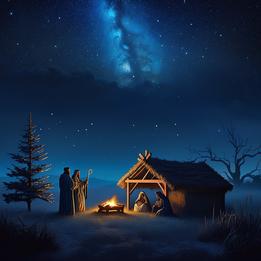
Nativity Scene
The Nativity Scene symbolizes the birth of Jesus Christ, evoking themes of hope, new beginnings, and familial love during the Christmas season.
Nativity Scene Dream Meaning
The Nativity Scene symbolizes the birth of Jesus Christ, evoking themes of hope, new beginnings, and familial love during the Christmas season.
Interpretive Themes
Hope
highRepresents a spiritual renewal or awakening.
Childhood Innocence
highHighlights the value of coming together during festive times.
Celebration
mediumEmphasizes the blending of personal beliefs with broader cultural practices.
Divine Presence
mediumInvokes feelings of reverence and spirituality.
Tradition
highFosters a sense of belonging and continuity.
Mythological Resonance
The Christ Child
ChristianThe incarnation of God as a vulnerable infant in Bethlehem, symbolizing the divine entering the material world, offering hope and salvation.
Horus
EgyptianThe divine child, son of Isis and Osiris, born in secrecy among the reeds, destined to restore order and rule, a symbol of new kingship and cosmic renewal.
Cultural Lenses
European Perspective
View Context →Nativity scenes have been a staple decoration in various European countries since the Middle Ages. Often displayed in public squares and churches during the holiday season. Variations can include local figures and customs, representing regional traditions.
Latin American Perspective
View Context →In Latin American cultures, nativity scenes (known as 'nacimientos') feature indigenous and local elements. Integral to Christmas festivities, often displayed prominently in households. Brings together diverse cultural influences and celebrates local heritage.
Latin American Perspective
View Context →Hispanic communities celebrate with unique adaptations of the nativity scene that reflect local cultures. Used in cultural festivals and family gatherings. [Hispanic] Highlights the fusion of religious significance with cultural expression.
Modern Western Perspective
View Context →American culture often incorporates nativity scenes in both secular and religious settings, particularly during Christmas. Decorated in homes and public spaces, sometimes accompanied by lights and other festive decor. [American] Reflects diverse interpretations of Christmas within a melting pot of traditions.
Historical Authorities
Want a deeper analysis?
Get a personalized interpretation of your entire dream including this symbol.
Interpret My DreamThe Oracle's Prediction
Combine multiple symbolsA profound inner revelation or the birth of a new understanding or purpose.
Timeframe
Lunation (~29 Days)
Intensity
Deep
Common Appearances & Contexts
| Context | Emotion | Interpretation |
|---|---|---|
| Context Setting up a nativity scene | Emotion Joy | Interpretation The act of creating or arranging a nativity scene may symbolize a desire for order in one's life or the joy of familial connection. |
| Context Overseeing a nativity scene in a public place | Emotion Pride | Interpretation This could indicate a longing for community engagement or appreciation for shared cultural values. |
| Context Witnessing a nativity scene under a starry sky | Emotion Awe | Interpretation Such a scene might reflect inner peace and a sense of wonder at the miracles of life. |
| Context Sharing stories around a nativity scene | Emotion Nostalgia | Interpretation Could signal a yearning for childhood memories or a response to familial ties. |
| Context Feeling disconnected from a nativity scene | Emotion Sadness | Interpretation This might suggest feelings of isolation or estrangement from family traditions. |
| Context Finding missing pieces of a nativity set | Emotion Anxiety | Interpretation Represents concerns over missing key elements in personal life or unresolved emotional issues. |
| Context Seeing a nativity scene with altered figures | Emotion Confusion | Interpretation Symbolizes questions regarding faith or changing beliefs. |
| Context Participating in a nativity play | Emotion Excitement | Interpretation Indicates a desire to connect with one's faith or express oneself creatively. |
| Context A neglected nativity scene | Emotion Disappointment | Interpretation Might reflect feelings of neglect towards personal or spiritual commitments. |
| Context Reviving an old nativity scene | Emotion Hope | Interpretation Could symbolize renewal of faith or family connections. |
Interpret Your Full Dream
Beyond this symbol, every dream carries a unique story. Share your dream for a personalized AI-powered interpretation.