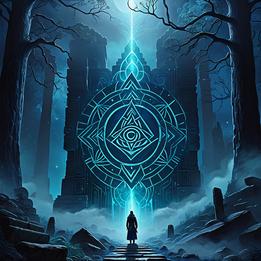
Mythic Symbol
A symbol drawn from mythology, folklore, or sacred tradition, representing archetypal forces, cosmic truths, or spiritual wisdom beyond ordinary reality.
Mythic Symbol Dream Meaning
A symbol drawn from mythology, folklore, or sacred tradition, representing archetypal forces, cosmic truths, or spiritual wisdom beyond ordinary reality.
Interpretive Themes
Mythological Resonance
The World Tree (Yggdrasil, Ashvattha, etc.)
UniversalThe cosmic axis connecting heaven, earth, and underworld, found in Norse, Hindu, and many traditions, representing the structure of reality and the interconnection of all things.
The Ankh
EgyptianThe symbol of life, combining the cross of matter with the loop of spirit, representing eternal life, divine power, and the union of opposites.
Cultural Lenses
Global/Universal Perspective
View Context →Appears across cultures as archetypal forms (e.g., mandala, tree of life) representing cosmic order, life cycles, and spiritual unity, used historically in rituals and modernly in global spirituality.
Jungian Perspective
View Context →Manifestation of the collective unconscious; an archetype (e.g., Self, Anima/Animus) guiding individuation. Historically from myth analysis, modernly used in therapy for self-integration.
Freudian Perspective
View Context →Disguised representation of repressed desires or childhood conflicts, often sexual or aggressive. Historically from dream analysis, modernly viewed as symbolic of unconscious wishes.
Gestalt Perspective
View Context →Projection of an unacknowledged part of the self; the dreamer IS the symbol. Historically from holistic therapy, modernly used for self-awareness through role-play.
Cognitive Perspective
View Context →Mental schema processing memories, emotions, or problem-solving; a brain's narrative tool. Historically from cognitive science, modernly seen as cognitive rehearsal or meaning-making.
Evolutionary Perspective
View Context →Adaptive trait for threat simulation, social bonding, or memory consolidation; enhances survival. Historically from evolutionary psychology, modernly explains recurring motifs as innate.
East Asian Perspective
View Context →Symbols like Yin-Yang or Dragon represent balance, harmony, and cosmic forces. Historically in Taoism/Confucianism, modernly in art and philosophy for holistic living.
South Asian Perspective
View Context →Sacred symbols (e.g., Om, Sri Yantra) denote divine energy and enlightenment. Historically in Hinduism/Buddhism, modernly in meditation and spiritual practice.
Middle Eastern Perspective
View Context →Symbols like the Hamsa or Star and Crescent protect against evil or signify faith. Historically in Islam/Judaism, modernly in jewelry and cultural identity.
European Perspective
View Context →Symbols like the Celtic knot or Cross represent eternity, faith, and heritage. Historically in Christianity/paganism, modernly in nationalism and folklore revival.
African Perspective
View Context →Adinkra or tribal symbols convey proverbs, community values, and ancestral spirits. Historically in oral traditions, modernly in art and cultural preservation.
North American Perspective
View Context →Indigenous symbols (e.g., dreamcatcher, thunderbird) connect to nature and spirituality. Historically in Native traditions, modernly in cultural revival and appropriation debates.
Historical Authorities
Want a deeper analysis?
Get a personalized interpretation of your entire dream including this symbol.
Interpret My DreamThe Oracle's Prediction
Combine multiple symbolsA synchronicity or meaningful coincidence will reveal a personal connection to an ancient pattern or story.
Timeframe
Immediate (Next 48h)
Intensity
Deep
A risk of misunderstanding or superficial use of a deep symbol, leading to empty action or misguidance.
Timeframe
Lunation (~29 Days)
Intensity
Deep
Common Appearances & Contexts
| Context | Emotion | Interpretation |
|---|---|---|
| Context Receiving a symbol | Emotion Awe | Interpretation Divine message received. |
| Context Carving a symbol | Emotion Purpose | Interpretation Creating personal meaning. |
| Context Symbol glowing | Emotion Wonder | Interpretation Activated spiritual energy. |
| Context Symbol fading | Emotion Loss | Interpretation Connection weakening. |
| Context Multiple symbols | Emotion Overwhelm | Interpretation Too many messages. |
| Context Ancient temple symbol | Emotion Reverence | Interpretation Sacred space encountered. |
| Context Modern symbol misuse | Emotion Anger | Interpretation Sacredness violated. |
| Context Symbol in nature | Emotion Peace | Interpretation Natural harmony revealed. |
| Context Symbol transforming | Emotion Fear | Interpretation Uncertain change ahead. |
| Context Teaching the symbol | Emotion Pride | Interpretation Wisdom transmission role. |
| Context Forgetting the symbol | Emotion Panic | Interpretation Lost spiritual insight. |
| Context Universal symbol recognition | Emotion Unity | Interpretation Collective connection felt. |
Interpret Your Full Dream
Beyond this symbol, every dream carries a unique story. Share your dream for a personalized AI-powered interpretation.