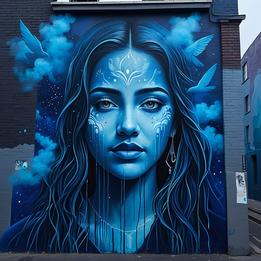
Mural Art
Mural art symbolizes expression, community identity, and cultural storytelling, reflecting the collective voice and experiences of a society.
Mural Art Dream Meaning
Mural art symbolizes expression, community identity, and cultural storytelling, reflecting the collective voice and experiences of a society.
Interpretive Themes
Cultural Identity
highMurals often depict local histories and cultures.
Storytelling
highMurals are vivid narratives that encapsulate community tales.
Social Interaction
mediumMany contemporary murals address social issues and injustices.
Unity
mediumMurals can be collaborative projects between artists and communities.
Transformation
highMurals often revitalize urban spaces and transform perceptions.
Mythological Resonance
The Muses
GreekThe nine goddesses who inspire all art, science, and literature, giving form to the formless.
Dreamtime Stories
Aboriginal AustralianSacred narratives and songlines painted on rock and in ceremony, mapping the land and law of creation.
Cultural Lenses
Latin American Perspective
View Context →Murals have deep roots in Mexican history, with famous artists like Diego Rivera conveying social messages. Tied to cultural festivals and celebrations. [Mexican] Reflects the rich tradition of storytelling in Mexican culture.
African Perspective
View Context →Murals often address the African American experience and struggles. Serves as a medium for civil rights activism. [African American] Highlights community narratives and social justice.
African Perspective
View Context →Murals tell the stories of Bantu tribes, depicting history and culture. Integral to community gatherings and storytelling events. [Bantu] Reflects the oral traditions of Bantu cultures.
European Perspective
View Context →Murals have historically adorned public places, reflecting local culture. Used in celebrations and public commemorations. Demonstrates the beauty of cultural diversity.
Historical Authorities
Want a deeper analysis?
Get a personalized interpretation of your entire dream including this symbol.
Interpret My DreamThe Oracle's Prediction
Combine multiple symbolsA profound connection to a community or cause will emerge.
Timeframe
Seasonal (~3 Months)
Intensity
Deep
Your work will gain public recognition or inspire others.
Timeframe
Lunation (~29 Days)
Intensity
Deep
Common Appearances & Contexts
| Context | Emotion | Interpretation |
|---|---|---|
| Context Admiring a mural | Emotion Inspiration | Interpretation Feeling uplifted by the beauty and meaning of the artwork. |
| Context Creating a mural | Emotion Pride | Interpretation Experiencing joy and fulfillment through personal expression. |
| Context Seeing a mural disappear | Emotion Sorrow | Interpretation Feeling loss or nostalgia for cultural heritage and identity. |
| Context Interpreting a complex mural | Emotion Confusion | Interpretation Attempting to understand complex identities or community histories. |
| Context Walking through a neighborhood filled with murals | Emotion Awe | Interpretation Feeling a profound connection to a community and its stories. |
| Context Discussing a mural's meaning | Emotion Curiosity | Interpretation Engaging in dialogue about culture and identity. |
| Context Participating in a mural painting event | Emotion Joy | Interpretation Shared creativity and collaboration enhancing community bonds. |
| Context Seeing graffiti mixed with murals | Emotion Ambivalence | Interpretation Contemplating the boundary between vandalism and art. |
| Context A mural depicting historical events | Emotion Nostalgia | Interpretation Reflecting on the impact of history on present identity. |
| Context Feeling threatened by a mural's message | Emotion Fear | Interpretation Confronting uncomfortable truths about society or oneself. |
| Context Exploring the techniques of mural painting | Emotion Fascination | Interpretation Gaining appreciation for art and skill. |
| Context Engaging in a disagreement over a mural's meaning | Emotion Frustration | Interpretation Experiencing tension in discussions about cultural perspectives. |
| Context Finding personal symbols within a mural | Emotion Empowerment | Interpretation Recognizing personal identity reflected in community art. |
| Context Witnessing a community mural celebration | Emotion Elated | Interpretation Enjoying the collective pride in cultural expression. |
| Context Transforming a dull wall into a mural | Emotion Hope | Interpretation Feeling optimistic about change and potential. |
| Context Being negatively affected by a mural's content | Emotion Discomfort | Interpretation Feeling challenged by provocative or controversial messages. |
Interpret Your Full Dream
Beyond this symbol, every dream carries a unique story. Share your dream for a personalized AI-powered interpretation.