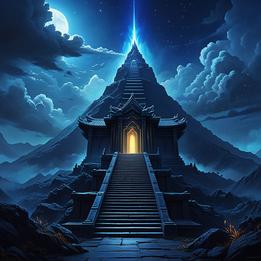
Mountain Temple
A sacred structure on elevated terrain, symbolizing spiritual ascent, inner wisdom, and the union of earthly challenges with divine connection.
Mountain Temple Dream Meaning
A sacred structure on elevated terrain, symbolizing spiritual ascent, inner wisdom, and the union of earthly challenges with divine connection.
Interpretive Themes
Spiritual Ascent
highMountain represents effort; temple represents reward.
Inner Sanctuary
highCombines isolation with sacred purpose.
Challenge and Reward
mediumPhysical climb mirrors spiritual struggle.
Connection to Tradition
mediumTemple as vessel of timeless knowledge.
Transcendence
lowElevation suggests escaping earthly limits.
Mythological Resonance
Mount Olympus
GreekThe dwelling of the gods, representing the ultimate ascent to divine wisdom and transcendent perspective.
Mount Meru
BuddhistThe cosmic axis and spiritual center of the universe, symbolizing the journey toward enlightenment and harmony.
Cultural Lenses
Jungian Perspective
View Context →Represents the Self archetype—integration of conscious and unconscious. Mountain symbolizes individuation journey; temple is the sacred center where wholeness is realized through symbolic rituals and inner work.
Freudian Perspective
View Context →Phallic symbolism of mountain combined with womb-like temple suggests sexual tension resolution. May represent sublimation of libido into spiritual pursuits or unresolved parental authority conflicts manifesting as sacred structures.
Gestalt Perspective
View Context →Projection of self-as-temple on life's mountain. Each element represents aspects of the dreamer: mountain as challenges, temple as inner resources. Integration comes from owning both struggle and sanctuary.
Cognitive Perspective
View Context →Schema combining 'achievement' (mountain) and 'sanctuary' (temple). Reflects problem-solving where spiritual goals require effort. May indicate memory consolidation of meaningful experiences or metaphorical thinking about life challenges.
Evolutionary Perspective
View Context →Adaptive symbol combining survival advantages: high ground (safety/visibility) and social ritual space (community bonding). Represents evolved need for sacred spaces that promote group cohesion and individual reflection in secure locations.
East Asian Perspective
View Context →In Daoist/Buddhist traditions, represents harmony with nature—mountains as cosmic pillars, temples as meditation points. Historically sites for monastic retreats; modernly symbolizes balance between effort (climbing) and stillness (temple meditation).
South Asian Perspective
View Context →Hindu/Buddhist symbol of tapasya (austerity)—ascetic practices in mountain temples. Historically pilgrimage destinations like Himalayan shrines; modernly represents spiritual discipline merging physical journey with devotional worship in sacred geography.
Middle Eastern Perspective
View Context →Ancient ziggurats/mountain shrines as bridges to divine. In Abrahamic traditions, mountains as revelation sites (Sinai). Modernly symbolizes steadfast faith—temples as fortified beliefs enduring life's mountainous challenges in turbulent regions.
European Perspective
View Context →Medieval monasteries on hills representing withdrawal from society for contemplation. Historically fortified spiritual retreats; modernly symbolizes heritage tourism or personal retreats seeking solitude and historical connection in natural settings.
African Perspective
View Context →Sacred mountains as ancestral homes of gods/spirits, with shrines for rituals. Historically sites for initiation ceremonies; modernly represents cultural resilience—temples as repositories of traditional wisdom surviving colonial and modern pressures.
North American Perspective
View Context →Indigenous vision quest sites combined with later frontier chapels. Symbolizes spiritual seeking in wilderness—historically Mormon temples in mountains; modernly represents eco-spirituality or wellness retreats in natural sanctuaries.
Latin American Perspective
View Context →Mesoamerican pyramids as mountain-temples (e.g., Teotihuacan). Historically ceremonial centers aligning with cosmos; modernly symbolizes syncretism—Catholic shrines on sacred mountains blending indigenous and colonial spiritual landscapes.
Historical Authorities
Want a deeper analysis?
Get a personalized interpretation of your entire dream including this symbol.
Interpret My DreamThe Oracle's Prediction
Combine multiple symbolsA breakthrough in personal insight or meditation practice will occur.
Timeframe
Immediate (Next 48h)
Intensity
Deep
Common Appearances & Contexts
| Context | Emotion | Interpretation |
|---|---|---|
| Context Climbing to temple | Emotion Determined | Interpretation Pursuing spiritual goals |
| Context Inside temple | Emotion Peaceful | Interpretation Finding inner calm |
| Context Temple in clouds | Emotion Awestruck | Interpretation Divine connection achieved |
| Context Abandoned temple | Emotion Lonely | Interpretation Lost spiritual path |
| Context Guarding temple | Emotion Protective | Interpretation Defending inner values |
| Context Temple collapsing | Emotion Anxious | Interpretation Faith crisis |
| Context Teaching in temple | Emotion Wise | Interpretation Sharing inner wisdom |
| Context Temple at sunrise | Emotion Hopeful | Interpretation New spiritual beginning |
| Context Hidden temple entrance | Emotion Curious | Interpretation Discovering inner truth |
| Context Temple on volcano | Emotion Fearful | Interpretation Spiritual danger present |
| Context Rebuilding temple | Emotion Resolute | Interpretation Renewing belief system |
| Context Temple festival | Emotion Joyful | Interpretation Celebrating spiritual community |
Interpret Your Full Dream
Beyond this symbol, every dream carries a unique story. Share your dream for a personalized AI-powered interpretation.