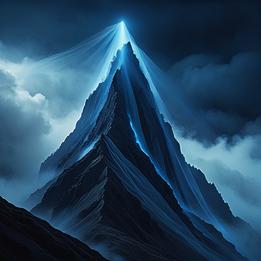
Mountain Mist
A veil between the known and unknown, often representing spiritual mystery, hidden truths, or the ephemeral nature of consciousness.
Mountain Mist Dream Meaning
A veil between the known and unknown, often representing spiritual mystery, hidden truths, or the ephemeral nature of consciousness.
Interpretive Themes
Mythological Resonance
Avalon
CelticThe mystical island of Avalon was often shrouded in mist, accessible only to those with pure intent, representing the veil between mortal and divine realms.
Kasumi
JapaneseIn Shinto tradition, mist (kasumi) is considered a temporary veil created by kami (spirits), obscuring sacred spaces from ordinary view.
Cultural Lenses
Jungian Perspective
View Context →Represents the collective unconscious or numinous experience—a veil over archetypal truths. The mist is the psyche's way of both revealing and concealing during individuation.
Freudian Perspective
View Context →Symbolizes repressed memories or desires clouding conscious thought. The mountain may represent ambition, with mist obscuring the path due to internal conflict or censored wishes.
Gestalt Perspective
View Context →The mist is an aspect of the self—perhaps uncertainty or mystery one projects onto the environment. It asks: 'What part of me feels obscured or veiled?'
Cognitive Perspective
View Context →Reflects mental states of ambiguity or incomplete information processing. The brain generates mist to symbolize cognitive gaps or problem-solving in low-clarity situations.
Evolutionary Perspective
View Context →Taps into ancestral fear/curiosity about obscured landscapes—mist signaled potential danger (predators) or opportunity (resources), triggering alertness and navigation instincts.
East Asian Perspective
View Context →In Daoism and Shinto, mountain mist (雲海) is sacred—it represents qi, the breath of the mountain spirit, and the mutable boundary between human and divine realms. Modernly, a symbol of natural harmony.
South Asian Perspective
View Context →In Hindu/Buddhist thought, mist on Mount Kailash or other sacred peaks symbolizes maya (illusion) obscuring ultimate reality. It's a spiritual test, with rituals for 'clearing' inner vision.
Middle Eastern Perspective
View Context →In Sufism, mist represents the hijab (veil) between creation and the Divine—a necessary obscurity that fuels mystical longing. In desert cultures, it can symbolize rare, life-giving moisture.
European Perspective
View Context →Celtic and Norse myths saw mountain mist as fairy glamour or the breath of giants—a magical boundary. In Romanticism, it symbolized sublime mystery and the unknown in nature.
African Perspective
View Context →In many traditions, mist on sacred mountains (e.g., Kilimanjaro) is the breath of ancestors or deities, a sign of their presence. It mediates between the living and spirit world.
North American Perspective
View Context →For many Indigenous peoples, mountain mist is a living entity—a teacher of patience and humility. In modern contexts, it appears in literature as a metaphor for frontier uncertainty.
Global/Universal Perspective
View Context →A cross-cultural symbol of transition, mystery, and the liminal—appearing in myths worldwide as a veil between worlds, representing the universal human experience of facing the unknown.
Historical Authorities
Want a deeper analysis?
Get a personalized interpretation of your entire dream including this symbol.
Interpret My DreamThe Oracle's Prediction
Combine multiple symbolsHidden truths about yourself or a situation will gradually become clear.
Timeframe
Seasonal (~3 Months)
Intensity
Deep
A period of confusion or miscommunication in important matters.
Timeframe
Immediate (Next 48h)
Intensity
Deep
Common Appearances & Contexts
| Context | Emotion | Interpretation |
|---|---|---|
| Context Ascending mountain | Emotion Determination | Interpretation Obstacle obscuring goal. |
| Context Standing in mist | Emotion Peace | Interpretation Acceptance of unknown. |
| Context Mist clearing | Emotion Relief | Interpretation Clarity approaching. |
| Context Mist thickening | Emotion Anxiety | Interpretation Increasing uncertainty. |
| Context Voice from mist | Emotion Awe | Interpretation Divine communication. |
| Context Lost in mist | Emotion Fear | Interpretation Directionless state. |
| Context Mist at peak | Emotion Wonder | Interpretation Mystery at achievement. |
| Context Mist in valley | Emotion Melancholy | Interpretation Hidden depths below. |
| Context Mist with light | Emotion Hope | Interpretation Guidance through obscurity. |
| Context Mist dissolving | Emotion Anticipation | Interpretation Revelation imminent. |
| Context Mist entering | Emotion Curiosity | Interpretation Exploring the unknown. |
| Context Mist surrounding | Emotion Isolation | Interpretation Separated from world. |
Interpret Your Full Dream
Beyond this symbol, every dream carries a unique story. Share your dream for a personalized AI-powered interpretation.