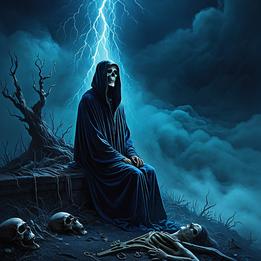
Mortal
A being subject to death, contrasting with the divine or immortal, highlighting human limitations and the finite nature of existence.
Mortal Dream Meaning
A being subject to death, contrasting with the divine or immortal, highlighting human limitations and the finite nature of existence.
Interpretive Themes
Cultural Lenses
Global/Universal Perspective
View Context →Nearly all cultures recognize mortality as defining human condition, with rituals (burial, mourning) and myths (afterlife, reincarnation) addressing this universal reality across history and modernity.
Jungian Perspective
View Context →Mortality symbolizes the confrontation with the Shadow and the process of individuation; integrating awareness of death is essential for psychological wholeness and connecting with the collective unconscious.
Freudian Perspective
View Context →Mortality represents Thanatos (death drive), the unconscious impulse toward self-destruction or return to inorganic state, often manifesting as anxiety about loss, separation, or castration.
Gestalt Perspective
View Context →Mortality represents unfinished business or the ultimate closure; dreaming of it may indicate avoidance of endings in waking life or need to complete psychological cycles.
Cognitive Perspective
View Context →Mortality appears in dreams as the brain processes fears of non-existence, often triggered by real-life reminders (illness, aging) as part of threat simulation and meaning-making systems.
Evolutionary Perspective
View Context →Mortality awareness evolved as adaptive mechanism promoting survival behaviors (risk-avoidance, reproduction) and group cohesion through shared rituals; dreams reinforce these biological imperatives.
East Asian Perspective
View Context →In Confucian, Taoist, and Buddhist traditions, mortality is part of natural cycles (yin-yang, samsara); historically, ancestor veneration bridges mortal and spiritual realms, with modern focus on filial piety and legacy.
South Asian Perspective
View Context →Hindu and Buddhist frameworks view mortality as illusion (maya) within cycle of rebirth (samsara); historical rituals aim for liberation (moksha/nirvana), while modern interpretations emphasize karma and spiritual progress.
Middle Eastern Perspective
View Context →In Abrahamic traditions (Islam, Judaism, Christianity), mortality is divine test with afterlife judgment; historical burial practices reflect resurrection beliefs, with modern debates on soul's fate.
European Perspective
View Context →From medieval memento mori to existential philosophy, European thought has oscillated between religious redemption and secular acceptance; modern secular Europe often approaches mortality through humanist and medical lenses.
African Perspective
View Context →Many African traditions view mortality as transition to ancestral realm, with elaborate funeral rites maintaining community bonds; modern syncretic practices often blend indigenous beliefs with Abrahamic influences.
North American Perspective
View Context →Diverse indigenous views of mortality as cyclical contrast with Euro-American death denial; modern culture exhibits tension between medicalized dying and spiritual seeking, with growing death positivity movements.
Want a deeper analysis?
Get a personalized interpretation of your entire dream including this symbol.
Interpret My DreamCommon Appearances & Contexts
| Context | Emotion | Interpretation |
|---|---|---|
| Context Facing death | Emotion Fear | Interpretation Existential terror surfacing. |
| Context Time running out | Emotion Panic | Interpretation Pressure to achieve. |
| Context Aging rapidly | Emotion Despair | Interpretation Loss of vitality feared. |
| Context Meeting immortals | Emotion Awe | Interpretation Human limitation felt. |
| Context Leaving legacy | Emotion Hope | Interpretation Seeking posthumous meaning. |
| Context Illness diagnosis | Emotion Dread | Interpretation Mortality becomes imminent. |
| Context Cheating death | Emotion Triumph | Interpretation Denial of finitude. |
| Context Burial preparation | Emotion Resignation | Interpretation Acceptance of end. |
| Context Comparing lifespans | Emotion Envy | Interpretation Longing for more time. |
| Context Moment of birth | Emotion Wonder | Interpretation Beginning of finite journey. |
| Context Historical figure alive | Emotion Confusion | Interpretation Time boundary violated. |
| Context Eternal youth offered | Emotion Temptation | Interpretation Mortality conflict arises. |
Interpret Your Full Dream
Beyond this symbol, every dream carries a unique story. Share your dream for a personalized AI-powered interpretation.