A
Anonymous Dreamer
2/24/2026
"I was watching myself but I wasn’t me and someone was taking a burning match to my eyelids and burned them off "
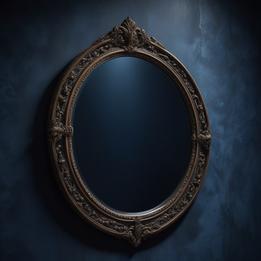
Mirrors in dreams often symbolize self-reflection, identity, and the truth of one's inner self, revealing insights that may be hidden from conscious awareness.
Mirrors in dreams often symbolize self-reflection, identity, and the truth of one's inner self, revealing insights that may be hidden from conscious awareness.
Mirrors compel individuals to confront their inner selves, often uncovering fears or desires they may not consciously acknowledge.
Dreams involving mirrors may challenge the dreamer to reevaluate their self-perception and the personas they inhabit.
Mirrors reveal the potential for distortion in self-view, prompting questions about authenticity and personal growth.
The act of looking into a mirror symbolizes the beginning of a transformative journey, where acceptance leads to growth.
The myth of Narcissus, who became trapped by his own reflection, symbolizing both the peril and necessity of self-contemplation.
Mirrors are seen as tools for self-discovery and reflection on the psyche. Used in therapeutic settings to facilitate self-exploration. Mirrors symbolize the shadow self and the journey to integrate all parts of one's identity.
Mirrors are traditionally used in Feng Shui to deflect negative energies and enhance protection. Placed strategically within homes for auspicious energy. [Chinese] Mirrors can symbolize clarity and insight, reflecting more than just physical appearance.
Mirrors were associated with beauty and femininity, often used by women for self-adornment. Used in religious rituals and personal beautification practices. [Ancient Egypt] Mirrors were believed to reflect both the physical and spiritual realm, connecting identity with the divine.
Mirrors are sacred objects, often used in Shinto as a representation of purity and clarity. Housed in shrines, reflecting the divine and the virtuous. [Japanese] The mirror symbolizes the truth and sincerity of one’s heart.
Used by shamans for divination and to connect with unseen worlds. Integral in rituals that involve asking for guidance from the spirits. [Mesoamerican] Mirrors signify a gateway to understanding both the past and future, reflecting the cyclical nature of life.
Anonymous Dreamer
2/24/2026
"I was watching myself but I wasn’t me and someone was taking a burning match to my eyelids and burned them off "
Levi
1/17/2026
"I found myself in a sprawling, ancient library with ceilings that vanished into shadow. I was searching desperately for a book I knew contained the secret to my future, but every time I reached for a spine, the shelf would stretch further away. The silence was heavy, like a physical weight. Suddenly, water started seeping from the floorboards. At first it was just a trickle, but within seconds, the aisles were rushing rivers. I wasn’t afraid of drowning, but I was terrified of the books being ruined. The scene shifted abruptly—I was now swimming in a vast, calm ocean under a twilight sky. In the distance, a solitary island rose up, topped by a massive clock tower that wasn’t ticking. I swam with a strength I don’t possess in waking life. When I reached the shore, the sand was made of crushed gemstones. I climbed the tower’s winding stairs, which felt endless. At the top, there was no clock face, only a giant mirror. When I looked into it, I didn’t see myself. I saw a younger version of my father, but he was wearing my clothes and looking at me with a mix of pity and pride. He handed me a key that was burning hot, but I took it anyway. I woke up just as the heat became unbearable."
Levi
1/17/2026
"I was being chased through a dark forest by a shadowy figure. Every tree I hid behind, the figure appeared closer. Then I was in my childhood home, furniture floating. My dead grandmother handed me a broken mirror. My reflection was crying but I felt calm. She spoke but I could not hear. I woke up disturbed."
Get a personalized interpretation of your entire dream including this symbol.
Interpret My DreamTimeframe
Immediate (Next 48h)
Intensity
Deep
Timeframe
Lunation (~29 Days)
Intensity
Deep
| Context | Emotion | Interpretation |
|---|---|---|
| Context Looking into a broken mirror | Emotion Anxiety | Interpretation This can represent fractured self-image or feelings of inadequacy, urging the dreamer to address underlying issues. |
| Context Seeing a reflection of someone else in a mirror | Emotion Confusion | Interpretation Indicates projection of feelings or traits onto others, exploring how the dreamer perceives relationships. |
| Context Mirror showing an aged version of oneself | Emotion Fear | Interpretation Reflects concerns about aging or change, often indicating a fear of losing one's identity over time. |
| Context Walking through a mirror | Emotion Excitement | Interpretation Symbolizes transition to new phases in life, suggesting readiness to embrace change or new opportunities. |
| Context Mirror reflecting a distorted image | Emotion Discomfort | Interpretation Expresses issues with self-acceptance and denial, encouraging the dreamer to confront uncomfortable realities. |
| Context Finding a hidden mirror | Emotion Curiosity | Interpretation Indicates discovery of truths previously overlooked, prompting personal growth and deeper self-awareness. |
| Context Mirror clouded with steam | Emotion Frustration | Interpretation Represents confusion or lack of clarity in the dreamer's life, hinting at the need to clear mental blockages. |
| Context Witnessing someone else admiring themselves in a mirror | Emotion Jealousy | Interpretation Could reveal the dreamer's insecurities regarding self-worth and how they perceive others’ self-confidence. |
| Context Mirror spontaneously shattering | Emotion Shock | Interpretation Represents sudden revelations or crises in self-perception, urging the dreamer to rebuild their self-image. |
| Context Multiple mirrors reflecting different angles | Emotion Overwhelmed | Interpretation Highlights the complexity of self-identity and the multifaceted aspects of the dreamer's personality. |
| Context Cleaning a dirty mirror | Emotion Determined | Interpretation Symbolizes the pursuit of clarity and the desire to confront personal truths, indicating readiness for growth. |
| Context Mirror showing a younger version of oneself | Emotion Nostalgic | Interpretation Reflects a longing for past innocence or simpler times, prompting reflection on personal growth. |
| Context A mirror that does not show any reflection | Emotion Confusion | Interpretation Suggests issues with self-identity or feeling invisible, urging the dreamer to explore their self-worth. |
| Context Trying to talk to oneself in the mirror | Emotion Reflective | Interpretation Indicates a desire for self-talk and understanding, often signifying a need for guidance from within. |
Beyond this symbol, every dream carries a unique story. Share your dream for a personalized AI-powered interpretation.