Mechanical
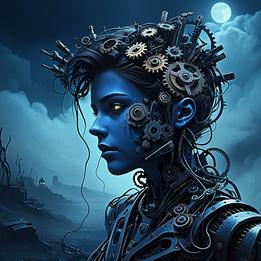
Represents rigid, automated, or externally controlled aspects of the self, often indicating emotional suppression, routine, or a lack of spontaneity.
Mechanical Dream Meaning
Represents rigid, automated, or externally controlled aspects of the self, often indicating emotional suppression, routine, or a lack of spontaneity.
Interpretive Themes
Mythological Resonance
Talos
GreekThe giant bronze automaton forged by Hephaestus to guard Crete, a being of immense power and rigid purpose, ultimately destroyed by having his life-fluid (ichor) drained.
The Golem
Jewish FolkloreA being of clay animated by ritual to serve and protect, but which becomes a mindless, uncontrollable force when its programmed purpose goes awry or is misunderstood.
Cultural Lenses
Jungian Perspective
View Context →Represents the persona or shadow aspects—how one presents a controlled, artificial self to the world, potentially masking true emotions or instincts, urging integration of the unconscious.
Freudian Perspective
View Context →Symbolizes sexual repression or anal-retentive traits, with mechanical movements reflecting suppressed desires or rigid control over primal urges, often tied to childhood development.
Gestalt Perspective
View Context →Indicates a fragmented self—parts of the personality operating mechanically without holistic awareness, calling for acknowledgment and integration of these disconnected aspects.
Cognitive Perspective
View Context →Reflects automatic thoughts or schemas—habitual, unexamined mental processes that may lead to emotional distress, suggesting a need for cognitive restructuring.
Evolutionary Perspective
View Context →Taps into ancient fears of dehumanization or loss of individuality in group dynamics, warning against over-adaptation that sacrifices personal authenticity for survival.
Modern Western Perspective
View Context →Often linked to technology overload, corporate culture, or social media algorithms, symbolizing a loss of human connection and authenticity in a digitized world.
East Asian Perspective
View Context →In traditions like Taoism or Buddhism, it may warn against rigid attachment to form or duty, encouraging harmony with natural flow over mechanical efficiency.
European Perspective
View Context →Historically tied to Industrial Revolution anxieties about dehumanization, now reflects work-life balance struggles or bureaucratic systems stifling creativity.
African Perspective
View Context →In some cultures, contrasts with ancestral or communal values, symbolizing foreign imposition or loss of spiritual connection through modern, impersonal systems.
Global/Universal Perspective
View Context →A cross-cultural symbol of control versus spontaneity, often arising in dreams during times of stress, routine, or technological change, highlighting universal tensions.
Middle Eastern Perspective
View Context →May reflect conflicts between traditional values and modernization, symbolizing rigid societal structures or a desire for order amidst chaos.
South Asian Perspective
View Context →In Hindu or Buddhist contexts, can represent Maya (illusion) or attachment to material world, urging detachment from mechanistic existence for spiritual growth.
Historical Authorities
Want a deeper analysis?
Get a personalized interpretation of your entire dream including this symbol.
Interpret My DreamThe Oracle's Prediction
Combine multiple symbolsAn impending confrontation regarding autonomy, boundaries, or creative stifling in your professional role.
Timeframe
Seasonal (~3 Months)
Intensity
Deep
A risk of stress-related physical tension or repetitive strain if current routines remain unchallenged.
Timeframe
Immediate (Next 48h)
Intensity
Deep
Common Appearances & Contexts
| Context | Emotion | Interpretation |
|---|---|---|
| Context Broken machine | Emotion Anxiety | Interpretation Fear of failure. |
| Context Operating machinery | Emotion Control | Interpretation Mastery or over-control. |
| Context Being a machine | Emotion Detachment | Interpretation Emotional numbness. |
| Context Clockwork mechanisms | Emotion Precision | Interpretation Rigid scheduling. |
| Context Rusty gears | Emotion Stagnation | Interpretation Emotional decay. |
| Context Automated movements | Emotion Monotony | Interpretation Life lacks spontaneity. |
| Context Machine repair | Emotion Hope | Interpretation Healing process. |
| Context Overheating engine | Emotion Stress | Interpretation Emotional burnout. |
| Context Precise assembly | Emotion Order | Interpretation Seeking control. |
| Context Malfunctioning robot | Emotion Confusion | Interpretation Identity crisis. |
| Context Smooth operation | Emotion Efficiency | Interpretation Life running smoothly. |
| Context Forced automation | Emotion Oppression | Interpretation External pressure. |
Interpret Your Full Dream
Beyond this symbol, every dream carries a unique story. Share your dream for a personalized AI-powered interpretation.