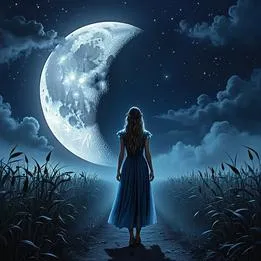
Lunar Cycle Dream Meaning
A celestial symbol representing cyclical change, feminine energy, and the passage of time through phases of waxing and waning.
Common Appearances & Contexts
| Context | Emotion | Interpretation |
|---|---|---|
| Full moon rising | Awe | Peak revelation. |
| New moon darkness | Anxious | Unknown beginnings. |
| Waxing crescent | Hopeful | Growth potential. |
| Waning gibbous | Reflective | Release phase. |
| Blood moon eclipse | Fearful | Major transformation. |
| Blue moon | Excited | Rare opportunity. |
| Harvest moon | Grateful | Abundance manifesting. |
| Moon setting | Melancholic | Cycle ending. |
| Moon in water | Peaceful | Emotional reflection. |
| Multiple moons | Confused | Overwhelming cycles. |
| No moon | Lost | Directionless phase. |
| Moon behind clouds | Frustrated | Hidden guidance. |
Interpretive Themes
Cultural Lenses
Global/Universal Perspective
View Context →Nearly all cultures have used lunar cycles for timekeeping, agriculture, and ritual. Modern astronomy explains mechanics, but symbolic power persists in art, literature, and spiritual practices worldwide.
Jungian Perspective
View Context →Represents the anima (feminine archetype) and collective unconscious rhythms. The cycle symbolizes individuation process—shadow work during dark phases leading to enlightenment in full illumination.
Freudian Perspective
View Context →Often symbolizes female sexuality and reproductive cycles. The phases may represent sexual desire waxing and waning, with the moon as a maternal symbol connected to early childhood experiences.
Gestalt Perspective
View Context →The dreamer projects their own cyclical nature onto the moon. Each phase represents different aspects of self needing integration—what part of you is waxing or waning right now?
Cognitive Perspective
View Context →Mind's pattern recognition of natural cycles applied to personal experience. The symbol helps process life transitions by providing a familiar framework for understanding change.
Evolutionary Perspective
View Context →Ancient survival advantage of tracking lunar cycles for navigation, hunting, and reproductive timing. Modern brains retain this sensitivity, interpreting lunar symbols as signals about environmental rhythms.
East Asian Perspective
View Context →In Chinese tradition, represents yin energy, immortality, and the feminine principle. Moon festivals celebrate harvest and family reunion. The rabbit in the moon symbolizes longevity in folklore.
South Asian Perspective
View Context →Hindu mythology features moon god Chandra governing emotions and plants. Lunar calendars determine festivals and auspicious times. The waning moon symbolizes detachment in spiritual practice.
Middle Eastern Perspective
View Context →Islamic calendar is lunar-based, marking Ramadan and Eid. Pre-Islamic moon worship influenced early Arabian religion. The crescent remains a powerful cultural and religious symbol.
European Perspective
View Context →Celtic and Norse traditions associated moon with goddesses and magic. Medieval folklore linked lunar phases to werewolves and madness ('lunacy'). Modern Wicca uses moon cycles in rituals.
African Perspective
View Context →Many traditions view moon as masculine counter to sun's femininity. Lunar cycles govern agricultural and ritual calendars. Moon deities like Khonsu (Egyptian) represent healing and time.
North American Perspective
View Context →Native American tribes used moon names to track seasons (Harvest Moon, Strawberry Moon). The cycle represents natural balance and spiritual guidance in many creation stories and ceremonies.
Interpret Your Full Dream
Beyond this symbol, every dream carries a unique story. Share your dream for a personalized AI-powered interpretation.