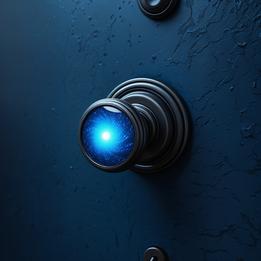
Knob
A knob represents access, control, and transition between spaces, often symbolizing opportunities, barriers, or personal agency.
Knob Dream Meaning
A knob represents access, control, and transition between spaces, often symbolizing opportunities, barriers, or personal agency.
Interpretive Themes
Cultural Lenses
Jungian Perspective
View Context →Archetypal symbol of the threshold between conscious and unconscious; turning it represents integrating shadow aspects or accessing deeper self-knowledge. Modernly, it signifies personal transformation.
Freudian Perspective
View Context →Phallic symbol representing sexual desire or aggression; turning may symbolize masturbation or penetration. In modern therapy, it often relates to repressed urges or power dynamics.
Gestalt Perspective
View Context →Projection of the dreamer's ability to 'handle' situations; the knob's condition reflects self-perception of control. Modern interpretation focuses on present-moment awareness of agency.
Cognitive Perspective
View Context →Mental schema for problem-solving or decision-making; dreaming of knobs processes real-life choices. Modern view ties to neural pathways activating during sleep.
Evolutionary Perspective
View Context →Ancient survival mechanism related to securing shelter or accessing resources; modern dreams echo primal needs for safety and exploration in urban environments.
Global/Universal Perspective
View Context →Cross-cultural symbol of portals and transitions; historically used in rituals (e.g., temple doors). Modernly represents universal human experiences of opportunity and limitation.
East Asian Perspective
View Context →In Feng Shui, knobs influence energy flow (qi); historically, ornate knobs on shrines denoted spiritual access. Modernly, they symbolize harmony or disruption in life paths.
South Asian Perspective
View Context →Linked to karma and dharma—turning a knob may represent karmic choices. Historically, temple door knobs held ritual significance. Modernly, it implies life's cyclical nature.
Middle Eastern Perspective
View Context →Symbol of hospitality (opening doors) or secrecy (locked spaces); historically, intricate knobs on mosques showed divine access. Modernly, it reflects social or spiritual boundaries.
European Perspective
View Context →Medieval castle knobs represented feudal power; later, Enlightenment-era knobs symbolized rational control. Modernly, it evokes historical legacy or personal autonomy.
African Perspective
View Context →In many traditions, knobs on communal huts symbolize tribal unity or ancestral gates; modern dreams may connect to heritage or community roles.
North American Perspective
View Context →Pioneer symbolism of homesteading and opportunity; modernly reflects individualism, innovation (e.g., tech knobs), or suburban privacy norms.
Want a deeper analysis?
Get a personalized interpretation of your entire dream including this symbol.
Interpret My DreamCommon Appearances & Contexts
| Context | Emotion | Interpretation |
|---|---|---|
| Context Turning a knob | Emotion Excitement | Interpretation Embracing new opportunities. |
| Context Stuck knob | Emotion Frustration | Interpretation Feeling blocked progress. |
| Context Missing knob | Emotion Helplessness | Interpretation Lack of control. |
| Context Polished knob | Emotion Pride | Interpretation Mastery over environment. |
| Context Broken knob | Emotion Anxiety | Interpretation Security compromised. |
| Context Many knobs | Emotion Overwhelm | Interpretation Too many choices. |
| Context Ancient knob | Emotion Awe | Interpretation Connecting to past. |
| Context Glowing knob | Emotion Hope | Interpretation Guiding light ahead. |
| Context Melting knob | Emotion Fear | Interpretation Losing stability. |
| Context Giant knob | Emotion Intimidation | Interpretation Daunting challenge. |
| Context Tiny knob | Emotion Focus | Interpretation Precise control needed. |
| Context Knob transforms | Emotion Wonder | Interpretation Unexpected change. |
Interpret Your Full Dream
Beyond this symbol, every dream carries a unique story. Share your dream for a personalized AI-powered interpretation.