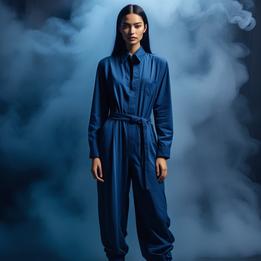
Jumpsuit
A jumpsuit symbolizes versatility, empowerment, and breaking gender norms, often representing a modern approach to identity and functionality.
Jumpsuit Dream Meaning
A jumpsuit symbolizes versatility, empowerment, and breaking gender norms, often representing a modern approach to identity and functionality.
Interpretive Themes
Empowerment
highEmbodies elements of strength and independence.
Versatility
highSignifies the ability to transition between roles and situations.
Rebellion Against Norms
mediumRepresents a challenge to gendered fashion norms.
Nurturing
highDemonstrates a relationship with physical freedom.
Adaptability
mediumIndicates the ability to fulfill various roles simultaneously.
Mythological Resonance
Hermes' Talaria
GreekThe winged sandals that allowed the messenger god to traverse realms effortlessly, symbolizing fluid mobility and boundary-crossing.
The Astronaut's Spacesuit
Modern MythologyThe ultimate jumpsuit enabling survival and exploration in alien environments, representing human ingenuity and the unity required for cosmic ventures.
Cultural Lenses
Modern Western Perspective
View Context →Jumpsuits gained popularity in the 1960s as a symbol of rebellion and empowerment during counter-cultural movements. Fashion statements during protests and social movements. [American] Often associated with the feminist movement.
Modern Western Perspective
View Context →Jumpsuits frequently appear in film and music as an icon of modernity and style. Worn by influential figures on stage and at red carpet events. [Pop Culture] Often used to convey a strong message.
European Perspective
View Context →In Europe, jumpsuits featured in women’s fashion in the 70s to symbolize liberation. Popular during cultural festivals. Connected to the avant-garde artistic movements.
East Asian Perspective
View Context →Modern adaptations of jumpsuits reflect contemporary innovations in fashion. Strategic designs in fashion shows. [Asian Cultures] Examples can be found in urban centers' street fashion.
Historical Authorities
Want a deeper analysis?
Get a personalized interpretation of your entire dream including this symbol.
Interpret My DreamThe Oracle's Prediction
Combine multiple symbolsA project will require versatile skills and crossing traditional departmental lines.
Timeframe
Immediate (Next 48h)
Intensity
Deep
You will experience a moment of clarity where disparate parts of your self feel integrated.
Timeframe
Lunation (~29 Days)
Intensity
Deep
Common Appearances & Contexts
| Context | Emotion | Interpretation |
|---|---|---|
| Context Wearing a jumpsuit to an important event | Emotion Confident | Interpretation Indicates comfort in one's identity. |
| Context Trying on different jumpsuits | Emotion Exploratory | Interpretation Represents searching for one's true self. |
| Context Transforming a jumpsuit into different styles | Emotion Creative | Interpretation Emphasizes adaptability in lifestyle. |
| Context Witnessing someone else in a commanding jumpsuit | Emotion Inspired | Interpretation Can signal admiration for empowerment. |
| Context Participating in a jumpsuit fashion show | Emotion Excited | Interpretation Represents embracing self-expression. |
| Context Feeling restricted in a jumpsuit | Emotion Confined | Interpretation Indicates potential anxiety about current life choices. |
| Context Dancing freely in a jumpsuit | Emotion Joyful | Interpretation Symbolizes liberation and self-acceptance. |
| Context Shopping for a jumpsuit with friends | Emotion Joyful | Interpretation Represents social connections and shared experiences. |
| Context Wearing a jumpsuit that doesn't fit | Emotion Frustrated | Interpretation Indicates feeling out of place in current situations. |
| Context Creating a custom jumpsuit | Emotion Liberated | Interpretation Represents individuality and personal style. |
| Context Seeing a collection of jumpsuits from different eras | Emotion Nostalgic | Interpretation Reflects on personal evolution and design trends. |
Interpret Your Full Dream
Beyond this symbol, every dream carries a unique story. Share your dream for a personalized AI-powered interpretation.