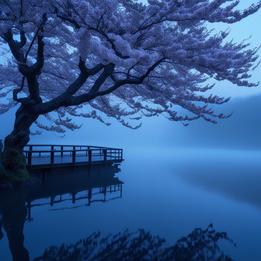
Joyful Cherry Blossom
Signifies the beauty of transience and the preciousness of life's fleeting moments.
Joyful Cherry Blossom Dream Meaning
Signifies the beauty of transience and the preciousness of life's fleeting moments.
Interpretive Themes
Mythological Resonance
Sakura (Cherry Blossom)
JapaneseIn Shinto and Buddhist thought, the sakura embodies mono no aware, the poignant awareness of impermanence, celebrating life's beauty precisely because it is fleeting, much like the samurai ideal of a glorious, brief life.
Persephone
GreekHer annual return from the Underworld brings the brief, vibrant bloom of spring—a joyful resurgence that is inherently temporary, mirroring the cycle of life, death, and rebirth.
Cultural Lenses
East Asian Perspective
View Context →Celebrated during Hanami festivals. Symbolizes the fleeting nature of life. [Japanese] Integral to Japanese culture.
East Asian Perspective
View Context →Associated with femininity and love. Part of traditional celebrations. [Chinese] Represents emotional connections.
European Perspective
View Context →Commonly planted in gardens. Celebrated in spring festivals. [Western] Used in many artistic expressions.
East Asian Perspective
View Context →Represented as a national flower. Symbols of renewal and hope. [Korean] Important in cultural identity.
East Asian Perspective
View Context →Commonly associated with the arrival of spring. Involves festivals celebrating nature. [Asian Cultures] Prominent in various celebrations.
Historical Authorities
Want a deeper analysis?
Get a personalized interpretation of your entire dream including this symbol.
Interpret My DreamThe Oracle's Prediction
Combine multiple symbolsA period of heightened awareness and deep appreciation for the present moment is imminent.
Timeframe
Seasonal (~3 Months)
Intensity
Deep
A current relationship will enter a phase of particular sweetness and closeness, though it may be time-bound.
Timeframe
Lunation (~29 Days)
Intensity
Deep
Common Appearances & Contexts
| Context | Emotion | Interpretation |
|---|---|---|
| Context Walking through a cherry blossom orchard | Emotion Elation | Interpretation Represents joy and appreciation for the beauty around. |
| Context Watching cherry blossoms fall gently | Emotion Reflection | Interpretation Encourages contemplation of life's impermanence. |
Interpret Your Full Dream
Beyond this symbol, every dream carries a unique story. Share your dream for a personalized AI-powered interpretation.