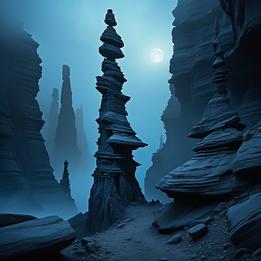
Hoodoo
A natural rock formation shaped by erosion, often appearing as tall, thin spires or balanced rocks. In dreams, it symbolizes natural forces, transformation, and mysterious balance.
Hoodoo Dream Meaning
A natural rock formation shaped by erosion, often appearing as tall, thin spires or balanced rocks. In dreams, it symbolizes natural forces, transformation, and mysterious balance.
Interpretive Themes
Mythological Resonance
Spider Rock
NavajoA towering sandstone spire in Canyon de Chelly, said to be the home of Spider Woman who taught the people weaving and balance between earth and sky.
The Pillars of Heracles
GreekAncient name for the Strait of Gibraltar's rock formations, marking the boundary between known and unknown worlds, eroded by ocean and myth.
Cultural Lenses
Jungian Perspective
View Context →Represents the Self archetype—enduring core identity shaped by life's erosions. Symbolizes individuation process where personality forms through weathering of experiences, creating unique spiritual form.
Freudian Perspective
View Context →Phallic symbol representing masculine energy and creative force. The erosion suggests castration anxiety or the wearing down of libidinal energy through societal pressures and time.
Gestalt Perspective
View Context →Represents the figure-ground relationship in perception. The hoodoo stands as prominent figure against environmental background, symbolizing what consciousness foregrounds from life's continuous field.
Cognitive Perspective
View Context →Embodies schemas of stability and change. Represents mental models of how structures endure through environmental pressures, reflecting cognitive processes of adaptation and pattern recognition.
Evolutionary Perspective
View Context →Symbolizes adaptive traits that withstand environmental pressures. Represents biological and psychological characteristics that survive through generations despite changing conditions and selective pressures.
North American Perspective
View Context →In Native traditions, hoodoos are often seen as transformed beings or petrified ancestors. Modern interpretation includes national park wonders like Bryce Canyon, representing natural heritage and conservation values.
African Perspective
View Context →In some traditions, similar formations represent earth spirits or ancestors' dwellings. The name 'hoodoo' itself connects to African American folk magic traditions, blending natural and spiritual realms.
European Perspective
View Context →Viewed through Romantic lens as sublime nature—both beautiful and terrifying. Geological science explains formation while folklore sometimes attributes them to giants or supernatural beings turned to stone.
East Asian Perspective
View Context →Resembles scholar's rocks (gongshi) appreciated for their natural beauty and qi energy flow. Represents Daoist principles of wu wei—natural action without force, shaped by wind and water over millennia.
Middle Eastern Perspective
View Context →Evokes desert pillars and ancient ruins, symbolizing endurance in harsh environments. Connects to biblical imagery of pillars and monuments, representing divine creation and human impermanence.
Latin American Perspective
View Context →Similar to sacred mountains and rock formations in indigenous traditions. Modern context includes geological tourism while maintaining spiritual significance as earth beings or transformed mythological figures.
Global/Universal Perspective
View Context →Universal symbol of nature's patient artistry. Across cultures, represents the dialogue between permanence and change, the visible result of invisible forces working across geological time.
Historical Authorities
Want a deeper analysis?
Get a personalized interpretation of your entire dream including this symbol.
Interpret My DreamThe Oracle's Prediction
Combine multiple symbolsA period of personal transformation will occur, where old structures erode to reveal more authentic foundations.
Timeframe
Lunation (~29 Days)
Intensity
Deep
Common Appearances & Contexts
| Context | Emotion | Interpretation |
|---|---|---|
| Context Climbing hoodoo | Emotion Fear | Interpretation Risking instability. |
| Context Watching erosion | Emotion Sadness | Interpretation Accepting inevitable change. |
| Context Balanced rock | Emotion Wonder | Interpretation Miraculous natural order. |
| Context Hoodoo collapsing | Emotion Shock | Interpretation Sudden foundation loss. |
| Context Carving hoodoo | Emotion Pride | Interpretation Shaping destiny. |
| Context Multiple hoodoos | Emotion Awe | Interpretation Collective ancient presence. |
| Context Hoodoo in storm | Emotion Anxiety | Interpretation Testing endurance. |
| Context Touching hoodoo | Emotion Reverence | Interpretation Connecting to earth. |
| Context Hoodoo as guide | Emotion Hope | Interpretation Natural navigation point. |
| Context Hoodoo changing shape | Emotion Confusion | Interpretation Reality shifting. |
| Context Hoodoo sanctuary | Emotion Peace | Interpretation Sacred protected space. |
| Context Hoodoo whispering | Emotion Curiosity | Interpretation Ancient messages heard. |
Interpret Your Full Dream
Beyond this symbol, every dream carries a unique story. Share your dream for a personalized AI-powered interpretation.