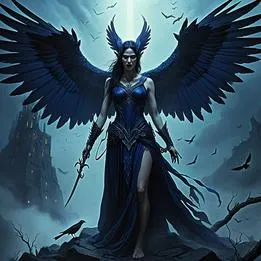
Harpy Dream Meaning
A mythological creature with a woman's face and a bird's body, often representing vengeance, punishment, and the tormenting of souls.
Common Appearances & Contexts
| Context | Emotion | Interpretation |
|---|---|---|
| Being chased | Terror | Guilt pursuing you. |
| Observing from afar | Dread | Anticipated punishment. |
| Fighting a harpy | Anger | Battling inner demons. |
| Harpy speaking | Shame | Conscience accusing you. |
| Multiple harpies | Overwhelm | Multiple sources of guilt. |
| Harpy as protector | Awe | Righteous fury defending. |
| Transforming into harpy | Horror | Becoming your tormentor. |
| Harpy stealing something | Loss | Theft of peace/soul. |
| Feeding a harpy | Resignation | Nourishing your guilt. |
| Killing a harpy | Relief | Overcoming torment. |
| Harpy in home | Violation | Guilt invading safety. |
| Harpy as guide | Unease | Punishment leading somewhere. |
Interpretive Themes
Cultural Lenses
Global/Universal Perspective
View Context →Cross-cultural archetype of a vengeful, hybrid creature often serving as an agent of divine punishment or torment, representing the fear of retribution for moral transgressions.
Jungian Perspective
View Context →Shadow aspect of the feminine, the 'Terrible Mother' archetype. Represents repressed rage, guilt, or the devouring, punishing side of the unconscious psyche that demands integration.
Freudian Perspective
View Context →Symbol of castration anxiety or superego punishment. The hybrid form may represent psychosexual conflict, with the bird body symbolizing phallic aggression turned punitive by the maternal face.
Gestalt Perspective
View Context →A disowned part of the self—likely rage, vengeance, or a punishing inner critic—projected into a monstrous form. The dream asks you to reclaim this energy.
Cognitive Perspective
View Context →A cognitive schema for 'deserved punishment' or 'inescapable guilt' made concrete. The mind uses this vivid image to process feelings of accountability or anticipated negative consequences.
Evolutionary Perspective
View Context →Amalgam of primal threats: predatory bird (aerial danger) and human-like face (social threat). May trigger hyper-vigilance against agents of social punishment or those who 'snatch' resources.
European Perspective
View Context →Originating in Greek myth as storm spirits and snatchers of souls, later medievalized as vile, greedy tormentors in Hell. Embodies classical and Christian fears of divine retribution.
Middle Eastern Perspective
View Context →Parallels exist in monstrous female spirits like the Persian 'Al' or certain jinn that steal or harm children, representing threats to lineage and the terror of the unnatural feminine.
East Asian Perspective
View Context →Less direct equivalent, but shares themes with vengeful female ghosts (e.g., Japanese 'Onryō') or hybrid 'Yōkai'. Can represent polluted karma or a spirit corrupted by injustice seeking retribution.
Modern Western Perspective
View Context →Prevalent in fantasy games and literature as monstrous enemies. Psychologically, may symbolize toxic shame, a harsh inner critic, or the fear of exposure and social punishment.
African Perspective
View Context →Resonates with tales of winged witches or spirits that bring sickness as punishment. Can represent the consequences of breaking taboos or the dangerous aspect of ancestral/spiritual forces.
Latin American Perspective
View Context →Echoes in myths of winged, monstrous women like 'La Llorona' variants or certain 'brujería' entities. Symbolizes the price of broken vows, curses, or the torment of unresolved injustice.
Interpret Your Full Dream
Beyond this symbol, every dream carries a unique story. Share your dream for a personalized AI-powered interpretation.