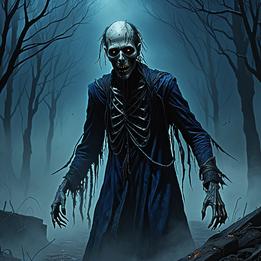
Ghoul
A malevolent undead creature from folklore that feeds on corpses, often symbolizing repressed fears, moral decay, or the consumption of life energy.
Ghoul Dream Meaning
A malevolent undead creature from folklore that feeds on corpses, often symbolizing repressed fears, moral decay, or the consumption of life energy.
Interpretive Themes
Mortality Confrontation
highGhouls embody death's physical reality.
Repressed Shadow
highFeeding on corpses suggests hidden hungers.
Moral Corruption
mediumCorpse-eating violates fundamental taboos.
Ancestral Burden
mediumGhouls often guard burial grounds.
Transformation Fear
lowPotential identification with the ghoul.
Cultural Lenses
Jungian Perspective
View Context →Represents the Shadow archetype—unconscious aspects of personality that the ego rejects. Historically seen as demons; modernly symbolizes repressed instincts that must be integrated for wholeness.
Freudian Perspective
View Context →Manifestation of death drive (Thanatos) and oral fixation. Historically linked to burial taboos; modernly represents unresolved childhood traumas or repressed sexual anxieties about mortality.
Gestalt Perspective
View Context →Projection of disowned parts of self. Historically seen as external monsters; modernly represents aspects of personality the dreamer refuses to acknowledge as their own.
Cognitive Perspective
View Context →Mental schema for processing fear of death. Historically served as explanation for grave disturbances; modernly represents cognitive distortions about mortality or threat assessment.
Evolutionary Perspective
View Context →Adaptive fear response to corpse contamination. Historically protected against disease; modernly manifests as anxiety about biological decay or genetic legacy threats.
Middle Eastern Perspective
View Context →In pre-Islamic Arabian folklore, ghūls shape-shift in deserts to devour travelers. Historically represented natural dangers; modernly symbolizes moral tests or spiritual corruption in religious contexts.
European Perspective
View Context →Medieval revenants that guard treasures in graveyards. Historically explained unexplained deaths; modernly appears in Gothic literature as symbols of class anxiety or societal decay.
South Asian Perspective
View Context →In Hindu and Buddhist traditions, pretas (hungry ghosts) suffer insatiable cravings due to bad karma. Historically represented rebirth consequences; modernly symbolizes materialism or addiction cycles.
East Asian Perspective
View Context →Jiangshi (hopping corpses) in Chinese folklore rise due to improper burial. Historically explained epidemics; modernly represents disruption of ancestral harmony or filial piety failures.
African Perspective
View Context →In various traditions, corpse-eating spirits punish taboo violations. Historically maintained social order; modernly represents consequences of breaking community norms or ancestral disrespect.
Modern Western Perspective
View Context →Zombie apocalypse metaphors in film/literature. Historically absent; modernly represents consumerism critiques, pandemic fears, or anxiety about social collapse and dehumanization.
Global/Universal Perspective
View Context →Cross-cultural archetype of death personified. Historically explained burial site disturbances worldwide; modernly represents universal human anxiety about mortality, decay, and what consumes us.
Want a deeper analysis?
Get a personalized interpretation of your entire dream including this symbol.
Interpret My DreamCommon Appearances & Contexts
| Context | Emotion | Interpretation |
|---|---|---|
| Context Being chased | Emotion Terror | Interpretation Unresolved trauma pursuing |
| Context Feeding ghoul | Emotion Guilt | Interpretation Nourishing destructive patterns |
| Context Becoming ghoul | Emotion Horror | Interpretation Fear of corruption |
| Context Ghoul in mirror | Emotion Shock | Interpretation Hidden self-recognition |
| Context Ghoul transformation | Emotion Panic | Interpretation Loss of humanity |
| Context Ghoul speaking | Emotion Dread | Interpretation Unwanted truth emerging |
| Context Multiple ghouls | Emotion Overwhelm | Interpretation Multiple fears converging |
| Context Ghoul in home | Emotion Violation | Interpretation Personal space invaded |
| Context Killing ghoul | Emotion Catharsis | Interpretation Conquering deep fear |
| Context Ghoul guarding | Emotion Apprehension | Interpretation Blocked emotional access |
| Context Ghoul decaying | Emotion Pity | Interpretation Witnessing inevitable decline |
| Context Ghoul in crowd | Emotion Paranoia | Interpretation Hidden threats everywhere |
Interpret Your Full Dream
Beyond this symbol, every dream carries a unique story. Share your dream for a personalized AI-powered interpretation.