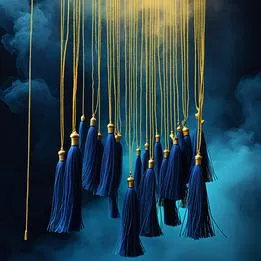
Fringe Dream Meaning
A decorative trim of hanging threads or tassels, often symbolizing transition, individuality, or unfinished aspects of self.
Common Appearances & Contexts
| Context | Emotion | Interpretation |
|---|---|---|
| Wearing fringe | confident | Expressing authentic self |
| Cutting fringe | anxious | Severing connections |
| Tangled fringe | frustrated | Complicated relationships |
| Golden fringe | hopeful | Spiritual awakening |
| Fringe moving | excited | Energy flowing freely |
| Fringe falling off | vulnerable | Losing protection |
| Black fringe | mysterious | Hidden aspects |
| Fringe on others | envious | Desiring freedom |
| Fringe in water | calm | Emotional cleansing |
| Fringe burning | terrified | Rapid transformation |
| Fringe growing | amazed | Personal expansion |
| Fringe on door | curious | Threshold awareness |
Interpretive Themes
Cultural Lenses
Jungian Perspective
View Context →Represents the persona's decorative aspects or shadow elements at consciousness edges. Fringe symbolizes transitional states between conscious and unconscious realms, often appearing during individuation processes.
Freudian Perspective
View Context →Symbolizes pubic hair or sexual maturity, representing repressed desires or exhibitionist tendencies. The movement of fringe suggests sexual energy and the decorative aspect relates to vanity.
Gestalt Perspective
View Context →Represents unfinished aspects of self or incomplete experiences. Each thread symbolizes different parts of personality needing integration for wholeness and completion.
Cognitive Perspective
View Context →Reflects peripheral thoughts or marginal concerns occupying mental space. The brain processes fringe as decorative details while focusing on central issues.
Evolutionary Perspective
View Context →Derived from animal fur or plant fibers used for protection and signaling. Symbolizes social status, mating displays, or territorial boundaries in human evolutionary history.
Global/Universal Perspective
View Context →Cross-cultural symbol of transition, appearing in rituals as boundary markers. From Native American regalia to Middle Eastern textiles, fringe universally represents movement and spiritual connection.
East Asian Perspective
View Context →In traditional Chinese and Japanese garments, fringe represents flowing energy (qi) and connection to natural elements. Often appears in ceremonial costumes as spiritual conduits.
South Asian Perspective
View Context →In Indian culture, fringe on saris and turbans symbolizes protection from evil spirits. Temple decorations feature fringe as divine blessings flowing downward to devotees.
Middle Eastern Perspective
View Context →Bedouin tent fringe marks sacred space boundaries. Prayer shawl fringe (tzitzit) in Judaism represents commandments, while Islamic prayer mats feature fringe as spiritual purification.
European Perspective
View Context →Medieval heraldry used fringe to denote noble status. Victorian mourning attire featured black fringe, while flapper dresses of 1920s symbolized liberation through movement.
African Perspective
View Context →Traditional ceremonial garments feature fringe in initiation rituals, symbolizing transition between life stages. Cowrie shell fringe represents wealth and spiritual protection across many cultures.
North American Perspective
View Context →Native American regalia fringe represents spiritual connections and earned honors. Each strand tells a story, while modern Western fashion adopts fringe for bohemian self-expression.
Interpret Your Full Dream
Beyond this symbol, every dream carries a unique story. Share your dream for a personalized AI-powered interpretation.