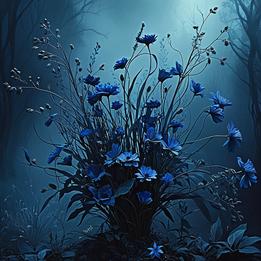
Floral
Represents beauty, growth, and the ephemeral nature of life, often linked to sensory pleasure and natural cycles.
Floral Dream Meaning
Represents beauty, growth, and the ephemeral nature of life, often linked to sensory pleasure and natural cycles.
Interpretive Themes
Mythological Resonance
Persephone
GreekThe flower-gathering maiden whose descent to the underworld represents both the beauty of spring and the necessary cycle of death and rebirth.
Sakura (Cherry Blossoms)
JapaneseThe national symbol of mono no aware - the poignant beauty of impermanence, celebrated even as it falls.
Cultural Lenses
Global/Universal Perspective
View Context →Universally symbolizes beauty, life cycles, and celebration. Used in rituals worldwide for weddings, funerals, and festivals to mark transitions and honor nature's bounty.
Jungian Perspective
View Context →Represents the Self's unfolding, individuation, and the anima's beauty. Flowers symbolize psychic growth and the integration of unconscious contents into conscious awareness.
Freudian Perspective
View Context →Often symbolizes female genitalia, sexuality, and reproductive desires. The blooming flower can represent sexual awakening or repressed erotic fantasies in the unconscious.
Gestalt Perspective
View Context →Seen as a projection of the dreamer's current state. The flower represents aspects of the self needing attention—its condition reflects how one nurtures or neglects personal growth.
Cognitive Perspective
View Context →Processed as a schema for natural beauty and growth. May reflect waking concerns about development, aesthetics, or environmental issues, serving as mental rehearsal.
Evolutionary Perspective
View Context →Rooted in survival advantages: recognizing flowers signaled food sources, medicinal plants, or fertile environments. May trigger innate responses to beauty and resource availability.
East Asian Perspective
View Context →In cultures like Japan and China, specific flowers carry deep meanings (e.g., cherry blossoms for transience, lotus for purity). Used in art and poetry to convey philosophical ideals and seasonal awareness.
South Asian Perspective
View Context →Integral to Hindu and Buddhist rituals; marigolds for worship, lotus for spiritual enlightenment. Flowers symbolize divine beauty, offerings to deities, and the cycle of karma and rebirth.
Middle Eastern Perspective
View Context →Historically valued in Persian poetry for love and mysticism (e.g., rose in Sufism). In modern contexts, flowers maintain ceremonial importance in weddings and express hospitality and respect.
European Perspective
View Context →Rich in folklore: roses for love, lilies for purity. Used historically in heraldry and art, with Victorian flower language assigning specific meanings to convey coded messages.
African Perspective
View Context →Varies by region; often used in rituals for healing, protection, or communication with ancestors. In some cultures, specific flowers symbolize community ties and natural harmony.
North American Perspective
View Context →In Indigenous traditions, flowers like sage or sweetgrass have spiritual uses. Modernly, commercialized in holidays (e.g., roses on Valentine's Day) but also valued in environmental movements.
Historical Authorities
Want a deeper analysis?
Get a personalized interpretation of your entire dream including this symbol.
Interpret My DreamThe Oracle's Prediction
Combine multiple symbolsA new relationship will blossom, bringing beauty but requiring acceptance of natural cycles.
Timeframe
Lunation (~29 Days)
Intensity
Deep
You will experience a moment of profound beauty that awakens spiritual awareness.
Timeframe
Immediate (Next 48h)
Intensity
Deep
Common Appearances & Contexts
| Context | Emotion | Interpretation |
|---|---|---|
| Context Blooming garden | Emotion Joyful | Interpretation Personal growth flourishing. |
| Context Wilting flowers | Emotion Sad | Interpretation Loss or ending. |
| Context Receiving bouquet | Emotion Loved | Interpretation Appreciation or affection. |
| Context Eating flowers | Emotion Curious | Interpretation Exploring new experiences. |
| Context Floral scent | Emotion Calm | Interpretation Sensory comfort present. |
| Context Artificial flowers | Emotion Disappointed | Interpretation Superficial or fake. |
| Context Planting seeds | Emotion Hopeful | Interpretation New beginnings starting. |
| Context Thorny roses | Emotion Cautious | Interpretation Beauty with pain. |
| Context Floral patterns | Emotion Creative | Interpretation Self-expression emerging. |
| Context Overgrown flowers | Emotion Overwhelmed | Interpretation Uncontrolled growth issues. |
| Context Rare orchid | Emotion Awed | Interpretation Unique value recognized. |
| Context Floral tea | Emotion Nurtured | Interpretation Healing or restoration. |
Interpret Your Full Dream
Beyond this symbol, every dream carries a unique story. Share your dream for a personalized AI-powered interpretation.