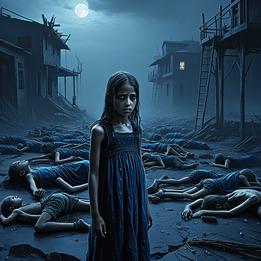
Famine
A profound lack or scarcity, often of food, representing deprivation, survival anxiety, and systemic collapse.
Famine Dream Meaning
A profound lack or scarcity, often of food, representing deprivation, survival anxiety, and systemic collapse.
Interpretive Themes
Cultural Lenses
Global/Universal Perspective
View Context →Across human history, famine represents ultimate survival threat, often seen in apocalyptic visions. Rituals include rain dances and harvest festivals to appease nature. Modernly, it symbolizes climate anxiety and economic precarity.
Jungian Perspective
View Context →Famine symbolizes the Shadow's depletion of psychic energy, a spiritual drought in the collective unconscious. It calls for integrating neglected aspects of self to restore inner fertility and wholeness.
Freudian Perspective
View Context →Represents oral fixation trauma or unmet infantile needs manifesting as anxiety about nourishment. Can symbolize sexual frustration (hunger as libido metaphor) or fear of maternal abandonment (breast as first resource).
Gestalt Perspective
View Context →The dreamer IS the famine—experiencing self-imposed deprivation or rejecting nourishment (literal or emotional). What part of you is starving? What are you refusing to 'feed' in your life?
Cognitive Perspective
View Context →Famine reflects catastrophic thinking patterns about resource management. The brain rehearses worst-case scarcity scenarios, possibly triggered by financial stress or news about climate change/food insecurity.
Evolutionary Perspective
View Context →Ancient adaptive memory of seasonal scarcity encoded in genes. The dream activates survival circuits preparing for resource competition, triggering hoarding behaviors and heightened threat detection.
East Asian Perspective
View Context →In Chinese tradition, famine breaks cosmic harmony between Heaven, Earth, and Humanity. Historically linked to failed Mandate of Heaven. Modernly reflects anxiety about losing 'face' or social standing (social nourishment).
South Asian Perspective
View Context →In Hindu/Buddhist context, famine represents karmic consequence of past actions (especially greed). Rituals include feeding the poor to gain merit. Modern interpretations include spiritual emptiness despite material plenty.
Middle Eastern Perspective
View Context →Abrahamic traditions view famine as divine punishment (Biblical plagues) or test of faith (Job's trials). In Islamic dream interpretation, it may warn against wastefulness. Modernly reflects geopolitical resource anxiety.
European Perspective
View Context →Medieval Europeans saw famine as one of Four Horsemen apocalypse. Celtic myths blame fairy theft of crops. Modern European dreams often connect to economic austerity memories or climate migration fears.
African Perspective
View Context →Many African traditions view famine as disrupted ancestral communication or broken taboos. Rituals involve libations to restore balance. Modern dreams may reflect neocolonial resource extraction anxieties.
North American Perspective
View Context →Indigenous views see famine as nature's response to human disrespect. Colonial history adds trauma of forced scarcity. Modern dreams often reflect consumer culture's paradoxical emptiness amidst abundance.
Want a deeper analysis?
Get a personalized interpretation of your entire dream including this symbol.
Interpret My DreamCommon Appearances & Contexts
| Context | Emotion | Interpretation |
|---|---|---|
| Context Empty pantry | Emotion Panic | Interpretation Immediate resource crisis. |
| Context Barren fields | Emotion Despair | Interpretation Future hopelessness foreseen. |
| Context Starving children | Emotion Guilt | Interpretation Failure to provide. |
| Context Hoarding food | Emotion Anxiety | Interpretation Scarcity mindset dominant. |
| Context Endless drought | Emotion Hopelessness | Interpretation Prolonged deprivation period. |
| Context Food turning ash | Emotion Horror | Interpretation Resources becoming useless. |
| Context Eating but hungry | Emotion Frustration | Interpretation Unmet deeper needs. |
| Context Others feasting | Emotion Envy | Interpretation Perceived inequality hurts. |
| Context Plague of locusts | Emotion Terror | Interpretation External devastation force. |
| Context Government rationing | Emotion Oppression | Interpretation Control through scarcity. |
| Context Cannibalism temptation | Emotion Shame | Interpretation Moral survival conflict. |
| Context Seed won't grow | Emotion Defeat | Interpretation Efforts fruitless, stagnant. |
Interpret Your Full Dream
Beyond this symbol, every dream carries a unique story. Share your dream for a personalized AI-powered interpretation.