Patterns & Nature

Estuary Dream Meaning

A transitional zone where freshwater meets saltwater, symbolizing liminality, transformation, and the merging of different states or identities.

Common Appearances & Contexts

Context Emotion Interpretation
Crossing an estuary Anxiety Fear of transition.
Swimming in estuary Confusion Identity uncertainty.
Observing from shore Curiosity Contemplating change.
Estuary flooding Overwhelm Emotional boundaries breached.
Fishing in estuary Hope Seeking new resources.
Polluted estuary Despair Corrupted potential.
Sunset over estuary Peace Accepting transitions.
Building near estuary Ambition Planning new beginnings.
Estuary drying up Loss Creative depletion.
Boat entering estuary Adventure Embarking on journey.
Child playing in estuary Joy Innocent exploration.
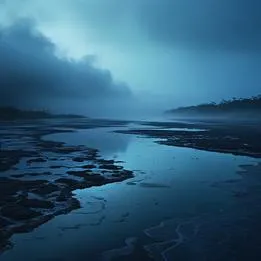
Estuary at night Mystery Unknown possibilities.

Interpretive Themes

Cultural Lenses

Jungian Perspective

View Context →

Represents the meeting point between conscious and unconscious mind, where personal transformation occurs through integration of shadow elements and archetypal energies.

Freudian Perspective

View Context →

Symbolizes sexual union and birth, with freshwater representing semen and saltwater representing amniotic fluid, reflecting primal reproductive anxieties or desires.

Gestalt Perspective

View Context →

Represents unfinished business or unresolved conflicts between different aspects of self that need integration for psychological wholeness and completion.

Cognitive Perspective

View Context →

Reflects mental processing of transitional life events, decision-making at crossroads, or cognitive blending of contradictory information or identities.

Evolutionary Perspective

View Context →

Taps into ancestral memories of resource-rich transitional zones that offered both opportunity and danger, activating survival-based approach-avoidance responses.

East Asian Perspective

View Context →

In Taoist philosophy, represents the harmonious balance of Yin (freshwater) and Yang (saltwater), while in Japanese culture, estuaries symbolize impermanent beauty (mono no aware).

South Asian Perspective

View Context →

In Hindu mythology, river confluences (sangam) are sacred sites for purification rituals; estuaries symbolize the merging of individual soul (atman) with universal consciousness (Brahman).

Middle Eastern Perspective

View Context →

In Mesopotamian traditions, estuaries represented the meeting of Tigris and Euphrates with the sea - symbolic of civilization meeting chaos, order meeting disorder in creation myths.

European Perspective

View Context →

In Celtic traditions, estuaries were liminal spaces between worlds; in Norse mythology, represented the meeting of different realms; historically important for trade and cultural exchange.

African Perspective

View Context →

In West African traditions, estuaries symbolize the meeting of ancestral spirits (freshwater) and ocean deities (saltwater); in Swahili culture, represent cultural and trade convergence points.

Latin American Perspective

View Context →

In Amazonian cultures, river confluences are sacred; in Mesoamerican traditions, estuaries represented the meeting of earthly and underworld waters in creation cosmology.

Modern Western Perspective

View Context →

Metaphor for career transitions, identity fluidity in digital age, multicultural blending, and environmental concerns about climate change impacts on vulnerable ecosystems.

AI-Powered

Interpret Your Full Dream

Beyond this symbol, every dream carries a unique story. Share your dream for a personalized AI-powered interpretation.