Body & Emotions

Ecstasy Dream Meaning

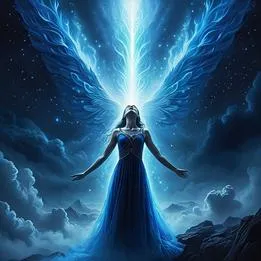
A state of overwhelming joy, rapture, or intense emotional/spiritual transcendence, often involving a loss of self-awareness.

Common Appearances & Contexts

Context Emotion Interpretation
Flying freely Liberation Transcending earthly limits.
Merging with light Awe Divine connection experience.
Musical rapture Euphoria Harmony with universe.
Nature immersion Wonder Oneness with environment.
Loved one reunion Bliss Emotional fulfillment peak.
Artistic creation Inspiration Creative flow state.
Ritual participation Devotion Communal transcendence experience.
Solving puzzle Triumph Intellectual breakthrough joy.
Physical achievement Exhilaration Body-mind unity.
Meditation depth Peace Consciousness expansion.
Near-death experience Acceptance Transitional bliss state.
Childbirth vision Love Creation ecstasy.

Interpretive Themes

Cultural Lenses

Jungian Perspective

View Context →

Ecstasy represents union with the Self, integration of conscious and unconscious, and experience of the numinous. It's a transcendent function connecting personal psyche to collective unconscious archetypes.

Freudian Perspective

View Context →

Ecstasy symbolizes release of repressed libidinal energy, regression to infantile pleasure states, or sublimation of sexual drives into spiritual experiences through displacement mechanisms.

Gestalt Perspective

View Context →

Ecstasy emerges from complete organismic self-regulation, where all parts of experience integrate into harmonious whole. It's the peak of awareness without fragmentation or unfinished business.

Cognitive Perspective

View Context →

Ecstasy results from optimal cognitive flow, where challenge and skill balance perfectly. It involves altered attention, time perception, and self-consciousness suppression through neural reward systems.

Evolutionary Perspective

View Context →

Ecstasy may have evolved as reward mechanism for social bonding, creative problem-solving, or spiritual practices that enhance group cohesion and survival through shared transcendent experiences.

South Asian Perspective

View Context →

In Hindu and Buddhist traditions, ecstasy (samadhi/ananda) is spiritual bliss from meditation, representing union with Brahman or cessation of suffering. Historically sought through yoga, now adapted in mindfulness.

Middle Eastern Perspective

View Context →

In Sufi Islam, ecstasy (wajd) is divine intoxication from dhikr rituals, representing annihilation in God. Historically central to mystical poetry, now exists in moderated spiritual practices.

European Perspective

View Context →

Historically, ecstasy appeared in Christian mysticism as union with God, and Romanticism as sublime nature experience. Modernly, it's secularized into peak experiences and flow states.

African Perspective

View Context →

In many traditions, ecstasy emerges through drumming, dance, and possession rituals connecting to ancestors. It serves communal healing and spiritual communication, preserved in diaspora practices.

East Asian Perspective

View Context →

In Daoism and Zen Buddhism, ecstasy arises from wu-wei (non-action) and satori (sudden enlightenment), representing harmony with Dao. Historically cultivated through meditation, now influences wellness.

Latin American Perspective

View Context →

Ecstasy appears in shamanic traditions using ayahuasca, representing communication with spirits. It blends indigenous, African, and Catholic elements in rituals for healing and vision-seeking.

Modern Western Perspective

View Context →

Ecstasy is often medicalized or commodified, associated with MDMA therapy, rave culture, or self-help peak performance. It represents both therapeutic potential and consumerist transcendence.

AI-Powered

Interpret Your Full Dream

Beyond this symbol, every dream carries a unique story. Share your dream for a personalized AI-powered interpretation.