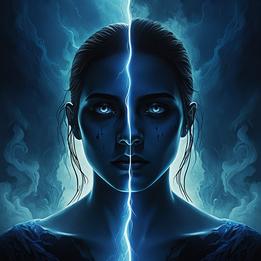
Doppelganger
A spiritual double or mirror self, often seen as an omen of transformation, death, or confronting hidden aspects of identity.
Doppelganger Dream Meaning
A spiritual double or mirror self, often seen as an omen of transformation, death, or confronting hidden aspects of identity.
Interpretive Themes
Cultural Lenses
Jungian Perspective
View Context →Represents the shadow archetype—unconscious aspects of personality requiring integration for individuation. Historically linked to alchemical doubles; modernly signifies personal growth through confronting denied traits.
Freudian Perspective
View Context →Manifestation of repressed desires or split ego, often relating to childhood trauma or unconscious conflicts. Historically seen in doppelgänger literature; modernly indicates psychological fragmentation.
Gestalt Perspective
View Context →Projection of disowned self-parts needing reclamation. Historically from phenomenological theory; modernly used in therapy to explore polarities and achieve wholeness through dialogue.
Cognitive Perspective
View Context →Result of memory encoding errors or self-recognition glitches in the brain. Historically explained via neuroscience; modernly linked to conditions like Capgras syndrome or dream cognition studies.
Evolutionary Perspective
View Context →Adaptive mechanism for threat detection or social self-modeling. Historically tied to survival instincts; modernly explains why humans fear doubles as potential imposters or competitors.
European Perspective
View Context →Traditional folklore omen of death or misfortune, like German 'Doppelgänger'. Historically feared in Gothic literature; modernly appears in horror genres as evil twin trope.
East Asian Perspective
View Context →Often seen as a spirit double or 'kage' in Japanese culture, indicating life-force imbalance. Historically linked to Shinto beliefs; modernly appears in anime as alter-egos.
South Asian Perspective
View Context →Related to concepts of 'dvi-ja' (twice-born) in Hinduism, symbolizing spiritual rebirth. Historically in epic narratives; modernly represents karmic mirrors or past-life connections.
Middle Eastern Perspective
View Context →In Islamic tradition, sometimes viewed as 'qarin'—a spiritual companion or temptor. Historically in Sufi poetry; modernly signifies moral duality tests.
African Perspective
View Context →In some traditions, a 'spirit double' from the ancestor realm. Historically in oral myths; modernly represents ancestral guidance or lineage connections.
Latin American Perspective
View Context →Linked to 'nahual' shapeshifter concepts in Mesoamerican cultures. Historically in Aztec/Mayan lore; modernly appears in magical realism as identity fluidity.
Modern Western Perspective
View Context →Pop culture symbol for identity exploration, from sci-fi clones to social media personas. Historically from 19th-century literature; modernly reflects digital self-duplication anxieties.
Want a deeper analysis?
Get a personalized interpretation of your entire dream including this symbol.
Interpret My DreamCommon Appearances & Contexts
| Context | Emotion | Interpretation |
|---|---|---|
| Context Chasing you | Emotion Terror | Interpretation Unconscious pursuit. |
| Context Talking to you | Emotion Curiosity | Interpretation Hidden wisdom. |
| Context Replacing you | Emotion Panic | Interpretation Identity theft fear. |
| Context Helping you | Emotion Relief | Interpretation Self-assistance. |
| Context Dying before you | Emotion Grief | Interpretation Ego death. |
| Context Leading you | Emotion Trust | Interpretation Guiding intuition. |
| Context Fighting you | Emotion Anger | Interpretation Internal conflict. |
| Context Ignoring you | Emotion Loneliness | Interpretation Self-alienation. |
| Context Merging with you | Emotion Euphoria | Interpretation Wholeness achieved. |
| Context Watching you sleep | Emotion Vulnerability | Interpretation Soul observation. |
| Context Warning you | Emotion Anxiety | Interpretation Premonition signal. |
| Context Laughing at you | Emotion Shame | Interpretation Mocking inner critic. |
Interpret Your Full Dream
Beyond this symbol, every dream carries a unique story. Share your dream for a personalized AI-powered interpretation.