Body & Emotions

Disoriented Dream Meaning

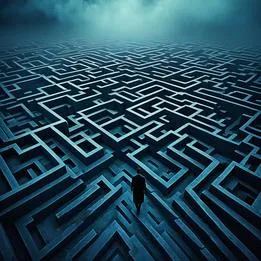
A state of confusion about one's location, identity, or purpose, often signaling a loss of direction or clarity in life.

Common Appearances & Contexts

Context Emotion Interpretation
Lost in city Panic Life direction unclear
Floating in space Detachment Emotional groundlessness
Mirror reflection unclear Confusion Identity fragmentation
Time moving backward Anxiety Regression fears
Familiar place changed Shock Security disrupted
Body parts unfamiliar Alienation Self-estrangement
Language incomprehensible Frustration Communication breakdown
Floating in water Vulnerability Emotional instability
Maze without exit Despair Life trapped
Ground shifting Fear Foundation unstable
Faces blurred Isolation Social disconnection
Falling endlessly Terror Control lost

Interpretive Themes

Cultural Lenses

Jungian Perspective

View Context →

Indicates ego dissolution before individuation; the conscious mind loses orientation as unconscious contents emerge. Historically seen in initiation rituals where disorientation precedes spiritual rebirth.

Freudian Perspective

View Context →

Represents repressed childhood memories surfacing, particularly Oedipal conflicts or early trauma. The mind's defense mechanisms create confusion to avoid confronting unacceptable desires.

Gestalt Perspective

View Context →

Shows unfinished business or conflicting parts of self. The disorientation reflects internal polarities not yet integrated, requiring awareness of contradictory needs or beliefs.

Cognitive Perspective

View Context →

Manifests from information processing overload or schema disruption. The brain struggles to organize perceptions when waking life presents contradictory data or rapid change.

Evolutionary Perspective

View Context →

Ancient survival mechanism activating when environmental cues conflict. Historically warned of predator proximity or territory danger; now triggers during social or career uncertainty.

East Asian Perspective

View Context →

In Taoist/Buddhist traditions, represents losing the Way (Dao). Historically seen as necessary emptiness before enlightenment; modernly reflects societal pressure to conform versus self-cultivation.

South Asian Perspective

View Context →

In Hindu philosophy, indicates maya (illusion) obscuring reality. Historically part of spiritual practice to transcend ego; modernly reflects cultural dislocation in globalized world.

Middle Eastern Perspective

View Context →

In Islamic mysticism, signifies fana (annihilation) before divine union. Historically valued in Sufi rituals; modernly reflects political instability and identity crises in changing societies.

European Perspective

View Context →

In Celtic traditions, represents being in a 'thin place' between worlds. Historically associated with fairy abduction folklore; modernly reflects existential questioning in secular societies.

African Perspective

View Context →

In many traditions, indicates ancestral calling or spirit possession onset. Historically part of initiation rites; modernly reflects cultural preservation struggles amid globalization.

North American Perspective

View Context →

In Indigenous traditions, represents vision quest disorientation before guidance. Historically ritualized for spiritual growth; modernly reflects identity negotiation in multicultural contexts.

Latin American Perspective

View Context →

In Mesoamerican traditions, signals nahual (animal spirit) emergence. Historically part of shamanic journeys; modernly reflects hybrid identity tensions in post-colonial societies.

AI-Powered

Interpret Your Full Dream

Beyond this symbol, every dream carries a unique story. Share your dream for a personalized AI-powered interpretation.