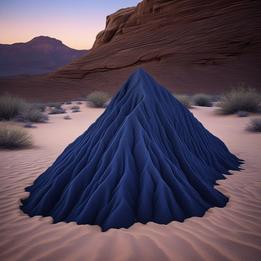
Desert
A desert in dreams often represents feelings of isolation, barrenness, or a journey through challenging emotional landscapes.
Desert Dream Meaning
A desert in dreams often represents feelings of isolation, barrenness, or a journey through challenging emotional landscapes.
Interpretive Themes
Mythological Resonance
The Forty-Year Wanderings of t
The Forty-Year Wanderings of the Israelites in Exodus
Cultural Lenses
Jungian Perspective
View Context →The desert symbolizes a void that can lead to self-discovery. Therapeutic exploration of personal narratives. The desert journey often leads to clarity.
Jungian Perspective
View Context →In Jungian psychology, the desert represents the unconscious mind, a place where repressed thoughts and emotions come to the surface during introspection.
North American Perspective
View Context →For many Native American cultures, the desert is a sacred space for vision quests, emphasizing the importance of solitude in achieving spiritual clarity.
European Perspective
View Context →In Christianity, the desert is often associated with trials and temptation, as seen in the story of Jesus' time spent in the desert.
Middle Eastern Perspective
View Context →The desert landscape in Islamic tradition can symbolize a spiritual journey and contemplation, reflecting connection to the divine.
Middle Eastern Perspective
View Context →The desert represents both danger and rebirth, as it is intertwined with the journey to the afterlife, filled with trials that ensure spiritual transformation.
South Asian Perspective
View Context →In Hindu thought, the desert can represent detachment from material pursuits, reflecting a journey toward moksha or spiritual liberation.
African Perspective
View Context →In many African traditions, deserts are seen as places of trials where individuals confront their fears and seek wisdom.
Latin American Perspective
View Context →Deserts are often viewed as areas where divination takes place, representing a connection to the earth and ancestral spirits.
European Perspective
View Context →For the ancient Greeks, the desert can represent exile or a journey of self-discovery, mirroring the epic quests found in their mythology.
Middle Eastern Perspective
View Context →In Sufism, the desert represents the lonely path of the seeker, where spiritual understanding is born from solitude.
Oceanian Perspective
View Context →For Aboriginal cultures, the desert is rich with stories and spirituality, serving as a reminder of connection to Country and tradition.
Historical Authorities
Want a deeper analysis?
Get a personalized interpretation of your entire dream including this symbol.
Interpret My DreamThe Oracle's Prediction
Combine multiple symbolsA profound period of self-discovery emerges from solitude.
Timeframe
Seasonal (~3 Months)
Intensity
Deep
Emotional dryness or disconnection may surface.
Timeframe
Immediate (Next 48h)
Intensity
Deep
Common Appearances & Contexts
| Context | Emotion | Interpretation |
|---|---|---|
| Context Wandering alone in a desert | Emotion Loneliness | Interpretation Indicates a search for purpose or connection. |
| Context Finding an oasis | Emotion Hope | Interpretation Represents unexpected sources of support during hardships. |
| Context Struggling to cross sand dunes | Emotion Exhaustion | Interpretation Shows the challenges one may face but also the path to growth. |
Interpret Your Full Dream
Beyond this symbol, every dream carries a unique story. Share your dream for a personalized AI-powered interpretation.