Culinary Ritual
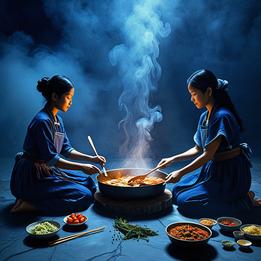
Culinary rituals are symbolic acts of preparation and consumption that embody cultural beliefs, identities, and shared values.
Culinary Ritual Dream Meaning
Culinary rituals are symbolic acts of preparation and consumption that embody cultural beliefs, identities, and shared values.
Interpretive Themes
Adaptability
highFood practices vary widely and serve as a reflection of cultural diversity.
Spiritual Significance
highFood is seen as an offering or connection to a higher power.
Childhood Innocence
mediumRecipes and cooking methods passed down through generations strengthen bonds.
Mindfulness and Presence
mediumThoughtfulness enhances appreciation for the process and the final meal.
Celebration
highRituals often align with seasonal changes, reflecting the earth's cycles.
Mythological Resonance
Demeter and Persephone
GreekThe eating of pomegranate seeds creates the seasonal cycle, where food becomes the contract between life and death, binding the goddess to the underworld.
Annapurna
HinduThe goddess of nourishment who feeds all beings, embodying the sacred act of cooking as divine service and spiritual sustenance.
Cultural Lenses
East Asian Perspective
View Context →Food is often part of spiritual offerings during worship and significant rituals. Integral to festivals and puja (prayer rituals). [South Asian] [Hindu] Culinary rituals are seen as a pathway to enlightenment.
East Asian Perspective
View Context →Culinary practices embody respect for nature and seasonal changes. Involves meticulous preparation and presentation during festivals and family gatherings. [Japanese] The practice of 'omotenashi' reflects hospitality and care in food preparation.
African Perspective
View Context →Culinary rituals often celebrate communal gathering and ancestral connections. Feasting during harvests, marriages, and community events. Food preparation involves many family members, preserving traditional practices.
Historical Authorities
Want a deeper analysis?
Get a personalized interpretation of your entire dream including this symbol.
Interpret My DreamThe Oracle's Prediction
Combine multiple symbolsA reconnection with family or cultural roots will bring emotional nourishment.
Timeframe
Seasonal (~3 Months)
Intensity
Deep
A ritual of mindfulness will reveal hidden patterns in your daily life.
Timeframe
Lunation (~29 Days)
Intensity
Deep
Common Appearances & Contexts
| Context | Emotion | Interpretation |
|---|---|---|
| Context Engaging in a cooking ritual alone | Emotion Contemplation | Interpretation Indicates a need for introspection and connection to one's roots. |
| Context Gathering with family for a traditional meal preparation | Emotion Connection | Interpretation Represents unity and shared history among family members. |
| Context Witnessing a sacred cooking ceremony | Emotion Reverence | Interpretation Signifies respect for cultural practices and heritage. |
| Context Using ancient techniques in cooking | Emotion Pride | Interpretation Reflects a sense of accomplishment and honoring traditions. |
| Context Cooking as an act of gratitude | Emotion Satisfaction | Interpretation Demonstrates appreciation for life’s many gifts. |
| Context Preparing food under the moonlight | Emotion Mystique | Interpretation Highlights the spiritual aspects and deeper connections with nature. |
| Context Breaking bread with strangers in ritual | Emotion Trust | Interpretation Indicates openness to new relationships and shared humanity. |
| Context Performing ancestral cooking techniques | Emotion Nostalgia | Interpretation Emphasizes longing for the past and ancestral ties. |
| Context Creating a dish that honors a loved one | Emotion Melancholy | Interpretation Represents healing through memory and celebration of the person's life. |
| Context Cooking with seasonal ingredients | Emotion Harmony | Interpretation Shows alignment with nature and life's cyclical patterns. |
| Context Seeking advice from an elder about cooking rituals | Emotion Respect | Interpretation Signifies the value of wisdom passed down through generations. |
| Context Using spices to enhance a ritual dish | Emotion Excitement | Interpretation Symbolizes a zest for life and creativity in food preparation. |
| Context Struggling to complete a cooking ritual | Emotion Frustration | Interpretation May signify blockages in personal or spiritual endeavors. |
| Context Sharing food that was part of a culinary ritual | Emotion Joy | Interpretation Represents the fulfillment found in shared experiences and community. |
| Context Incorporating personal touches into a traditional recipe | Emotion Innovation | Interpretation Represents the merging of tradition with personal expression. |
Interpret Your Full Dream
Beyond this symbol, every dream carries a unique story. Share your dream for a personalized AI-powered interpretation.