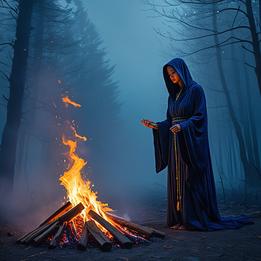
Cremation
A ritual of transformation through fire, representing release, purification, and the transition from physical to spiritual existence.
Cremation Dream Meaning
A ritual of transformation through fire, representing release, purification, and the transition from physical to spiritual existence.
Interpretive Themes
Cultural Lenses
Global/Universal Perspective
View Context →Cross-cultural death ritual using fire for purification and transition, appearing in ancient and modern societies as method for releasing spirit from physical form.
Jungian Perspective
View Context →Symbol of individuation process where ego structures are burned away to reveal true Self; alchemical transformation through fire leading to psychological rebirth.
Freudian Perspective
View Context →Manifestation of death drive (Thanatos) and transformation of libidinal energy; may represent repressed desires for destruction or purification of unacceptable impulses.
Gestalt Perspective
View Context →Projection of unfinished business with endings or transformations; represents parts of self needing release or aspects of life requiring complete closure.
Cognitive Perspective
View Context →Mental schema for processing endings and transitions; brain's metaphorical representation of irreversible change and memory consolidation during significant life shifts.
Evolutionary Perspective
View Context →Ancient adaptation for processing mortality and group cohesion; ritualized response to death that reduces disease risk while reinforcing social bonds through shared ceremony.
South Asian Perspective
View Context →Hindu ritual (antyeshti) releasing soul from body for reincarnation; sacred fire (Agni) carries essence to ancestors, with ashes scattered in holy rivers for purification.
East Asian Perspective
View Context →Buddhist-influenced practice emphasizing impermanence (anicca); in Japan, kotsu (bones) are ceremonially collected after cremation, representing transition between worlds.
European Perspective
View Context →Historically varied from Viking ship burnings to Christian restrictions; modern acceptance grew with urbanization, now seen as practical and ecological choice across continent.
Middle Eastern Perspective
View Context →Generally avoided in Abrahamic traditions favoring burial; Zoroastrian 'Tower of Silence' exposes bodies but avoids fire pollution; modern Muslim societies largely prohibit cremation.
North American Perspective
View Context →Increasing preference over burial since 1960s, now exceeding 50% rate; represents practical choice, environmental concern, and changing attitudes toward body disposition.
Modern Western Perspective
View Context →Choice reflecting individualism, environmental consciousness, and cost considerations; memorialization shifts from graves to ashes in jewelry, art, or digital memorials.
Want a deeper analysis?
Get a personalized interpretation of your entire dream including this symbol.
Interpret My DreamCommon Appearances & Contexts
| Context | Emotion | Interpretation |
|---|---|---|
| Context Attending ceremony | Emotion Grief | Interpretation Processing loss directly. |
| Context Watching flames | Emotion Awe | Interpretation Witnessing transformation power. |
| Context Handling ashes | Emotion Contemplation | Interpretation Connecting with essence. |
| Context Smelling smoke | Emotion Nostalgia | Interpretation Memory triggered by scent. |
| Context Building pyre | Emotion Purpose | Interpretation Ritual preparation significance. |
| Context Scattering remains | Emotion Liberation | Interpretation Final release action. |
| Context Avoiding ceremony | Emotion Fear | Interpretation Resistance to transformation. |
| Context Multiple cremations | Emotion Overwhelm | Interpretation Multiple endings occurring. |
| Context Self-cremation | Emotion Transcendence | Interpretation Ego dissolution process. |
| Context Ancient cremation | Emotion Reverence | Interpretation Connecting to traditions. |
| Context Accidental fire | Emotion Panic | Interpretation Uncontrolled transformation fear. |
| Context Preserving ashes | Emotion Attachment | Interpretation Holding onto past. |
Interpret Your Full Dream
Beyond this symbol, every dream carries a unique story. Share your dream for a personalized AI-powered interpretation.