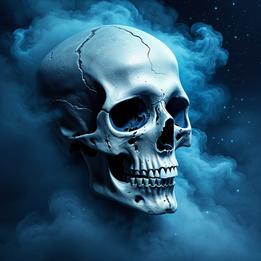
Cranium
The skull or head, representing intellect, identity, consciousness, and mortality.
Cranium Dream Meaning
The skull or head, representing intellect, identity, consciousness, and mortality.
Interpretive Themes
Cultural Lenses
Jungian Perspective
View Context →Represents the seat of consciousness and the Self. The cranium houses the psyche; dreams may indicate individuation processes or archetypal wisdom emerging from the collective unconscious.
Freudian Perspective
View Context →Often symbolizes the father or authority figures (phallic symbolism). May represent intellectual repression or unconscious thoughts struggling to surface from the id.
Gestalt Perspective
View Context →The dreamer's own mind projected. Every aspect of the cranium represents a part of the self—asking what function this 'head' serves in the dreamer's current life situation.
Cognitive Perspective
View Context →Reflects waking concerns about mental processes, problem-solving, or memory. The brain's attempt to process information, often related to learning, decision-making, or cognitive load.
Evolutionary Perspective
View Context →Rooted in survival mechanisms—protection of vital organ. May signal threat detection, social cognition concerns, or adaptive responses to environmental challenges requiring mental acuity.
Global/Universal Perspective
View Context →Cross-culturally, the head houses life essence and identity. From ancient trepanation to modern neuroscience, it remains the locus of self, thought, and spiritual connection.
East Asian Perspective
View Context →In Chinese tradition, the head contains shen (spirit). A dream cranium may indicate balance of yin-yang energies in thought or ancestral wisdom needing acknowledgment.
South Asian Perspective
View Context →In Hindu/Buddhist contexts, the cranium may represent the seat of consciousness (chitta) or the impermanent self (anatman). Sometimes associated with kapala rituals and transcendence.
Middle Eastern Perspective
View Context →In Islamic dream interpretation, the head often signifies leadership, honor, or one's religion. A healthy cranium suggests strong faith; damaged may indicate spiritual weakness.
European Perspective
View Context →Historically linked to phrenology and rationalism. In folklore, skulls appear as memento mori. Modern views blend scientific brain function with existential identity questions.
African Perspective
View Context →In many traditions, the head holds personal destiny and connection to ancestors. Cranium dreams may relate to wisdom transmission, community leadership, or spiritual guidance.
Modern Western Perspective
View Context →Often reflects anxiety about intelligence, mental health, or self-image in competitive societies. May symbolize information overload, identity crises, or mindfulness practices.
Want a deeper analysis?
Get a personalized interpretation of your entire dream including this symbol.
Interpret My DreamCommon Appearances & Contexts
| Context | Emotion | Interpretation |
|---|---|---|
| Context Cracking cranium | Emotion Fear | Interpretation Mental breakdown threat. |
| Context Shining cranium | Emotion Pride | Interpretation Intellectual achievement. |
| Context Empty cranium | Emotion Despair | Interpretation Loss of self. |
| Context Multiple craniums | Emotion Confusion | Interpretation Identity fragmentation. |
| Context Cranium opening | Emotion Awe | Interpretation Revelation or insight. |
| Context Cranium shrinking | Emotion Shame | Interpretation Intellectual inadequacy. |
| Context Cranium expanding | Emotion Wonder | Interpretation Mind growth. |
| Context Cranium as vessel | Emotion Curiosity | Interpretation Container for ideas. |
| Context Cranium floating | Emotion Detachment | Interpretation Disconnected thoughts. |
| Context Cranium heavy | Emotion Burdened | Interpretation Mental overload. |
| Context Cranium transparent | Emotion Vulnerability | Interpretation Exposed thoughts. |
| Context Cranium fortified | Emotion Security | Interpretation Mental defense. |
Interpret Your Full Dream
Beyond this symbol, every dream carries a unique story. Share your dream for a personalized AI-powered interpretation.