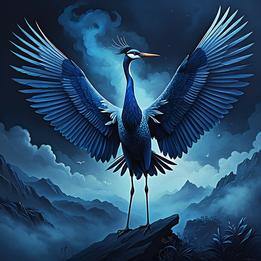
Crane Dance
A graceful, patterned movement symbolizing harmony, longevity, and spiritual elevation through disciplined, synchronized motion.
Crane Dance Dream Meaning
A graceful, patterned movement symbolizing harmony, longevity, and spiritual elevation through disciplined, synchronized motion.
Interpretive Themes
Spiritual Ascension
highLinked to crane's flight and dance height.
Harmonious Union
highSynchronized movement implies unity.
Cyclical Renewal
mediumSeasonal or ritual repetition.
Disciplined Expression
mediumPatterned, intentional movement.
Celebratory Transition
lowOften in ceremonies or festivals.
Mythological Resonance
The Dance of the Cranes
GreekTheseus and the Athenian youths performed a crane dance after escaping the Labyrinth, their synchronized movements mimicking the birds' migratory patterns and celebrating their deliverance.
Tsuru no Mai
JapaneseSacred Shinto dance performed by miko (shrine maidens) imitating crane movements to invoke longevity, peace, and divine blessings.
Cultural Lenses
Jungian Perspective
View Context →Archetypal symbol of the Self's integration, representing the individuation process through graceful, patterned movement that balances conscious and unconscious elements in the psyche.
Freudian Perspective
View Context →Sublimated expression of libidinal energy, where the rhythmic, elongated movements symbolize repressed sexual desires transformed into socially acceptable artistic or ritual performance.
Gestalt Perspective
View Context →Holistic expression of the dreamer's current existential state, where the dance's flow, interruptions, or patterns represent unfinished business or the integration of fragmented aspects of self.
Cognitive Perspective
View Context →Mental rehearsal of social coordination or problem-solving, where the patterned movements reflect neural processes organizing complex information, memory consolidation, or adaptive behavioral schemas.
Evolutionary Perspective
View Context →Adaptive behavior rooted in mating displays, social bonding, or territorial rituals, where synchronized movement enhances group cohesion, reproductive success, or survival signaling in ancestral environments.
East Asian Perspective
View Context →Deeply symbolic in Chinese, Japanese, and Korean traditions, representing longevity, marital harmony, and spiritual purity; historically part of court rituals and folk festivals, now seen in cultural performances and environmental symbolism.
South Asian Perspective
View Context →In Hindu and Buddhist contexts, symbolizes divine grace, cosmic order (rita), and the dance of creation (as in Nataraja); associated with deities like Saraswati and rituals celebrating life transitions.
Middle Eastern Perspective
View Context →In Persian and Sufi traditions, represents mystical union with the divine (whirling dervishes), poetic elegance, and the soul's ascent; historically linked to courtly arts and spiritual ecstasy in ritual practices.
European Perspective
View Context →In Celtic and Mediterranean folklore, cranes symbolize vigilance, wisdom, and seasonal migration; dances appear in folk traditions as omens or celebratory rites, now reinterpreted in ecological and artistic movements.
African Perspective
View Context →In various West and East African cultures, crane dances embody ancestral communication, community unity, and rites of passage; used in masquerades and ceremonies to honor elders and natural cycles.
North American Perspective
View Context →Among Indigenous peoples like the Hopi or Plains tribes, crane dances are part of seasonal ceremonies, healing rituals, and storytelling, symbolizing balance, migration, and connection to the natural world.
Latin American Perspective
View Context →In Mesoamerican and Andean traditions, linked to celestial cycles, rain dances, and agricultural fertility; modern interpretations blend indigenous symbolism with contemporary dance forms in cultural festivals.
Historical Authorities
Want a deeper analysis?
Get a personalized interpretation of your entire dream including this symbol.
Interpret My DreamThe Oracle's Prediction
Combine multiple symbolsHarmonious partnership or synchronized teamwork.
Timeframe
Immediate (Next 48h)
Intensity
Deep
Improved physical grace and longevity through disciplined practice.
Timeframe
Seasonal (~3 Months)
Intensity
Deep
Common Appearances & Contexts
| Context | Emotion | Interpretation |
|---|---|---|
| Context Watching performance | Emotion Awe | Interpretation Observing higher harmony. |
| Context Participating in dance | Emotion Joy | Interpretation Personal spiritual alignment. |
| Context Leading the dance | Emotion Pride | Interpretation Guiding collective rhythm. |
| Context Dance disrupted | Emotion Anxiety | Interpretation Harmony threatened. |
| Context Teaching the dance | Emotion Fulfillment | Interpretation Passing on tradition. |
| Context Dance at dawn | Emotion Hope | Interpretation New beginnings symbolized. |
| Context Dance in water | Emotion Calm | Interpretation Emotional fluidity. |
| Context Dance with partner | Emotion Connection | Interpretation Relational harmony. |
| Context Dance alone | Emotion Peace | Interpretation Inner balance achieved. |
| Context Dance in storm | Emotion Resilience | Interpretation Grace under pressure. |
| Context Dance ends abruptly | Emotion Loss | Interpretation Disrupted cycles. |
| Context Dance transforms shape | Emotion Wonder | Interpretation Evolutionary adaptation. |
Interpret Your Full Dream
Beyond this symbol, every dream carries a unique story. Share your dream for a personalized AI-powered interpretation.