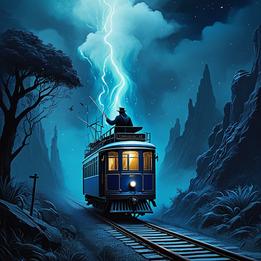
Conveyance
Symbolizes movement through life's journey, representing transitions, progress, and the means by which we navigate our path.
Conveyance Dream Meaning
Symbolizes movement through life's journey, representing transitions, progress, and the means by which we navigate our path.
Interpretive Themes
Life Transition
highOften appears during major changes.
Personal Agency
mediumDriver vs passenger distinctions matter.
Progress Assessment
highSpeed and destination reveal priorities.
Unconscious Journey
mediumSymbolizes inner transformation processes.
Social Connection
lowGroup travel indicates relationships.
Cultural Lenses
Jungian Perspective
View Context →Represents the individuation process—the vehicle as the psyche moving toward wholeness. Historical chariots symbolized solar consciousness; modern cars reflect ego's journey through collective unconscious landscapes.
Freudian Perspective
View Context →Symbolizes sexual energy and libidinal drives—the vehicle as phallic symbol representing masculine energy and motion. The act of conveyance represents wish fulfillment of movement toward desired objects.
Gestalt Perspective
View Context →The conveyance represents the self in motion—every aspect (steering, speed, passengers) reflects different parts of personality. The journey shows how these parts interact in life situations.
Cognitive Perspective
View Context →Represents mental schemas about progress and movement—the brain processes life transitions through transportation metaphors. Modern context includes digital 'movement' through information spaces.
Evolutionary Perspective
View Context →Rooted in migration and territory expansion instincts—conveyance dreams activate ancient neural pathways for navigation and resource seeking. Modern vehicles trigger these primal movement imperatives.
East Asian Perspective
View Context →In Chinese tradition, vehicles symbolize career advancement and social mobility—historical palanquins indicated status; modern cars reflect economic journey. Feng shui considers vehicle placement for life flow.
South Asian Perspective
View Context →In Hindu symbolism, the chariot represents the body carrying the soul—Bhagavad Gita's chariot metaphor for self-mastery. Ratha yatra festivals show divine journey through community spaces.
Middle Eastern Perspective
View Context →Camel caravans historically symbolized trade and pilgrimage journeys—modern dreams incorporate desert crossings as spiritual tests. Islamic tradition values safe travel as divine blessing.
European Perspective
View Context →Medieval pilgrimage vehicles represented spiritual quests—coaches indicated class mobility. Romantic era carriages symbolized courtship journeys; modern trains reflect industrial progress narratives.
African Perspective
View Context →Dugout canoes represent ancestral river journeys—masked procession vehicles carry spirit messages. Modern matatus (shared vans) symbolize community movement through urban transitions.
North American Perspective
View Context →Covered wagons embodied westward expansion mythology—automobiles represent freedom and individualism. Road trip culture reflects search for identity across vast landscapes.
Latin American Perspective
View Context →Day of the Dead processions carry souls—modern buses connect rural/urban divides. Magical realism treats vehicles as portals between ordinary and spiritual realms.
Want a deeper analysis?
Get a personalized interpretation of your entire dream including this symbol.
Interpret My DreamCommon Appearances & Contexts
| Context | Emotion | Interpretation |
|---|---|---|
| Context Driving smoothly | Emotion Confident | Interpretation Life control mastery |
| Context Lost in transit | Emotion Anxious | Interpretation Direction uncertainty |
| Context Broken vehicle | Emotion Frustrated | Interpretation Progress blocked |
| Context Fast movement | Emotion Exhilarated | Interpretation Rapid advancement |
| Context Passenger role | Emotion Vulnerable | Interpretation Lacking control |
| Context Missed connection | Emotion Regretful | Interpretation Lost opportunity |
| Context New vehicle | Emotion Hopeful | Interpretation Fresh start |
| Context Crowded transport | Emotion Overwhelmed | Interpretation Social pressure |
| Context Flying conveyance | Emotion Liberated | Interpretation Transcending limits |
| Context Ancient transport | Emotion Nostalgic | Interpretation Past connection |
| Context Water vehicle | Emotion Fluid | Interpretation Emotional journey |
| Context Stuck in traffic | Emotion Impatient | Interpretation Progress stalled |
Interpret Your Full Dream
Beyond this symbol, every dream carries a unique story. Share your dream for a personalized AI-powered interpretation.