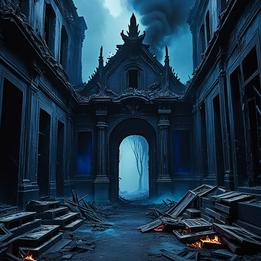
Charred
Food or matter burned beyond recognition, often signifying destruction, purification, or irreversible change.
Charred Dream Meaning
Food or matter burned beyond recognition, often signifying destruction, purification, or irreversible change.
Interpretive Themes
Mythological Resonance
Phoenix (Bennu)
EgyptianThe sacred firebird consumed itself in flames every 500 years, rising renewed from its own charred ashes with the dawn.
Heracles' Burning
GreekHeracles built his own funeral pyre and was consumed by flames, his mortal parts charred away so he could ascend to Olympus as a god.
Cultural Lenses
Jungian Perspective
View Context →Symbolizes the destructive aspect of the Shadow or the alchemical process of calcinatio—burning away the ego's impurities to reveal the essential Self. May represent necessary psychic destruction for rebirth.
Freudian Perspective
View Context →Often relates to repressed desires turned destructive, or anxiety about castration/punishment. Charred objects may symbolize forbidden wishes that have been 'burned' by the superego, leaving guilt or shame.
Gestalt Perspective
View Context →Represents a part of the self that feels 'burned out,' destroyed, or rendered unusable. The dreamer is asked to identify with the charred object—'I am the charred thing'—to explore feelings of worthlessness or transformation.
Cognitive Perspective
View Context →May reflect cognitive schemas related to failure, irreversible mistakes, or catastrophic thinking. The brain processes memories of loss or fear through the metaphor of burning, indicating high emotional arousal.
Evolutionary Perspective
View Context →Taps into primal fear of fire, a survival threat. Charred food signals poison/inedibility, triggering disgust to avoid illness. Charred landscapes signal habitat loss, activating anxiety about resources and safety.
Global/Universal Perspective
View Context →Commonly signifies irreversible loss, the aftermath of disaster, or a warning. Fire is a universal tool and threat, making 'charred' a cross-cultural symbol of destruction and, sometimes, purification rituals.
East Asian Perspective
View Context →In traditions like Buddhism, charring can symbolize impermanence (anicca) and the destruction of attachment. In Chinese culture, burning paper offerings (Joss paper) is ritualistic, where charring signifies delivery to the spirit world.
South Asian Perspective
View Context →In Hindu rituals, fire (Agni) purifies; charred remains (vibhuti) are sacred ash. A charred object in dreams may signal the end of a karma cycle or a destructive phase necessary for spiritual cleansing.
Middle Eastern Perspective
View Context →Historically, charred cities symbolize conquest and divine wrath (e.g., Sodom). In modern context, it may reflect trauma from conflict. In Islamic tradition, hellfire (Jahannam) is a vivid metaphor for spiritual punishment.
European Perspective
View Context →Draws from historical events like witch-burnings or wartime bombing, symbolizing persecution and collective trauma. In folklore, charred remains might be seen as cursed or as protection against evil (e.g., burnt offerings).
African Perspective
View Context →In many traditions, fire is used in rituals for cleansing and communication with ancestors. Charred objects can signify a message received or a sacrifice accepted, but also warn of drought or ecological imbalance.
North American Perspective
View Context →For Indigenous cultures, controlled burns renew land; charring can symbolize cyclical renewal. In modern settler context, it often relates to wildfires, industrial accidents, or personal burnout in a high-pressure society.
Historical Authorities
Want a deeper analysis?
Get a personalized interpretation of your entire dream including this symbol.
Interpret My DreamThe Oracle's Prediction
Combine multiple symbolsA painful ending will birth profound transformation.
Timeframe
Seasonal (~3 Months)
Intensity
Deep
Something valuable risks being destroyed beyond recovery.
Timeframe
Immediate (Next 48h)
Intensity
Deep
Common Appearances & Contexts
| Context | Emotion | Interpretation |
|---|---|---|
| Context Charred food | Emotion Disgust | Interpretation Nourishment turned toxic. |
| Context Charred landscape | Emotion Despair | Interpretation Environmental devastation felt. |
| Context Charred documents | Emotion Panic | Interpretation Lost knowledge or evidence. |
| Context Charred clothing | Emotion Vulnerability | Interpretation Protection destroyed. |
| Context Charred building | Emotion Loss | Interpretation Home or safety gone. |
| Context Charred body part | Emotion Horror | Interpretation Self-damage or illness. |
| Context Charred offering | Emotion Guilt | Interpretation Sacrifice rejected. |
| Context Charred artwork | Emotion Grief | Interpretation Creativity destroyed. |
| Context Charred money | Emotion Anxiety | Interpretation Financial ruin feared. |
| Context Charred vehicle | Emotion Helplessness | Interpretation Mobility or freedom lost. |
| Context Charred garden | Emotion Hopelessness | Interpretation Growth potential killed. |
| Context Charred photograph | Emotion Nostalgia | Interpretation Memories fading away. |
Interpret Your Full Dream
Beyond this symbol, every dream carries a unique story. Share your dream for a personalized AI-powered interpretation.