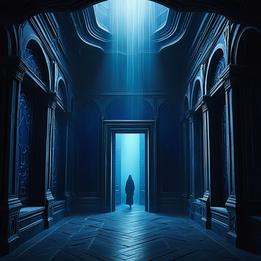
Chamber
A private, enclosed space representing the inner self, hidden aspects, or a specific stage in life's journey.
Chamber Dream Meaning
A private, enclosed space representing the inner self, hidden aspects, or a specific stage in life's journey.
Interpretive Themes
Mythological Resonance
The Burial Chamber
EgyptianThe innermost room of a pyramid, designed to protect the pharaoh's body and treasures for eternity, symbolizing the ultimate private space for transformation and journey into the afterlife.
The Cave of Trophonius
GreekAn oracular cave where seekers would descend into a dark chamber to receive prophetic dreams and visions, representing the psyche's hidden depths as a source of revelation.
Cultural Lenses
Jungian Perspective
View Context →Represents the personal unconscious or a specific archetypal space. Chambers can symbolize different aspects of the psyche, like the anima/animus chamber or shadow chamber, where integration occurs.
Freudian Perspective
View Context →Often symbolizes the womb, representing regression or birth anxiety. Can indicate repressed sexual memories or desires contained within the subconscious mind's private spaces.
Gestalt Perspective
View Context →The chamber represents a part of the self that the dreamer is currently experiencing or avoiding. Each aspect of the chamber (walls, contents) reflects different personality fragments needing integration.
Cognitive Perspective
View Context →Represents memory consolidation or problem-solving processes. The brain's compartmentalization of information during sleep, with chambers as mental models for organizing waking experiences and emotions.
Evolutionary Perspective
View Context →Rooted in ancestral need for secure shelter. Chambers trigger primal responses about safety, territory, and social hierarchy—activating ancient neural pathways related to cave dwellings and protected spaces.
East Asian Perspective
View Context →In Chinese tradition, chambers often represent the heart-mind (xin) or different energy centers. In Feng Shui, chamber arrangement reflects life harmony; in Japanese culture, ma (negative space) concepts apply.
South Asian Perspective
View Context →In Hindu and Buddhist traditions, chambers symbolize chakras or inner temples. The heart chamber (hridaya) holds the true self; meditation chambers represent spiritual practice spaces for self-realization.
Middle Eastern Perspective
View Context →Historically, chambers in Persian and Islamic architecture represent paradise gardens or divine presence. The Kaaba's inner chamber symbolizes sacred center; Sufi traditions use chambers for spiritual retreat and dhikr.
European Perspective
View Context →Medieval chambers represented social status and privacy. In Gothic architecture, chambered naves symbolized heavenly hierarchy; Renaissance studiolos were chambers for contemplation and intellectual pursuit.
African Perspective
View Context →In many traditions, chambers represent ancestral connection spaces. Initiation chambers for rites of passage, healing chambers for traditional medicine, and communal chambers for storytelling and wisdom transmission.
Latin American Perspective
View Context →Mesoamerican traditions viewed chambers as underworld portals or celestial observation spaces. Modern interpretations blend indigenous concepts with Catholic imagery of sacred heart chambers and family privacy values.
Modern Western Perspective
View Context →Chambers symbolize psychological privacy in individualistic society—therapy as 'chamber work,' social media as public/private chambers, and work-life balance as compartmentalization of different life spheres.
Historical Authorities
Want a deeper analysis?
Get a personalized interpretation of your entire dream including this symbol.
Interpret My DreamThe Oracle's Prediction
Combine multiple symbolsYou will receive a significant insight or intuitive revelation regarding a long-held personal mystery.
Timeframe
Lunation (~29 Days)
Intensity
Deep
Risk of becoming overly isolated or compartmentalized in an important area of life (e.g., work consuming private life).
Timeframe
Seasonal (~3 Months)
Intensity
Deep
Common Appearances & Contexts
| Context | Emotion | Interpretation |
|---|---|---|
| Context Locked chamber | Emotion Anxious | Interpretation Inaccessible inner truth. |
| Context Empty chamber | Emotion Lonely | Interpretation Emotional void or potential. |
| Context Furnished chamber | Emotion Comforted | Interpretation Established inner life. |
| Context Dark chamber | Emotion Fearful | Interpretation Unknown aspects of self. |
| Context Bright chamber | Emotion Hopeful | Interpretation Clarity or enlightenment. |
| Context Multiple chambers | Emotion Curious | Interpretation Complex inner world. |
| Context Chamber with door | Emotion Anticipatory | Interpretation Transition or opportunity. |
| Context Chamber without exit | Emotion Trapped | Interpretation Feeling stuck in life. |
| Context Shared chamber | Emotion Vulnerable | Interpretation Intimacy or invasion. |
| Context Ancient chamber | Emotion Awed | Interpretation Deep ancestral memory. |
| Context Chamber collapsing | Emotion Panicked | Interpretation Inner structure failing. |
| Context Chamber expanding | Emotion Liberated | Interpretation Personal growth occurring. |
Interpret Your Full Dream
Beyond this symbol, every dream carries a unique story. Share your dream for a personalized AI-powered interpretation.