Cant
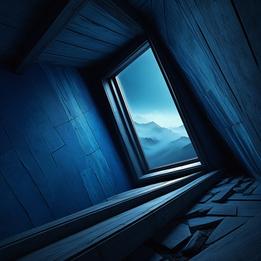
A slanted or tilted architectural element, often a wall, beam, or support structure that deviates from vertical or horizontal alignment.
Cant Dream Meaning
A slanted or tilted architectural element, often a wall, beam, or support structure that deviates from vertical or horizontal alignment.
Interpretive Themes
Structural Integrity
highMay reflect anxiety about support systems.
Deviation from Norms
mediumCould symbolize nonconformity or rebellion.
Precarious Balance
highOften represents life situations at tipping point.
Hidden Weakness
mediumSuggests underlying issues needing attention.
Forced Perspective
lowMay indicate skewed understanding of reality.
Mythological Resonance
The Leaning Tower of Pisa
GreekAn architectural marvel whose famous tilt, initially a structural flaw, became its defining characteristic and source of wonder, demonstrating how deviation can create unique identity.
Yggdrasil
NorseThe World Tree that grows at an angle, connecting different realms through its tilted axis, representing how cosmic structures often deviate from perfect symmetry to create connection.
Cultural Lenses
Jungian Perspective
View Context →Represents the Shadow aspect of structure - the unconscious recognition of psychological imbalance or the compensatory function of the psyche when conscious attitudes become too rigid.
Freudian Perspective
View Context →Symbolizes sexual displacement or phallic imagery in compromised position, often representing castration anxiety or fear of masculine power being undermined.
Gestalt Perspective
View Context →The 'cant' represents unfinished business or incomplete gestalt - something in the dreamer's life that isn't properly aligned and demands attention for psychological completion.
Cognitive Perspective
View Context →Reflects cognitive dissonance or mental schemas that have become misaligned with reality, often signaling the need for mental restructuring or belief adjustment.
Evolutionary Perspective
View Context →Triggers ancient survival instincts related to unstable environments; activates primal fear responses to potential shelter collapse or environmental threats.
East Asian Perspective
View Context →In Feng Shui tradition, represents disrupted qi flow and imbalance of yin-yang energies; historically seen as bad omen for family harmony and prosperity.
European Perspective
View Context →Medieval symbolism of moral decline; Renaissance association with imperfect beauty; modern engineering marvel when intentional but structural failure when accidental.
Middle Eastern Perspective
View Context →Islamic architecture uses precise geometric alignment as divine reflection; cant represents spiritual deviation; historically seen as sign of divine displeasure with community.
African Perspective
View Context →In many traditions, represents ancestral displeasure or broken community bonds; some cultures see intentional cant in ritual structures as portal to spirit world.
Latin American Perspective
View Context →Pre-Columbian architecture valued precision; colonial baroque embraced dramatic angles; modern interpretation often relates to social inequality and economic instability.
Modern Western Perspective
View Context →Deconstructivist architecture celebrates intentional cant as artistic statement; accidental cant symbolizes systemic failures in institutions or personal life structures.
Global/Universal Perspective
View Context →Cross-cultural archetype representing imbalance between ideal and reality; universally triggers primal concerns about shelter safety and environmental stability.
Historical Authorities
Want a deeper analysis?
Get a personalized interpretation of your entire dream including this symbol.
Interpret My DreamThe Oracle's Prediction
Combine multiple symbolsAn unconventional opportunity requiring you to approach problems from an unexpected angle.
Timeframe
Seasonal (~3 Months)
Intensity
Deep
A situation where appearances are deceptive and foundations are unstable.
Timeframe
Immediate (Next 48h)
Intensity
Deep
Common Appearances & Contexts
| Context | Emotion | Interpretation |
|---|---|---|
| Context Leaning wall | Emotion Anxiety | Interpretation Foundational concerns emerging. |
| Context Tilted floor | Emotion Disorientation | Interpretation Life feels unbalanced. |
| Context Slanted doorway | Emotion Apprehension | Interpretation Fear of entering new phase. |
| Context Crooked beam | Emotion Worry | Interpretation Support systems compromised. |
| Context Angled ceiling | Emotion Confinement | Interpretation Feeling psychologically restricted. |
| Context Tilted staircase | Emotion Unease | Interpretation Progress feels unstable. |
| Context Slanted window | Emotion Confusion | Interpretation Distorted worldview. |
| Context Leaning column | Emotion Dread | Interpretation Core values threatened. |
| Context Crooked arch | Emotion Discomfort | Interpretation Transition feels forced. |
| Context Tilted foundation | Emotion Panic | Interpretation Basic security undermined. |
| Context Slanted roof | Emotion Vulnerability | Interpretation Protection feels inadequate. |
| Context Angled wall | Emotion Tension | Interpretation Boundaries being tested. |
Interpret Your Full Dream
Beyond this symbol, every dream carries a unique story. Share your dream for a personalized AI-powered interpretation.