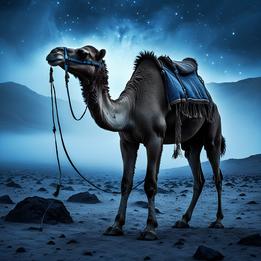
Camel
A symbol of endurance, survival, and journey through harsh conditions, representing the ability to carry burdens across difficult terrain.
Camel Dream Meaning
A symbol of endurance, survival, and journey through harsh conditions, representing the ability to carry burdens across difficult terrain.
Interpretive Themes
Cultural Lenses
Jungian Perspective
View Context →Represents the Self's journey through the arid unconscious, carrying consciousness across psychic deserts. The hump symbolizes stored spiritual nourishment for confronting shadow aspects during individuation.
Freudian Perspective
View Context →Phallic symbol representing masculine endurance and persistence. The hump suggests repressed desires or burdens carried from childhood, with desert journeys symbolizing emotional aridity in relationships.
Gestalt Perspective
View Context →Represents how you 'carry yourself' through life's difficulties. Each part (hump, legs, eyelashes) symbolizes different aspects of your adaptation system and how you manage environmental challenges.
Cognitive Perspective
View Context →Mental schema for resource management and long-term planning. Represents cognitive strategies for delayed gratification and endurance thinking, with desert symbolizing cognitive load or problem space.
Evolutionary Perspective
View Context →Embodies survival adaptations to extreme environments. Symbolizes evolutionary advantages of energy storage, temperature regulation, and social cooperation for species persistence under resource scarcity.
Middle Eastern Perspective
View Context →Sacred animal in Bedouin and Islamic traditions, called 'Ship of the Desert.' Historically essential for trade routes, pilgrimage to Mecca, and survival. Modern symbol of heritage and desert wisdom.
African Perspective
View Context →Dromedary camels symbolize trans-Saharan trade, Tuareg nomadic identity, and survival knowledge. In North Africa, associated with hospitality gifts and wedding ceremonies as prosperity symbols.
South Asian Perspective
View Context →In Rajasthan and Gujarat, camels represent desert royalty, with decorated camels in festivals. Camel milk considered medicinal. Historically crucial for Silk Road connections to Central Asia.
East Asian Perspective
View Context →In Chinese symbolism, camels from Silk Road represent foreign wealth and exotic journeys. Mongolian Bactrian camels symbolize Gobi Desert resilience and nomadic life continuity.
Modern Western Perspective
View Context →Metaphor for carrying corporate or personal burdens ('camel's back' idiom). Eco-tourism icon. Sometimes appears as kitsch or exoticism in advertising and media.
Latin American Perspective
View Context →Introduced animals now in zoos and tourism. Symbolize exotic foreignness rather than native tradition. Sometimes appear in magical realism as surreal desert travelers.
Global/Universal Perspective
View Context →Cross-cultural symbol of endurance across harsh landscapes. Appears in proverbs worldwide about patience, preparation, and carrying what's essential for survival journeys.
Want a deeper analysis?
Get a personalized interpretation of your entire dream including this symbol.
Interpret My DreamCommon Appearances & Contexts
| Context | Emotion | Interpretation |
|---|---|---|
| Context Riding camel | Emotion Confident | Interpretation Mastering difficult journey |
| Context Lost camel | Emotion Anxious | Interpretation Losing vital resource |
| Context Camel drinking | Emotion Relieved | Interpretation Replenishing after drought |
| Context Camel caravan | Emotion Hopeful | Interpretation Community support journey |
| Context Camel kneeling | Emotion Grateful | Interpretation Service and submission |
| Context Camel racing | Emotion Competitive | Interpretation Speed through adversity |
| Context Camel giving birth | Emotion Awed | Interpretation New life harshness |
| Context Camel in city | Emotion Disoriented | Interpretation Traditional modern clash |
| Context Camel carrying gold | Emotion Wealthy | Interpretation Valuable burden transport |
| Context Camel dying | Emotion Despairing | Interpretation Endurance finally fails |
| Context Camel crossing mirage | Emotion Deluded | Interpretation False hope pursuit |
| Context Camel hump shrinking | Emotion Depleted | Interpretation Resources running low |
Interpret Your Full Dream
Beyond this symbol, every dream carries a unique story. Share your dream for a personalized AI-powered interpretation.