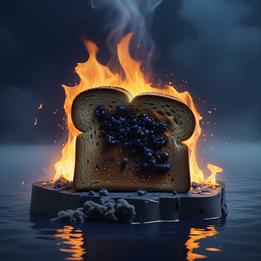
Burned Toast
Burned toast symbolizes mistakes, feelings of failure, or situations that have gone awry.
Burned Toast Dream Meaning
Burned toast symbolizes mistakes, feelings of failure, or situations that have gone awry.
Interpretive Themes
Investment
highBurned toast signifies the inevitability of mistakes in life.
Societal Expectations
highIt represents an acceptance of life's imperfections.
Frustration
mediumDreaming of burned toast often evokes feelings of irritation or disappointment.
Rediscovery
mediumIt can also indicate that errors can lead to new, unexpected outcomes.
Self-Reflection
highThis symbol often invites introspection about personal choices.
Mythological Resonance
Nigredo
AlchemicalThe first stage of alchemy, where matter blackens and decays, necessary for purification and rebirth.
Burnt Offering
BiblicalIn Leviticus, burned sacrifices symbolize atonement and transformation through fire's consuming grace.
Cultural Lenses
Modern Western Perspective
View Context →Burned toast is often associated with a rushed breakfast culture. Served as a symbol of hectic mornings. [American] Often jokingly referenced in modern media.
European Perspective
View Context →Perceived as a common domestic hazard, especially in traditional households. Often serves as a humorous element in family dining. [British] Commonly appears in literature as an anecdote for domestic life.
East Asian Perspective
View Context →Burned toast is often associated with failure in a highly perfectionistic culture. Used in casual settings to signify mistakes. [Japanese] Cultural stories may illustrate learning from mistakes.
European Perspective
View Context →Burned bread historically indicated poverty or hardship. Tales of resilience are often linked to food mishaps. Reflections on food scarcity are common in folklore.
Historical Authorities
Want a deeper analysis?
Get a personalized interpretation of your entire dream including this symbol.
Interpret My DreamThe Oracle's Prediction
Combine multiple symbolsA minor setback or overlooked detail causing frustration.
Timeframe
Immediate (Next 48h)
Intensity
Deep
A necessary release of old patterns or beliefs.
Timeframe
Lunation (~29 Days)
Intensity
Deep
Common Appearances & Contexts
| Context | Emotion | Interpretation |
|---|---|---|
| Context Burning toast in a busy kitchen | Emotion Overwhelmed | Interpretation Reflects stress leading to mistakes. |
| Context Attempts to salvage burned toast | Emotion Frustrated | Interpretation Indicates efforts to rectify a flaw or mistake. |
| Context Serving burned toast to guests | Emotion Embarrassed | Interpretation Symbolizes fear of judgment from others. |
| Context Dreaming of burned toast but enjoying it anyway | Emotion Accepting | Interpretation Represents a positive outlook on imperfections. |
| Context Observing others eating burned toast | Emotion Amused | Interpretation Represents observing others' mistakes and their outcomes. |
| Context Seeing burned toast in an empty kitchen | Emotion Lonely | Interpretation Symbolizes feelings of isolation or neglect. |
| Context Burning toast repeatedly | Emotion Helpless | Interpretation Points to a cycle of frustration in daily tasks. |
| Context Cooking with someone and burning toast together | Emotion Bonding | Interpretation Highlights the ability to connect over shared mistakes. |
| Context Finding a way to cook toast perfectly after attempts | Emotion Relieved | Interpretation Symbolizes learning and improvement from past failures. |
| Context Dreaming of different types of burned toast | Emotion Curious | Interpretation Indicates exploring various outcomes of mistakes. |
Interpret Your Full Dream
Beyond this symbol, every dream carries a unique story. Share your dream for a personalized AI-powered interpretation.