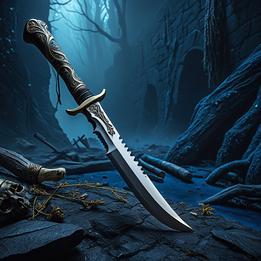
Bone Knife
The bone knife symbolizes ancient tools of sustenance, representing the dual nature of creation and destruction within the realm of food preparation.
Bone Knife Dream Meaning
The bone knife symbolizes ancient tools of sustenance, representing the dual nature of creation and destruction within the realm of food preparation.
Interpretive Themes
Survival
highBone knives were critical for various survival tasks in ancient environments.
Craftsmanship
highRepresents human creativity and skill in tool-making.
Creation and Destruction
mediumHighlights the complex relationship humans have with nature.
Connection to Ancestors
mediumBone tools suggest tradition, ancestry, and respect for history.
Ritualistic Significance
lowCould denote the cultural practices surrounding food gathering.
Mythological Resonance
Prometheus
GreekWho used a blade to steal fire from the gods, representing the transformative power of tools to elevate humanity from primitive state.
Fenrir's Binding
NorseThe gods used a magical ribbon made from impossible materials including bear sinews, representing how crafted restraints contain primal forces.
Cultural Lenses
East Asian Perspective
View Context →Traditionally used for survival and artistic expression. Tools often held cultural significance in stories and art. [Asian Cultures] Bone was often chosen for its beauty and strength.
African Perspective
View Context →Bone tools were used in various tasks and often imbued with spiritual significance. Integral in ceremonies related to sustenance. [African Cultures] Bone knives represented survival wisdom.
Historical Authorities
Want a deeper analysis?
Get a personalized interpretation of your entire dream including this symbol.
Interpret My DreamThe Oracle's Prediction
Combine multiple symbolsA need for precise skill application in your work.
Timeframe
Immediate (Next 48h)
Intensity
Deep
Potential conflict requiring careful boundary-setting.
Timeframe
Lunation (~29 Days)
Intensity
Deep
Common Appearances & Contexts
| Context | Emotion | Interpretation |
|---|---|---|
| Context Using a bone knife to prepare food | Emotion Curiosity | Interpretation Indicates an exploration of ancestral practices or a with a historical significance. |
| Context Finding a bone knife in a wilderness setting | Emotion Respect | Interpretation Reflects reverence for nature and survival heritage. |
| Context Cutting oneself with a bone knife | Emotion Fear | Interpretation May symbolize self-harm or risk in the pursuit of sustenance. |
| Context Observing a ritual where a bone knife is used | Emotion Awe | Interpretation Represents the sacred aspects of ancient traditions. |
| Context Carving intricate designs into a bone knife | Emotion Pride | Interpretation Highlights personal creativity and the joy of craftsmanship. |
| Context Receiving a bone knife as a gift | Emotion Honor | Interpretation Symbolizes recognition of kinship or ancestral ties. |
| Context Experiencing a confrontation with teeth and bone tools | Emotion Tension | Interpretation Reflects inner conflict regarding nature's dualities. |
| Context Protecting oneself with a bone knife | Emotion Defiance | Interpretation Represents empowerment and defense against perceived threats. |
| Context Seeing an ancient meal prepared with a bone knife | Emotion Nostalgia | Interpretation Inspires reflection on cultural heritage and traditional practices. |
| Context Misusing a bone knife, leading to mishaps | Emotion Regret | Interpretation Represents failure to respect the tools and practices passed down. |
| Context Hearing the sound of a bone knife cutting through flesh | Emotion Unease | Interpretation Symbolizes discomfort with the violence inherent in food preparation. |
| Context Creating a meal for a gathering with a bone knife | Emotion Connection | Interpretation Represents the unity of people coming together for sustenance. |
| Context Witnessing a duel with bone knives | Emotion Fear | Interpretation Indicates a struggle or conflict related to survival instincts. |
| Context Finding several bone knives buried | Emotion Intrigue | Interpretation Embodies a need to delve into one’s past or explore hidden aspects of oneself. |
| Context Crafting a bone knife from scratch | Emotion Satisfaction | Interpretation Highlights the pride of creating and the mastery of ancient skills. |
Interpret Your Full Dream
Beyond this symbol, every dream carries a unique story. Share your dream for a personalized AI-powered interpretation.