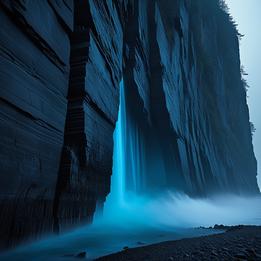
Bluff
A steep cliff or deceptive appearance, representing hidden truths, risk-taking, or false fronts in life.
Bluff Dream Meaning
A steep cliff or deceptive appearance, representing hidden truths, risk-taking, or false fronts in life.
Interpretive Themes
Mythological Resonance
Loki
NorseThe trickster god whose deceptions often walk the edge of catastrophe, revealing hidden realities through chaos.
Coyote
Native AmericanThe shape-shifter whose bluffs and tricks teach survival lessons, balancing wisdom with foolish risk.
Cultural Lenses
Jungian Perspective
View Context →Represents the persona - the false self presented to the world. The bluff masks the true Self, with the cliff edge symbolizing the dangerous boundary between conscious and unconscious realms.
Freudian Perspective
View Context →Symbolizes defense mechanisms and repression. The bluff represents the ego's construction of false narratives to protect against unconscious desires, with the drop representing repressed material.
Gestalt Perspective
View Context →Represents unfinished business or avoidance. The bluff symbolizes what the dreamer avoids confronting, with the height indicating the perceived difficulty of facing the truth.
Cognitive Perspective
View Context →Manifestation of cognitive distortions or false beliefs. The bluff represents schemas of deception or threat perception, processed during REM sleep for emotional regulation.
Evolutionary Perspective
View Context →Ancient survival mechanism for assessing risk and deception. The bluff triggers primal fear responses related to height dangers and social deception detection for group survival.
Global/Universal Perspective
View Context →Cross-cultural symbol of deception and danger. Found in creation myths as boundaries between worlds and in folk tales as tests of truth versus falsehood.
East Asian Perspective
View Context →In Daoist thought, represents the illusion of separateness. In Zen, the bluff is emptiness - what appears solid is transient, teaching non-attachment to appearances.
South Asian Perspective
View Context →In Hindu philosophy, represents Maya - the illusion of reality. The bluff is the veil of ignorance separating Atman from Brahman, to be seen through for enlightenment.
Middle Eastern Perspective
View Context →In Islamic dream interpretation, symbolizes hypocrisy (nifaq) or the dangerous edge between faith and disbelief. In Persian poetry, represents love's precipice.
European Perspective
View Context →In Celtic tradition, bluffs were liminal spaces to the Otherworld. In Norse mythology, represents the deceptive strategies of Loki or the edges of Yggdrasil.
African Perspective
View Context →In many traditions, represents ancestral tests or initiation boundaries. The bluff is where youth prove courage or where spirits reveal truths behind appearances.
North American Perspective
View Context →In Native traditions, often sacred vision quest sites. In modern context, represents the 'bluff' of American exceptionalism or frontier mythology's deceptive promises.
Historical Authorities
Want a deeper analysis?
Get a personalized interpretation of your entire dream including this symbol.
Interpret My DreamThe Oracle's Prediction
Combine multiple symbolsA negotiation or competitive situation will require strategic deception.
Timeframe
Immediate (Next 48h)
Intensity
Deep
A false persona or hidden vulnerability is nearing exposure.
Timeframe
Lunation (~29 Days)
Intensity
Deep
Common Appearances & Contexts
| Context | Emotion | Interpretation |
|---|---|---|
| Context Standing on edge | Emotion Fear | Interpretation Fear of falling/failure |
| Context Bluff collapsing | Emotion Relief | Interpretation Truth revealed positively |
| Context Calling someone's bluff | Emotion Confidence | Interpretation Challenging falsehoods |
| Context Building a bluff | Emotion Anxiety | Interpretation Creating false front |
| Context Hiding behind bluff | Emotion Shame | Interpretation Concealing vulnerability |
| Context Bluff as protection | Emotion Security | Interpretation False safety barrier |
| Context Crossing a bluff | Emotion Courage | Interpretation Taking calculated risk |
| Context Bluff overlooking water | Emotion Awe | Interpretation Perspective on emotions |
| Context Bluff eroding | Emotion Anxiety | Interpretation Falsehoods crumbling |
| Context Multiple bluffs | Emotion Confusion | Interpretation Complex deceptions |
| Context Bluff in desert | Emotion Isolation | Interpretation Lonely deception |
| Context Bluff with path | Emotion Hope | Interpretation Way through deception |
Interpret Your Full Dream
Beyond this symbol, every dream carries a unique story. Share your dream for a personalized AI-powered interpretation.