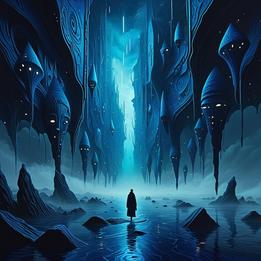
Abstract Shapes
Abstract shapes reflect the subconscious mind's complexity, representing ideas and emotions that are not easily defined.
Abstract Shapes Dream Meaning
Abstract shapes reflect the subconscious mind's complexity, representing ideas and emotions that are not easily defined.
Interpretive Themes
Subconscious Mind
highRepresents thoughts that are not immediately accessible.
Creativity
mediumReflects innovative thinking and artistic expression.
Authenticity
highSuggests differing perspectives on a single event.
Freedom of Expression
mediumSymbolizes vibrant ideas and emotions finding a voice.
Authenticity
lowIndicates how personal biases can color experiences.
Mythological Resonance
Chaos
GreekThe primordial void from which all creation emerged, representing the undifferentiated potential before form.
Nataraja
HinduShiva's cosmic dance within a circle of flames, where abstract movement creates and dissolves reality.
Cultural Lenses
Modern Western Perspective
View Context →Abstract shapes are prominent in contemporary art and design. Serve as expressions of individual and collective experiences. Reflects post-modern thought and values.
Modern Western Perspective
View Context →In art, abstract shapes symbolize freedom and innovation. Featured in advertisements and media to evoke emotions. [Pop Culture] Popularized in music videos and contemporary design.
European Perspective
View Context →Used in avant-garde and modernist movements to challenge norms. Encourages discussion on perception and reality. [European Art Movements] Shapes convey complex ideas and cultural critiques.
Historical Authorities
Want a deeper analysis?
Get a personalized interpretation of your entire dream including this symbol.
Interpret My DreamThe Oracle's Prediction
Combine multiple symbolsA breakthrough in understanding your emotional landscape.
Timeframe
Lunation (~29 Days)
Intensity
Deep
Common Appearances & Contexts
| Context | Emotion | Interpretation |
|---|---|---|
| Context Creating shapes on canvas | Emotion Excitement | Interpretation Indicates creative expression and exploration of self. |
| Context Encountering floating shapes | Emotion Wonder | Interpretation Represents the exploration of thoughts beyond the conscious mind. |
| Context Shapes merging and combining | Emotion Intrigue | Interpretation Reflects complex ideas or emotions coming together. |
| Context Distorted shapes | Emotion Confusion | Interpretation Suggests feelings of disarray and uncertainty in life. |
| Context Interpreting an abstract design | Emotion Curiosity | Interpretation Represents the quest for understanding personal experiences. |
| Context Seeing shapes in movement | Emotion Excitement | Interpretation Symbolizes energetic change or growth. |
| Context Shape transforming into a familiar object | Emotion Fascination | Interpretation Signifies personal revelations or insights. |
| Context Confronting chaotic shapes | Emotion Overwhelm | Interpretation Indicates challenges in processing emotions or experiences. |
| Context Seeing shapes reflect personal issues | Emotion Unease | Interpretation Represents unresolved emotions manifesting visually. |
| Context Merging multiple shapes into one coherent form | Emotion Achievement | Interpretation Signifies clarity and resolution in personal thoughts or experiences. |
Interpret Your Full Dream
Beyond this symbol, every dream carries a unique story. Share your dream for a personalized AI-powered interpretation.