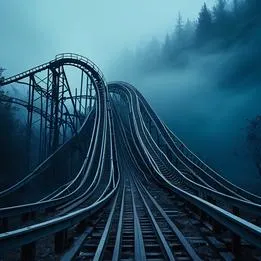
Abandoned Roller Coaster Dream Meaning
The abandoned roller coaster represents lost excitement, unfinished experiences, or the fading of once-thrilling aspects of life.
Common Appearances & Contexts
| Context | Emotion | Interpretation |
|---|---|---|
| Walking through the abandoned park | Melancholy | Reflects feelings of loss over past joys in life. |
| Attempting to ride the coaster | Terror | Indicates facing fears or situations that feel out of control. |
| Watching others ride while feeling left out | Isolation | Represents feelings of exclusion from experiences. |
| Fixing the roller coaster | Hope | Suggests a desire to revive neglected desires or projects. |
| Hearing the sounds of joy from the coaster | Longing | Indicates wistfulness for past fun and experiences. |
| Finding remnants of the original excitement | Surprise | Suggests rediscovering joy in one’s life. |
| Navigating through overgrown tracks | Confusion | Represents feeling lost or uncertain about one’s path. |
| Seeing children enjoying a new coaster | Sadness | May evoke feelings of nostalgia or fear of not keeping pace. |
| Trying to rebuild the coaster | Desperation | Emphasizes the struggle to re-establish excitement in life. |
| Feeling emotions from the past ride | Awe | Connects with powerful memories of peak experiences. |
| Witnessing the dilapidation spread | Dread | Reflects anxiety about changes that are irreversible. |
| Gathering with friends reminiscing about rides | Connection | Highlights the importance of shared past joys. |
| Finding a new roller coaster in the same park | Excitement | Symbolizes new opportunities arising from past closures. |
| Falling off the coaster | Panic | Represents fears of failure or loss of control in life. |
| Reinvigorating the park with others | Joy | Suggests collaborating to revive life’s lost joys. |
| Experiencing the coaster’s roar in memories | Nostalgia | Connects deeply with rich personal history. |
Interpretive Themes
Lost Potential
ConfidenceIt points to unfinished projects or desires that have since faded.
Fear
ConfidenceThe coaster may symbolize life's unpredictabilities and fears.
Nostalgia for Adventure
ConfidenceIt highlights the human craving for excitement and novelty.
Cycle of Life
ConfidenceThe coaster’s ups and downs reflect life's inherent cycles.
Change and Transition
ConfidenceThe coaster can symbolize transitions that come with growth.
Cultural Lenses
Jungian Perspective
Full Hub →Represents the collective shadow of abandoned potential and thrill-seeking archetypes. Historically linked to carnival symbolism of life's cycles. Emotionally signifies repressed excitement or fear of life's ups and downs becoming stagnant.
Freudian Perspective
Full Hub →Symbolizes repressed childhood excitement and sexual energy (the phallic structure) now abandoned. Historically connects to early 20th-century amusement park psychology. Emotionally represents lost pleasure or fear of emotional peaks becoming inaccessible.
Gestalt Perspective
Full Hub →Represents the dreamer's unfinished emotional cycles or abandoned excitement. The empty seats symbolize unexpressed parts of self. Historically reflects mid-20th century therapy focusing on present awareness of abandoned life aspects.
Cognitive Perspective
Full Hub →Reflects mental schemas about abandoned fun or threat assessment of decaying structures. Emotionally connects to memory processing of past excitement. Modern relevance in anxiety about abandoned social connections or career trajectories.
Evolutionary Perspective
Full Hub →Triggers ancient threat detection toward abandoned structures while recalling tribal celebration patterns. Historically connects to ritual gathering spaces. Emotionally activates both danger avoidance and nostalgia for communal excitement experiences.
Global/Universal Perspective
Full Hub →Cross-culturally represents abandoned joy, technological decay, and the passage of time. Historically tied to industrialization's amusement parks. Ritually appears in coming-of-age stories worldwide as metaphors for lost innocence.
East Asian Perspective
Full Hub →In Chinese/Japanese traditions, symbolizes abandoned yang energy (movement) returning to yin (stillness). Historically references temporary festival structures. Emotionally represents the Buddhist concept of impermanence in worldly pleasures.
South Asian Perspective
Full Hub →Reflects Hindu concepts of abandoned lila (divine play) or the empty ratha (chariot). Historically connects to festival processions. Emotionally signifies detachment from worldly thrills in pursuit of moksha (liberation).
Middle Eastern Perspective
Full Hub →Symbolizes abandoned entertainment violating traditional modesty values. Historically references temporary market attractions. Emotionally represents the Quranic warning against fleeting worldly delights (dunya) contrasted with eternal rewards.
European Perspective
Full Hub →Evokes post-industrial decline and abandoned fairground traditions. Historically tied to 19th-century pleasure gardens. Emotionally represents Romantic era themes of sublime decay and lost collective joy in changing societies.
African Perspective
Full Hub →In many traditions, represents abandoned communal celebration spaces. Historically connects to colonial-era imports of Western amusement. Emotionally signifies both lost collective joy and resilience in repurposing abandoned structures.
North American Perspective
Full Hub →Symbolizes abandoned frontier optimism and consumer culture decay. Historically tied to mid-20th century amusement park boom/bust cycles. Emotionally represents both nostalgia for childhood and anxiety about economic decline.
What is Your Dream Archetype?
Beyond this symbol, your soul carries a distinct pattern. Take the 2-minute quiz to discover your archetypal personality.