
Dream Symbols by Category: A Practical Framework for Navigating Animals, Water, Houses, Bodies, Thresholds, and Spiritual Images
A long-form category guide explaining why grouped symbol families are often more useful than alphabetized interpretation, and how the main symbolic neighborhoods of the archive work.
Most readers arrive at a dream archive through a single remembered image. But interpretation becomes much easier when that image is placed inside the right symbolic family. Alphabetical dictionaries are useful for retrieval. They are far less useful for understanding the symbolic landscape. That is why category thinking matters.
This guide explains why category pages are one of the most important forms of symbolic infrastructure on the site. Categories do not replace individual symbol pages. They make those pages usable by giving them neighborhood context. A dreamer who saw a wolf, a bridge, a flood, or a hidden basement may not realize they are looking at an animal dream, a threshold dream, an overwhelm dream, or a self-architecture dream. Category thinking turns isolated images into intelligible clusters.
1. Why Category Navigation Is Stronger Than Alphabetical Navigation Alone
Alphabetical order is efficient when you already know the exact name of what you saw. Category order is better when you remember the kind of scene you were in.
Categories help readers:
- search when they do not know the precise symbolic label
- compare nearby symbols
- understand why certain symbols recur together
- move from literal image to interpretive pattern
That makes category pages stronger public resources and better internal architecture.
2. Animal Symbols
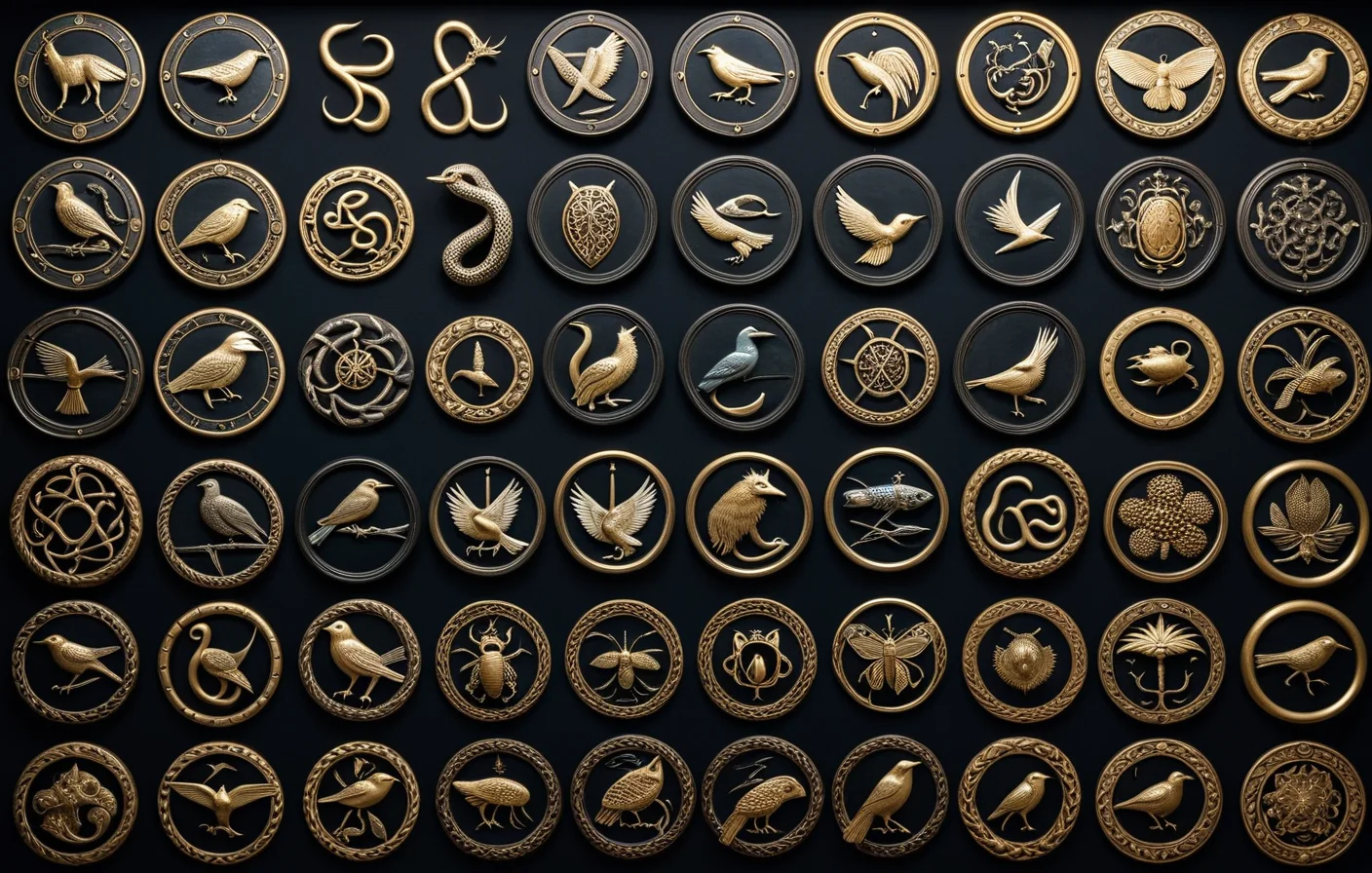
Animal dreams remain some of the most memorable and emotionally immediate experiences in the archive. Animals often carry primal force, instinct, social hierarchy, survival pressure, speed, fertility, danger, or messengership.
Why animal categories matter
Readers often search animal dreams by creature, but many interpretations become clearer only when the dreamer compares predator, herd animal, bird, insect, reptile, or sea creature patterns.
Typical animal subfamilies
- predator animals
- domestic animals
- bird symbolism
- insects and swarms
- reptiles and amphibians
- marine creatures
Interpretive value
Animal category pages help the reader see when an animal dream is about instinct, threat, social belonging, spiritual message, or transformation.
3. House and Architectural Symbols
House dreams are so common that they deserve category-level treatment. Architecture is one of the psyche’s favorite symbolic languages because it allows the dream to spatialize identity.
Core architectural families include:
- house and home
- room and hidden room
- door and gate
- attic and basement
- stairs and hallways
- windows and walls
Architectural categories are valuable because they help readers move from “I saw a house” to “what part of the self-structure was active?”
4. Water and Elemental Symbols
Water, weather, fire, mountain, forest, and desert imagery all function as emotional and existential environments rather than isolated objects.
Category pages for elemental symbols can help distinguish:
- purification vs overwhelm
- illumination vs destruction
- grounding vs immobility
- concealment vs revelation
These categories are some of the archive’s richest because they combine internal feeling with external scale.
5. Body and Exposure Symbols
Body dreams remain central because they compress vulnerability into unforgettable scenes. Teeth, skin, blood, pregnancy, nakedness, paralysis, voice, hair, and wounds all belong to a family of symbols concerned with embodiment, identity, and visible weakness.
These pages should help readers compare:
- appearance anxiety
- bodily integrity
- fertility and growth
- voice and agency
- shame and public visibility
6. Threshold and Journey Symbols
Roads, bridges, trains, stairs, tunnels, crossroads, doorways, elevators, ladders, and gates are all transition structures. They help the dream show movement between roles, states, rooms, worlds, or identities.
Threshold pages are powerful because they help the reader recognize a dream of process rather than object.
7. Spiritual and Messenger Symbols
Not all dream images are best handled as material objects or personal memories. Some belong to a symbolic family of messengers, omens, sacred signs, ancestors, angels, guides, and ritual objects.
These symbols require particularly careful handling because they can drift into overclaiming. Category pages are useful here because they can preserve comparison and caution rather than forcing each symbol into its own inflated certainty.
8. Animal Categories in Detail
Animal categories deserve extra emphasis because they produce some of the archive’s strongest instinctive interpretations. Readers often search by exact creature, but broader subfamilies help clarify why the creature feels the way it does.
Predator animals
Predators often gather around threat, instinctive force, territorial conflict, and activated power.
Domestic animals
Domestic animals often reveal loyalty, dependence, care, attachment, and the socialized face of instinct.
Birds
Bird categories help distinguish omens, messengers, carrion imagery, flock behavior, and elevation.
Insects and swarms
Insects often point to irritation, repetition, labor, contamination, or many small pressures converging.
Reptiles and amphibians
These categories often draw interpretation toward ancient fear, bodily unease, threshold life, or transformation.
9. Architecture as Psychic Geography
Architecture categories matter because dreams routinely convert internal life into spatial form. Readers may not know how to describe their inner structure directly, but they remember a locked basement, a flooded kitchen, an endless hallway, or a room they did not know existed.
Room logic matters:
- attic can suggest memory, thought, or forgotten ideals
- basement can suggest repression, burden, or depth
- bedroom can suggest intimacy or vulnerability
- kitchen can suggest preparation, nourishment, or labor
- bathroom can suggest privacy, cleansing, or embarrassment
This is why one generalized “house meaning” is never enough.
10. Environmental Categories
Environmental families such as water, fire, storm, forest, mountain, desert, and night organize the dream as a whole atmosphere rather than a single object.
These categories help readers ask:
- Am I in overwhelm or purification?
- Am I facing danger or illumination?
- Am I lost, ascending, exposed, or hidden?
Environmental pages often become stronger than isolated symbol pages because they mirror how dream scenes are actually remembered.
11. Body Categories and Exposure
Body symbols are often the most urgent because they merge identity and vulnerability. Teeth, skin, blood, paralysis, hair, pregnancy, wounds, breath, and nakedness all belong to a family concerned with embodiment.
Category treatment helps readers compare:
- shame and social exposure
- bodily failure
- fertility and growth
- voice and agency
- fear of visible change
12. Relationship Categories
Some categories are organized not by object or environment but by role: parent, ex-partner, child, boss, stranger, sibling, teacher, crowd, lover. These figures often act as role-carriers rather than literal stand-ins.
Category framing helps prevent simplistic readings such as “I dreamed of my mother, therefore it is only about my mother.” Sometimes the figure is relationally literal; sometimes it is structurally symbolic.
13. Object Categories
Objects can look less dramatic than storms or predators, but they are often where dreams become precise. Keys, rings, clocks, bags, books, knives, shoes, vehicles, and phones all function as symbolic tools.
Object categories often organize around:
- access
- commitment
- communication
- time
- travel
- concealment
14. Why Category Pages Are Linkable Assets
Category pages also matter strategically. An alphabetical symbol index is useful for browsing, but a strong page like “Animal Dream Symbols” or “Threshold Symbols in Dreams” is far easier for educators, writers, and resource pages to cite because it feels curated rather than undifferentiated.
15. Category Discipline
A weak category system becomes clutter quickly. A strong one remains:
- intuitive
- limited enough to navigate
- broad enough to be useful
- consistent over time
This requires restraint. New categories should exist because they help readers orient, not because they inflate count.
16. Category Pages as Linking Infrastructure
Category pages are also one of the strongest internal linking engines in the archive. A strong category hub can link:
- downward to individual symbols
- sideways to related themes
- outward to guides and scenario hubs
- upward to research assets such as methodology or atlas pages
This makes category architecture valuable not only for interpretation but for the structural health of the site as a whole.
17. Reader Memory and Category Thinking
Most readers remember dreams in broad families before they remember exact terms. They remember:
- an animal
- a flooded place
- a house with strange rooms
- a body problem
- a road or threshold
Category pages reduce the gap between remembered experience and searchable language. This is one reason they often feel more humane than a strict alphabetical directory.
18. Category Pages as Credibility Assets
A giant symbol directory proves scale, but category pages prove editorial judgment. That matters externally. Writers, teachers, and resource pages are much more likely to cite a strong page like “Animal Dream Symbols” or “Threshold Symbols in Dreams” than an undifferentiated index.
What makes a category page citeable is not merely the title. It is the combination of:
- a unique editorial framing
- a clear explanation of why the category matters
- a curated symbolic set
- links to deeper pages
- comparative or thematic insight
19. Category Drift and Cleanup
Because categories are so useful, they are also especially vulnerable to drift. A category can become too broad, duplicate another one, or absorb material that no longer belongs there. This is why category work is never fully done. It requires periodic cleanup and re-centering.
20. Teaching Symbolic Thinking
Another overlooked benefit of category pages is educational. They teach readers how to think in symbolic families rather than isolated labels. Over time, readers begin to notice the difference between:
- body dreams
- environmental dreams
- threshold dreams
- authority dreams
- messenger dreams
- relationship dreams
That change in thinking makes the whole archive more useful.
21. Categories and Emotional Patterning
Categories help not only because they group similar objects, but because they group similar emotional situations. Animal categories often carry instinct. House categories often carry structure and inheritance. Body categories often carry exposure. Threshold categories often carry transition. Category pages therefore help readers recognize feeling-patterns as well as image-patterns.
22. Search Behavior and Category Utility
Real search behavior also supports category thinking. Many readers search broad families before they search precise symbols. They search for animal dreams, house dreams, water dreams, or death dreams. Category hubs match that behavior naturally and then move readers toward more precise pages.
23. Category Pages and Comparative Interpretation
Categories also make comparative work easier. A cross-cultural comparison of birds, water, roads, or houses becomes stronger when those image families are already organized clearly inside the archive. Category logic is therefore one of the foundations of atlas work.
24. Category Overlap
No category system is perfect because symbols are multivalent. A snake belongs to animals but also to transformation and danger. A house belongs to architecture but may also act as memory or ancestry. Category pages should therefore be strong neighborhoods, not rigid prisons.
25. A Practical Reader Loop
The most useful loop is:
- start with category
- compare likely symbols
- move to the strongest specific symbol page
- move outward to theme, guide, or atlas pages
This loop is what turns a large archive into something a reader can actually think with.
26. What Weak Category Pages Get Wrong
Weak category pages often:
- dump links without explanation
- repeat generic lines
- ignore emotional patterning
- fail to connect to deeper resources
Strong category pages do the opposite. They orient, explain, and connect.
27. Categories and Archive Scale
As an archive grows, intermediate structures become more important. Without them, the jump from one symbol page to the entire system becomes exhausting. Category pages provide the middle layer that keeps scale from becoming disorientation.
28. Category Literacy
Ultimately, category pages teach symbolic literacy. They help readers realize that dreams are rarely just lists of things. They are patterns of related things. That shift in perception is part of what makes the archive more useful than a simple dictionary.
Conclusion
Category structure is one of the archive’s most practical forms of intelligence. It turns the site from a dictionary into a symbolic map. Readers need both, but the map is what helps them understand where they are.
Related Research
Continue In Research
Build context across methodology, statistics, and reference guides.
Reference
How Dream Symbols Are Organized: Structure, Coverage, and Limits
A detailed guide to how dream symbols, themes, myths, and cultural associations are organized so interpretations can be searched, compared, and read in context.
Data
Dream Symbol Statistics: What Scale, Recurrence, and Category Structure Reveal
A statistical reference page on the scope of the symbol library, the value of category structure, recurring dream motifs, and how to interpret data-rich symbolic patterns without false certainty.
Atlas
Cross-Cultural Dream Symbol Atlas: How Shared Images Shift Across Traditions
A comparative atlas tracing recurring dream symbols such as snakes, water, mirrors, roads, birds, and death imagery across psychological, mythological, and cultural traditions.
Guide
Common Dreams Explained: Why the Same Dream Scenarios Return Again and Again
A long-form guide to the major recurring dream scenarios that dominate public interest, including being chased, falling, teeth, snakes, ex-partners, paralysis, floods, nudity, flying, and death imagery.