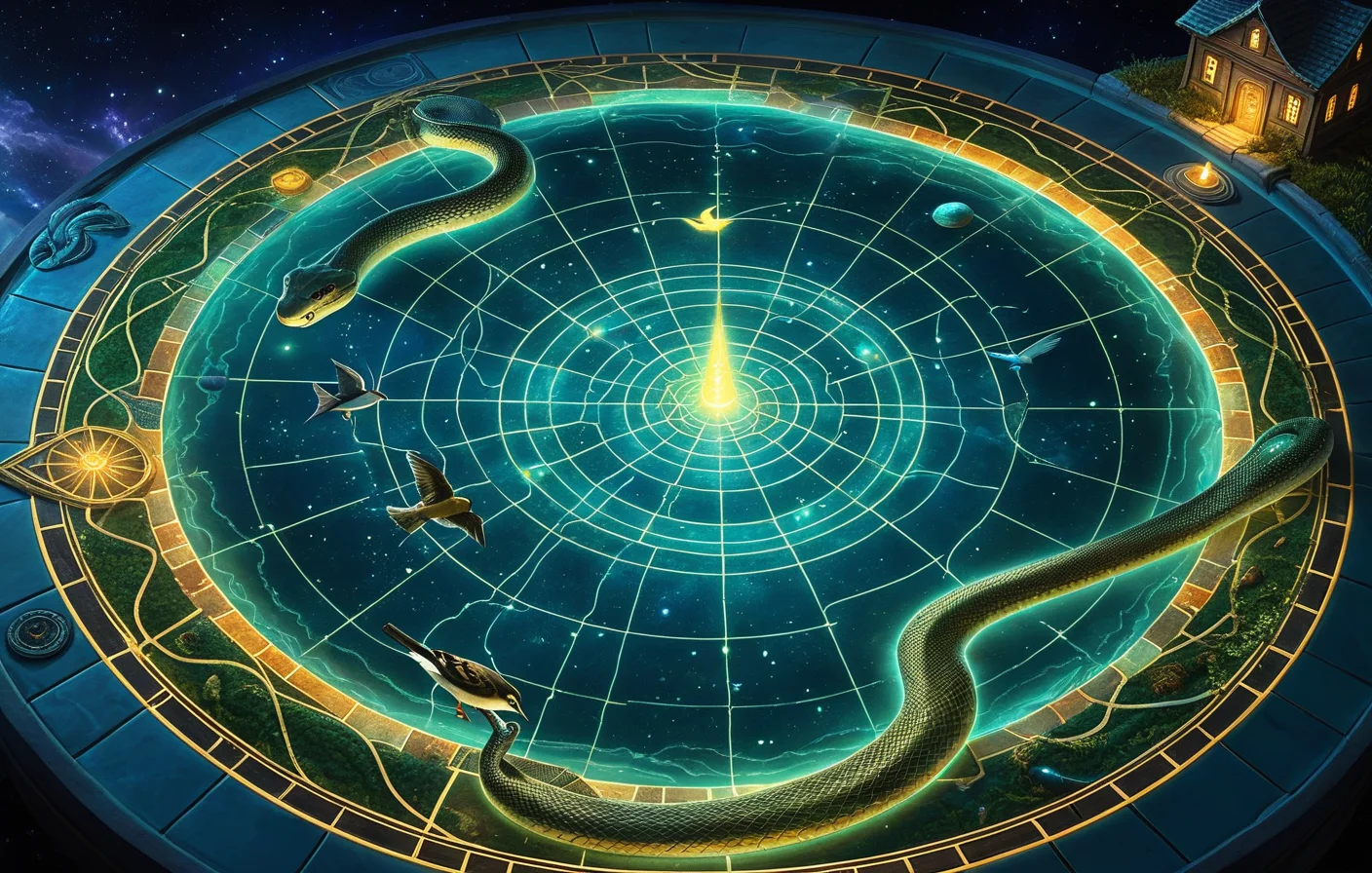
Cross-Cultural Dream Symbol Atlas: How Shared Images Shift Across Traditions
A comparative atlas tracing recurring dream symbols such as snakes, water, mirrors, roads, birds, and death imagery across psychological, mythological, and cultural traditions.
The same dream image can move through radically different symbolic worlds without losing its recognizability. A snake is still a snake. Water is still water. A mirror still reflects, a road still leads, a house still encloses. Yet the meaning attached to those images can bend dramatically depending on culture, religion, mythology, and inherited symbolic habit. That is the central fact this atlas is built to show.
The goal of a cross-cultural atlas is not to force every tradition into neat boxes or to pretend that entire civilizations agree with themselves. It is to reveal a deeper pattern: certain symbols recur because they are rooted in shared human experience, but what communities do with those symbols can vary sharply. Some traditions emphasize danger where others emphasize initiation. Some emphasize morality where others emphasize power, fertility, memory, or transformation.
A comparative atlas is valuable because it prevents two equal and opposite errors:
- pretending that symbols have one universal fixed meaning
- pretending that symbols mean anything at all and therefore nothing in particular
The truth is more interesting. Symbols are stable enough to recur and flexible enough to refract through many systems.
1. How to Use This Atlas
Each symbol section in this atlas works through four interpretive layers:
- a baseline symbolic function
- major cultural or religious emphases
- mythic narrative examples
- practical dream-interpretation implications
The atlas is designed to help readers see both divergence and convergence. Divergence matters because culture shapes symbolic emphasis. Convergence matters because some symbolic patterns survive across geography precisely because they are tied to recurring human conditions.
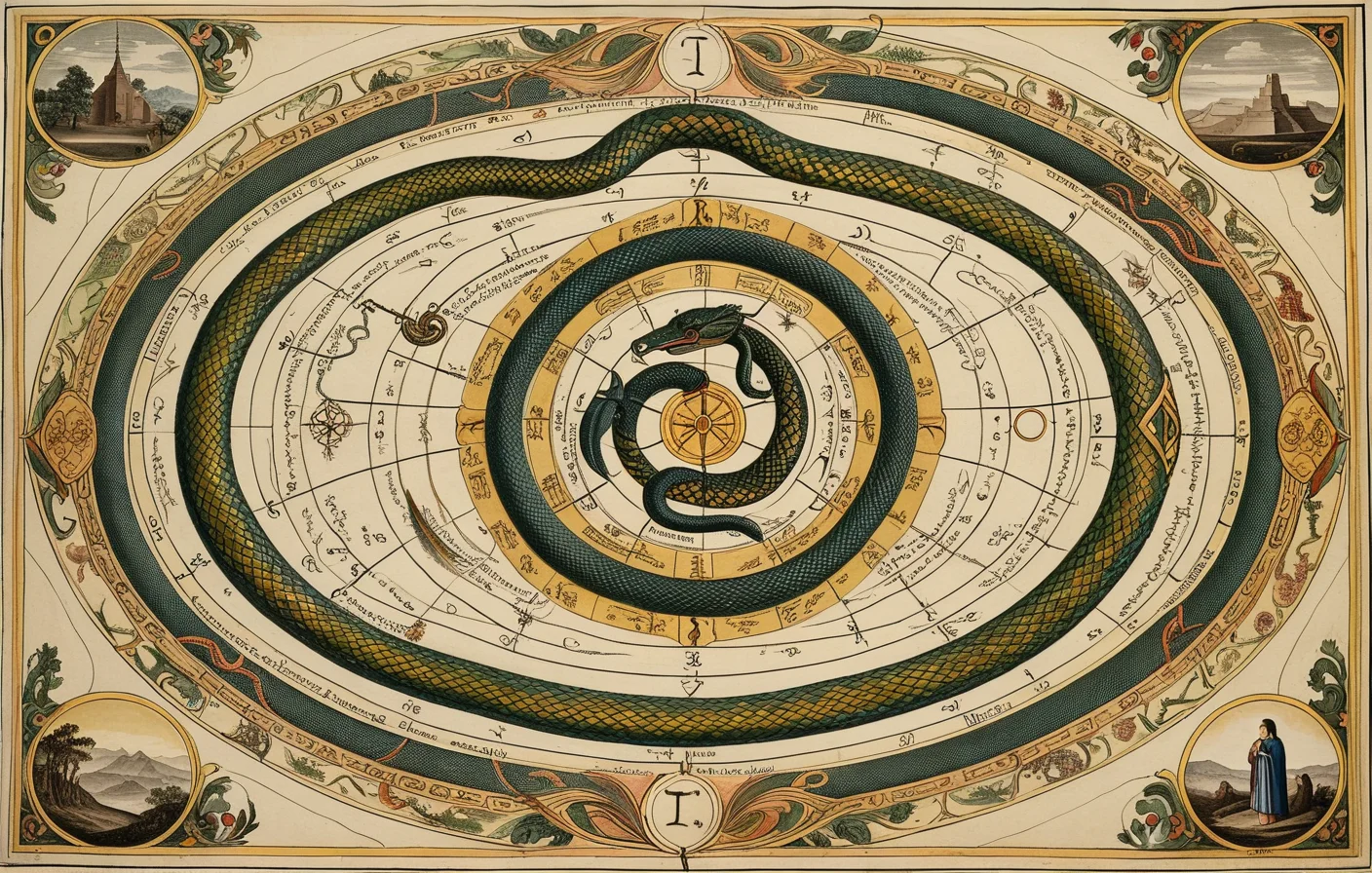
2. Snake
The snake is one of the most polarized dream symbols in the world. It combines danger, healing, renewal, forbidden knowledge, hidden force, and bodily intelligence in one image.
Baseline symbolic range
- danger and threat
- transformation and shedding
- sexuality and vitality
- medicine and healing
- hidden power
Cultural emphases
Biblical and Christian symbolic traditions
The snake often carries temptation, deceit, or moral testing. In dreams this can tilt interpretation toward seduction, compromise, divided conscience, or spiritual warning.
Greek traditions
The snake can appear in healing contexts, especially where medicine and prophecy overlap. This gives serpent imagery a more ambivalent role: not simply danger, but dangerous wisdom or curative force.
South Asian and yogic traditions
The serpent may indicate kundalini force, spiritual awakening, coiled potential, and life energy moving through the body.
Mesoamerican traditions
Feathered-serpent and sacred-serpent imagery complicate simplistic fear readings by linking the snake with creation, rulership, and the meeting of earth and sky.
Dream implication
When a snake appears, the interpreter should ask not “good or bad?” but “what kind of power is present, and is the dreamer resisting it, receiving it, or being warned by it?”
3. Water
Water is among the broadest symbolic media in dream life. It can cleanse, overwhelm, reveal depth, hide danger, carry memory, or signal new life. Cultural traditions often differ less on the importance of water than on which of its properties they emphasize.
Baseline symbolic range
- emotion and affect
- purification
- fertility and life
- chaos or overwhelm
- memory and the unconscious
Cultural emphases
Biblical and Near Eastern traditions
Water often swings between flood, judgment, deliverance, and purification. This makes dream water highly sensitive to scale and emotional tone.
East Asian traditions
Water can emphasize flow, adaptation, harmony, and subtle strength, especially where philosophical traditions value yielding over blunt resistance.
Indigenous and land-based traditions
Water may be treated as kin, life path, ancestral memory, or territorial force rather than merely interior emotion.
Dream implication
The core question is whether the dreamer is inside water, watching water, crossing water, resisting water, or being transformed by water. Those narrative positions matter more than the image alone.
4. Mirror
Mirror symbolism is often treated narrowly as vanity or self-reflection, but comparative reading reveals a richer field.
Baseline symbolic range
- self-knowledge
- distortion
- revelation
- doubled identity
- illusion
Cultural emphases
Psychological traditions
Mirrors often indicate confrontation with the self-image, disowned traits, or developmental change.
Ritual and magical traditions
Mirrors may operate as thresholds, divinatory devices, or surfaces between worlds.
Literary and mythic traditions
The mirror often becomes a place where truth is either shown or distorted. In dream life, this can produce scenes of uncanny recognition or frightening misrecognition.
Dream implication
A mirror dream should be read with attention to what is reflected, what is missing, and whether the reflection feels truthful, idealized, or monstrous.
5. Bird
Bird symbolism often feels intuitive because birds already occupy a natural threshold between ground and sky. Yet even here, cultural emphasis matters.
Baseline symbolic range
- transcendence
- message
- freedom
- soul or spirit
- perspective
Cultural emphases
Classical and divinatory traditions
Birds can function as omens, messengers, or indicators of fate.
Christian and spiritual traditions
Birds may symbolize soul ascent, purity, or divine communication depending on species and scene.
Shamanic and mythic traditions
Birds often represent travel between levels of reality, carrying dream interpretation toward threshold states rather than ordinary cognition.
Dream implication
Bird dreams often ask whether the dreamer is being invited upward, warned from above, or shown a new field of perception.
6. House
The house is one of the most globally legible dream structures because it converts personhood into architecture.
Baseline symbolic range
- selfhood
- psyche structure
- memory
- safety and exposure
- inherited history
Cultural emphases
Domestic structure means different things in different symbolic worlds, but the recurring dream logic remains stable: houses reveal what the self contains, hides, inherits, or neglects.
Basements, attics, hidden rooms, collapsing walls, and unfamiliar additions all become powerful because they spatialize internal realities.
Dream implication
House dreams should always be read room by room. The site of action matters. A roof problem means something different from a basement flood or a hidden chamber.
7. Road, Bridge, Stair, and Gate
Threshold symbols deserve to be grouped because they often function together across cultures.
Baseline symbolic range
- movement between states
- transition
- decision
- crossing
- risk and initiation
Cultural emphases
Roads may imply fate, pilgrimage, exile, or purposeful journeying. Bridges may imply relationship, danger, or passage between worlds. Stairs may imply ascent, descent, hierarchy, or initiation. Gates may imply access, exclusion, or permission.
Dream implication
These symbols are strongest when interpreted as process rather than object. The question is always: what is being crossed, approached, avoided, or left behind?

8. Death Imagery
Death is one of the most misunderstood dream symbols because readers often fear literal prediction. Comparative reading usually shows a much wider symbolic range.
Baseline symbolic range
- ending
- transition
- ego death
- grief processing
- rebirth
Cultural emphases
Some traditions emphasize moral judgment or afterlife transition. Others emphasize cyclical renewal, ancestor contact, or ritual passage. Psychological frameworks often emphasize transformation rather than literal mortality.
Dream implication
Death dreams are best read in relation to what in the dreamer’s life is ending, shedding, or changing form. Literal fear should not be exploited where symbolic transition is the stronger reading.
9. Why Comparison Improves Interpretation
Cross-cultural comparison helps readers in four major ways:
- it breaks false literalism
- it widens symbolic imagination
- it prevents one framework from dominating too quickly
- it reveals where meaning converges across traditions
Good comparison does not create confusion. It creates proportion. It reminds the reader that a symbol can carry several live possibilities without becoming arbitrary.
10. Limits of the Atlas
The atlas does not claim to summarize every tradition exhaustively. Cultural labels are broad. Historical records vary in depth. Some symbolic lines are cleaner than others. The atlas should therefore be read as a comparative guide rather than a final tribunal.
Conclusion
Shared dream images survive because human life repeats certain conditions: danger, desire, passage, loss, awe, memory, and change. Culture does not erase those conditions. It shapes how they are told. This atlas exists to help readers see both the common image and the culturally distinct story.
That is what makes comparative symbolism worth doing carefully.
Related Research
Continue In Research
Build context across methodology, statistics, and reference guides.
Reference
How Dream Symbols Are Organized: Structure, Coverage, and Limits
A detailed guide to how dream symbols, themes, myths, and cultural associations are organized so interpretations can be searched, compared, and read in context.
Data
Dream Symbol Statistics: What Scale, Recurrence, and Category Structure Reveal
A statistical reference page on the scope of the symbol library, the value of category structure, recurring dream motifs, and how to interpret data-rich symbolic patterns without false certainty.
Guide
Common Dreams Explained: Why the Same Dream Scenarios Return Again and Again
A long-form guide to the major recurring dream scenarios that dominate public interest, including being chased, falling, teeth, snakes, ex-partners, paralysis, floods, nudity, flying, and death imagery.
Standards
How Dream Interpretation Stays Coherent: Review, Care, and Consistency
A guide to how dream writing is reviewed so symbols, myths, and recurring scenarios remain careful, readable, and internally consistent.