Zumbi of Palmares Myth Meaning & Symbolism
The story of a warrior-king born free in a fugitive kingdom, whose life and death forged an eternal symbol of resistance and collective soul.
The Tale of Zumbi of Palmares
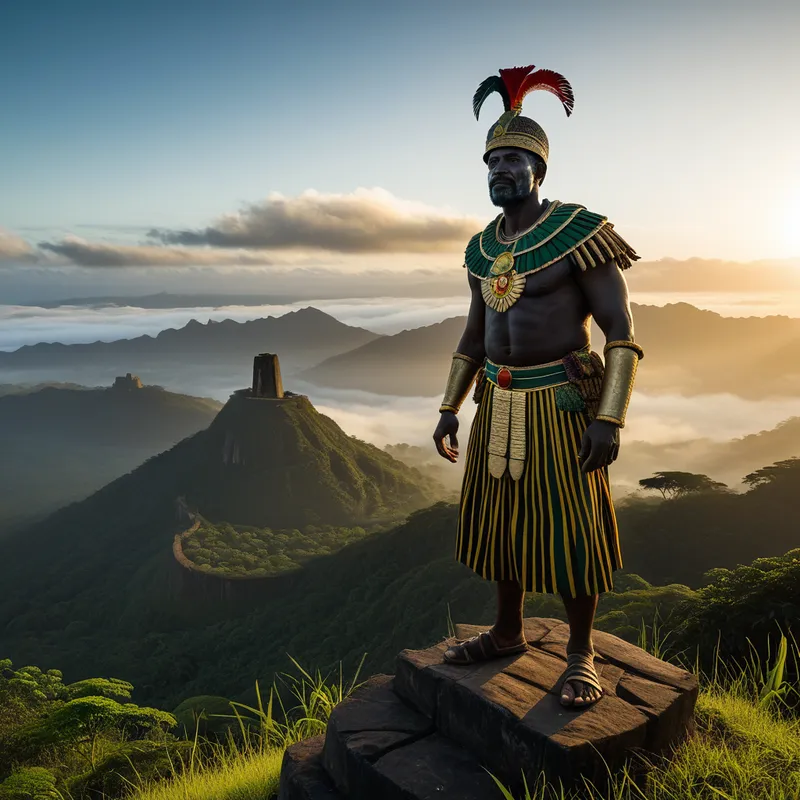
Listen. The story does not begin with a birth, but with a breath—the first free breath drawn in a land of chains. It begins in the green, defiant heart of the Serra da Barriga, the Mountain of the Belly, where the earth itself swelled to give sanctuary. Here, the fugitives built not just huts, but a kingdom. They called it Palmares, a forest of palms, and for a hundred years it stood as a thorn in the side of empire, a republic of the escaped.
Into this world of hard-won freedom, a child was born. Not in a palace, but in the free air. They named him Zumbi. The story says he was not just a man, but a force—a spirit of ancestral vengeance and future hope made flesh. As a youth, he was taken, his freedom stolen a second time, given to a priest who taught him the language and the god of the masters. He learned their letters, their prayers, their maps of conquest. But the forest called to him in the voice of his mother. The drums of Palmares beat in his blood, a rhythm no Latin hymn could drown. He returned. He shed the priest’s cloth and took up the warrior’s spear.
And so Zumbi rose, not as a king by birth, but as a king by will. Under his command, Palmares did not just hide; it thrived. Its warriors, the quilombolas, moved through the forest like shadows, striking with the sudden fury of a storm. They built terraces for maize, foraged the bounty of the land, and forged weapons from captured iron. For years, the Portuguese sent their bandeiras, their flags of death, into the highlands. And for years, the forest swallowed them whole.
But empires have long memories and longer grudges. The final assault came not as a raid, but as a siege—a slow, grinding encirclement of the dream. They brought cannons to crack the mountain’s spirit. The air grew thick with the smell of gunpowder and burning palm thatch. For twenty-two days, the kingdom fought. On the twenty-third, the walls of the great settlement, Macaco, fell.
The tale does not end there. Zumbi escaped. He became a ghost in the forest he had ruled, a whisper of resistance that terrified the colonists more than any army. For nearly two years, he was a legend walking, a promise that Palmares lived while he drew breath. But gold and betrayal are old companions. A trusted brother, lured by promises of pardon and pieces of silver, led the hunters to his refuge.
They captured him on November 20th, 1695. In the public square of Porto Calvo, they severed his head. They salted it and placed it on a pike, a warning to all who might dream of freedom. But as the story is told, the head did not rot. Its eyes remained open, staring not at the crowd, but at the distant, green mountains. And from that day, the name Zumbi did not signify death. It became a verb. To Zumbi is to resist. To Zumbi is to be unkillable. The body could be broken, but the spirit had already taken root in the soul of a people.
Cultural Origins & Context
This is not a myth from a lost antiquity, but a living legend born from the brutal forge of the Atlantic World. Its setting is the historical quilombo of Palmares in 17th-century Brazil, the largest and longest-lasting Maroon society in the Americas. The story of Zumbi is the foundational epic of the African Diaspora in Brazil, a narrative crafted not by scribes in courts, but by the oral tradition of resistance.
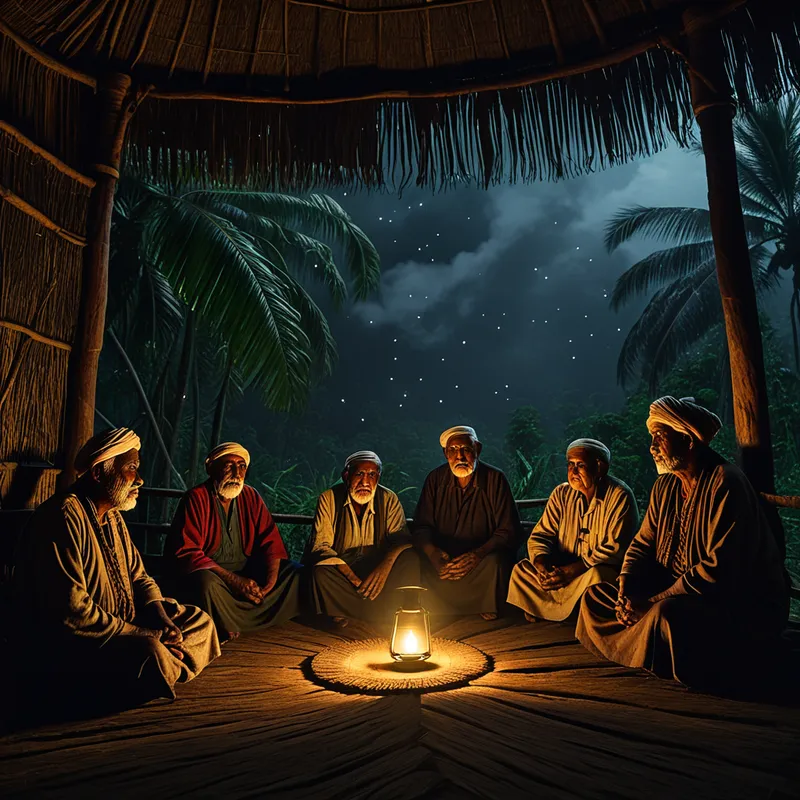
It was passed down in whispers by enslaved people in the senzalas (slave quarters), sung in the cadences of capoeira circles, and preserved in the rituals of Candomblé and other African-derived religions. For centuries, it was a subterranean history, a counter-narrative to the official story of colonial pacification. The tellers were the griots of the new world—elders, warriors, mothers singing lullabies of freedom. Its societal function was multifaceted: it was a map for escape, a blueprint for community, a theology of liberation, and a psychological armor against the dehumanizing reality of chattel slavery. It transformed history into destiny, and a man into an orixá of war and justice.
Symbolic Architecture
At its core, the myth of Zumbi is an archetypal [drama](/symbols/drama “Symbol: Drama signifies narratives, emotional expression, and the exploration of human experiences.”/) of the Self versus the oppressive, alienating [Shadow](/symbols/shadow “Symbol: The ‘shadow’ embodies the unconscious, repressed aspects of the self and often represents fears or hidden emotions.”/) of the colonial ego. Zumbi represents the indomitable psychic core that refuses [assimilation](/symbols/assimilation “Symbol: The process of integrating new experiences, identities, or knowledge into one’s existing self, often involving adaptation and transformation.”/) or annihilation. His [journey](/symbols/journey “Symbol: A journey in dreams typically signifies adventure, growth, or a significant life transition.”/) from captured [child](/symbols/child “Symbol: The child symbolizes innocence, vulnerability, and potential growth, often representing the dreamer’s inner child or unresolved issues from childhood.”/) to priestly [student](/symbols/student “Symbol: The student symbolizes learning, growth, and the pursuit of knowledge.”/) to rebel [king](/symbols/king “Symbol: A symbol of ultimate authority, leadership, and societal order, often representing the dreamer’s inner power or external control figures.”/) models the process of reclaiming one’s own narrative from the captor’s [script](/symbols/script “Symbol: The symbol of ‘script’ indicates a narrative or roadmap for one’s life, representing the conscious and unconscious stories we tell ourselves.”/).
The true rebellion is not merely against external chains, but against the internalized master who whispers that freedom is impossible.
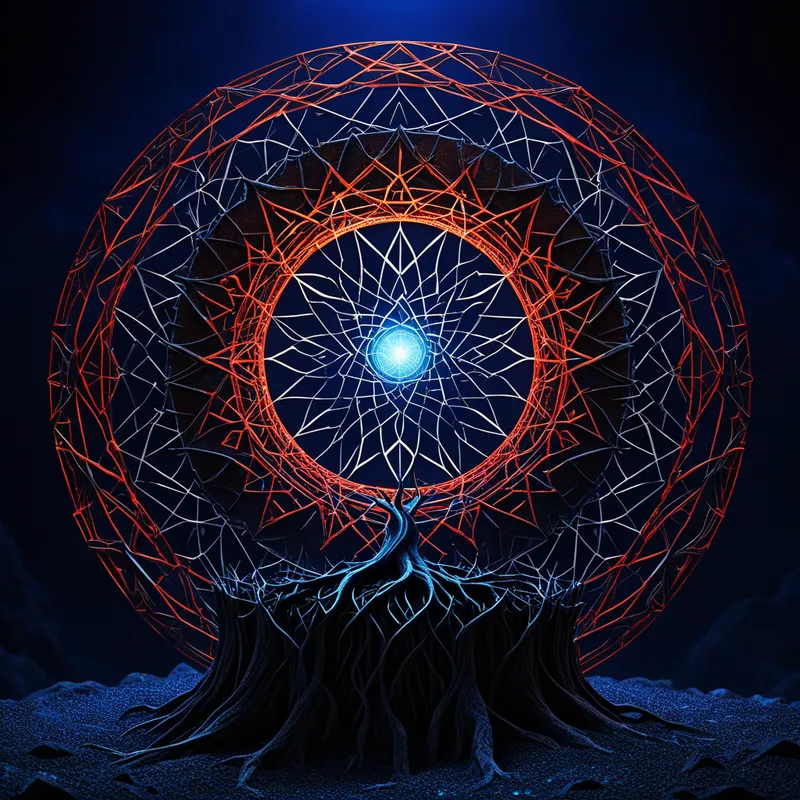
The [kingdom](/symbols/kingdom “Symbol: A kingdom symbolizes authority, belonging, and a sense of identity within a larger context or community.”/) of Palmares itself is a profound [symbol](/symbols/symbol “Symbol: A symbol can represent an idea, concept, or belief, serving as a powerful tool for communication and understanding.”/)—a [mandala](/symbols/mandala “Symbol: A sacred geometric circle representing wholeness, the cosmos, and the journey toward spiritual integration.”/) of wholeness carved out of [chaos](/symbols/chaos “Symbol: In Arts & Music, chaos represents raw creative potential, uncontrolled expression, and the breakdown of order to forge new artistic forms.”/). It represents the achieved Self, a functioning, autonomous psyche built from the fragments of a shattered cultural [identity](/symbols/identity “Symbol: Identity represents the sense of self, encompassing personal beliefs, cultural background, and social roles.”/). Its ultimate destruction is not a failure, but a necessary crucifixion; the physical [kingdom](/symbols/kingdom “Symbol: A kingdom symbolizes authority, belonging, and a sense of identity within a larger context or community.”/) had to fall so that the symbolic kingdom—the [idea](/symbols/idea “Symbol: An ‘Idea’ represents a spark of creativity, innovation, or realization, often emerging as a solution to a problem or a new outlook on life.”/) of absolute freedom—could become immortal, migrating from geography to the [soul](/symbols/soul “Symbol: The soul represents the essence of a person, encompassing their spirit, identity, and connection to the universe.”/).
The Dreamer’s Resonance
When this myth stirs in the modern dreamer, it signals a profound confrontation with the internalized oppressor. To dream of Zumbi or Palmares is to dream of a part of the psyche that has been in fugitive status—a talent, a cultural identity, a moral truth, or a capacity for joy that has been forced into hiding by the “colonial” forces of conformity, shame, or trauma.
The somatic experience might be one of constriction (the chains, the siege) suddenly breaking into a surge of empowered agency (running through the forest, defending a high place). The dreamer may find themselves in a labyrinthine, fortified place they must defend, or conversely, fleeing toward a distant, green mountain they instinctively know as home. This is the psyche mobilizing its resources for a final, defining stand to reclaim sovereignty. The emotional tone is not naive hope, but the grim, exhilarating clarity of a freedom fought for, not given.
Alchemical Translation
The alchemy of the Zumbi myth is the transmutation of victimhood into eternal resistance, and of historical death into symbolic immortality. For the individual, this models the most critical phase of individuation: the conscious sacrifice of the old, adapted personality (the assimilated Zumbi in the priest’s service) to the demands of the authentic Self (the Zumbi who returns to the mountain).
The head on the pike is the ultimate alchemical symbol: the caput mortuum that is not dead. It represents the fixed, conscious principle (the head) that, through the ultimate sacrifice, becomes permanently installed as a guiding, witnessing consciousness for the collective.
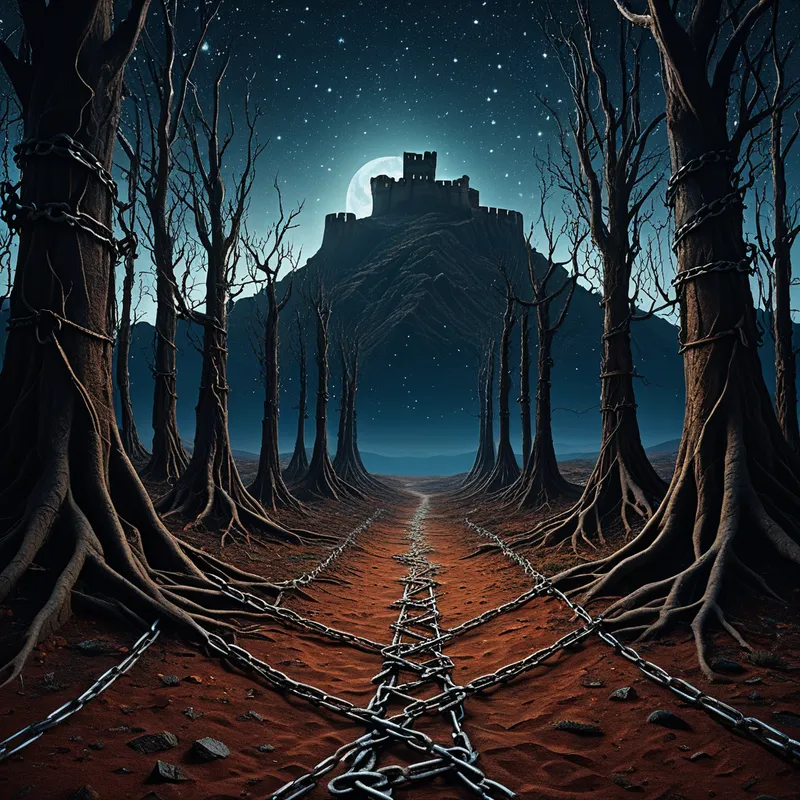
The process is nigredo—the blackening of siege and betrayal, the feeling of utter annihilation. It is the rubedo—the bleeding wound of the people, the red earth of the mountain path. And it is the ultimate albedo—not a white purity, but the enduring, ghostly presence of the spirit that cannot be erased. The modern individual undergoing this transmutation does not necessarily win their external battle. They may lose the job, the relationship, the old identity. But like Zumbi, they achieve a symbolic victory: the internal oppressor is definitively identified and exiled, and the soul’s territory, however small, is declared forever free. The kingdom within is established.
Associated Symbols
Explore related symbols from the CaleaDream lexicon:
- Forest — The dense, protective, and nourishing womb of resistance; the unconscious realm where the fugitive self can hide, gather strength, and move unseen.
- Mountain — The elevated place of sovereignty, vision, and ultimate defense; representing the aspirational height of the achieved Self and the difficult ascent to freedom.
- Warrior — The archetype of disciplined, principled resistance; the part of the psyche that must fight to protect its boundaries and its right to exist.
- Sacrifice — The necessary offering of the individual life for the immortality of the ideal; the alchemical process where personal death fuels collective rebirth.
- Spirit — The indomitable, non-physical essence that survives physical destruction; the ancestral force that animates the resistance and becomes a guiding presence.
- Freedom — The ultimate goal and core state of being; not a granted condition but a captured territory of the soul that must be constantly defended.
- Root — The connection to ancestral source, culture, and identity that provides sustenance and resilience; the hidden network that supports the visible struggle.
- Circle — The wholeness and self-sufficiency of the quilombo community; the mandala of a complete, autonomous psyche achieved against all odds.
- Blood — The lineage, the cost of sacrifice, and the visceral bond of a people; the life-force spilled that consecrates the ground of struggle.
- Shadow — Both the oppressive external force to be resisted and the internalized betrayer; the dark aspects that must be confronted and integrated or expelled.
- Dream — The visionary blueprint for a free society held collectively; the prophetic impulse that guides the fugitive toward the promised land.
- African — The irreducible core of identity and cultural memory; the diasporic connection to a homeland of the spirit that fuels the desire for autonomy.