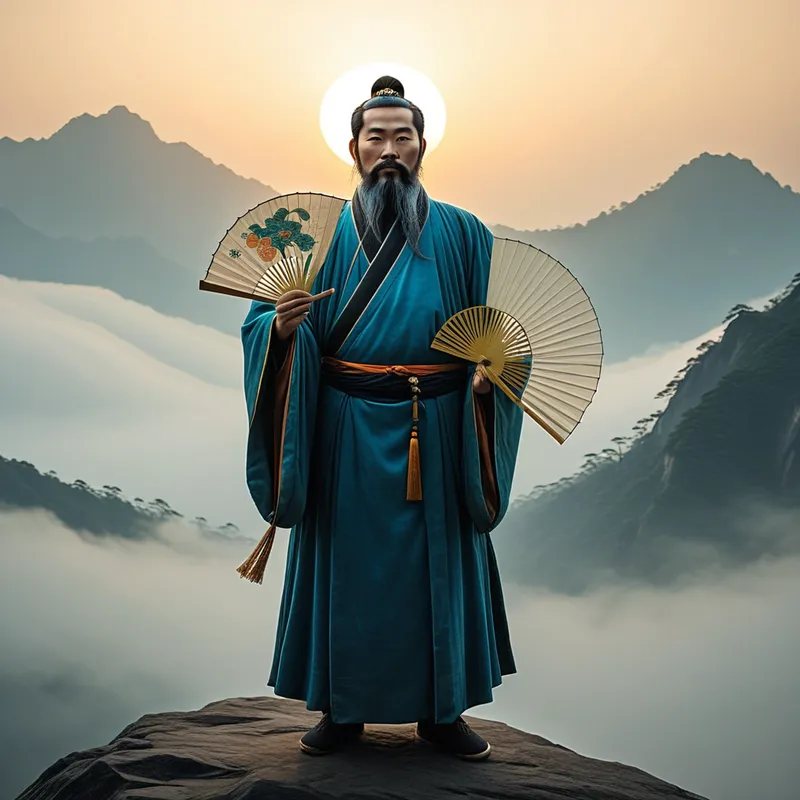
Zhongli Quan Myth Meaning & Symbolism
A Tang dynasty general's failure leads to an encounter with an immortal, transforming him into a divine sage wielding the fan of life and death.
The Tale of Zhongli Quan
The air over the battlefield was thick with the iron scent of blood and the despair of broken men. General Zhongli Quan surveyed the carnage, his heart a stone in his chest. The emperor’s favor, the glittering armor, the roar of loyal troops—all had turned to ash. Defeat was complete. The path of worldly ambition, he saw now, led only to this field of sorrow. With the weight of a thousand lost souls upon him, he turned his back on the empire and walked. He walked until his fine boots frayed, until the shouts of war faded into the whisper of mountain pines, until he found a valley so remote it seemed to have been forgotten by time itself.
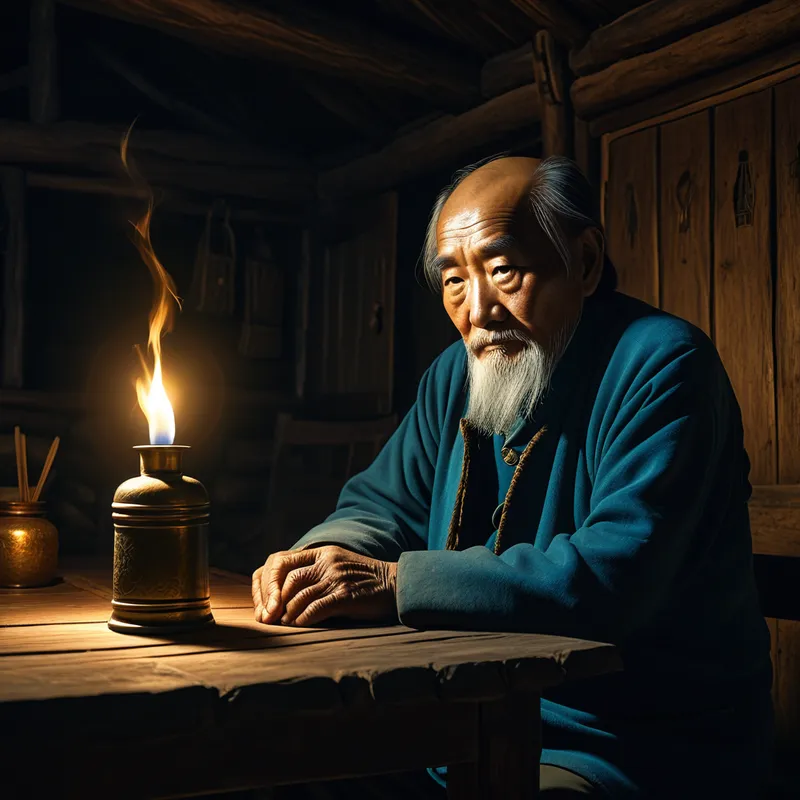
Here, in a humble hut of stone and thatch, he sought to forget. He tried to tend a garden, but his hands, trained for the sword, fumbled with the soil. He tried to meditate, but his mind was a storm of ghosts. One evening, as a violet dusk settled, a strange light flickered at his door. An old man stood there, but this was no ordinary elder. His eyes held the depth of still pools, and a faint, pearlescent light seemed to emanate from his simple robe. He introduced himself as Li Tieguai, and in his presence, the very air hummed with potential.
“You seek to escape your nature,” Li Tieguai said, his voice like wind through ancient bamboo. “But the furnace of the self must be entered, not fled.” He spoke of the Qi, of the secret fire that could transmute leaden failure into golden wisdom. For days, he instructed the weary general in the arts of the breath, the circulation of light, and the patience of the mountain. Then, from a simple pouch, Li Tieguai produced a small, unadorned crucible. With a gesture, a flame—cold and blue—sprang to life beneath it. He added herbs, minerals, and finally, a single drop of dew gathered at dawn from a lotus leaf.
As the mixture shimmered, Li Tieguai turned to Zhongli Quan. “The final ingredient,” he intoned, “is your regret. Not to be discarded, but to be offered to the fire.” Zhongli Quan, tears finally breaking through his stern facade, bowed his head. He saw not just his military failure, but the arrogance, the ambition, the blindness that had led him there. He offered it all into the crucible. The substance within flashed with a light so profound it cast no shadow, resolving into a single, luminous pearl—the Elixir of Life.
Upon swallowing it, Zhongli Quan did not merely feel healed. He was unmade and remade. The burdens of his past dissolved not into nothingness, but into understanding. His military bearing softened into an unshakable poise; his stern gaze warmed with boundless compassion. Li Tieguai smiled and presented him with two gifts: the secret of the Golden Elixir of the Nine Cycles, and a large, magical fan. “With this,” the immortal said, “you may revive the dead and wither the living. You are no longer a general of men, but a steward of the great transformation.” And with that, Zhongli Quan, now an immortal, took his place among the stars, his laughter echoing like a gentle thunder that promises rain.
Cultural Origins & Context
The myth of Zhongli Quan is woven into the rich tapestry of Taoist folklore, crystallizing during the Tang and Song dynasties. He is foremost among the Eight Immortals, a beloved pantheon that represented accessible divinity, each figure a archetype of how enlightenment could be achieved from ordinary, often flawed, human beginnings. Unlike remote celestial bureaucrats, the Eight Immortals were depicted as jovial, itinerant sages who intervened in human affairs, rewarding the virtuous and punishing the wicked.
Zhongli Quan’s story was propagated through oral tradition, popular drama, temple murals, and vernacular literature. His narrative served a crucial societal function: it democratized the pursuit of immortality. Here was a high-ranking general, a man of the Confucian world of order and duty, who found his true path only through its collapse and subsequent tutelage in Taoist wisdom. This provided a powerful cultural counter-narrative, suggesting that ultimate wisdom (zhi) often lies beyond conventional success. His iconography—the bare belly symbolizing contentment and the fan symbolizing control over life forces—made complex alchemical principles tangible for common people, offering a mythic map for personal transformation amidst life’s inevitable failures.
Symbolic Architecture
At its core, the myth of Zhongli Quan is a profound allegory for the alchemy of the psyche. The battlefield represents the persona, the constructed self of social achievement and martial identity that is ultimately shattered. His retreat to the mountain is not an escape, but a necessary descent into the unconscious—the isolated valley where the neglected parts of the self reside.
The crucible is not found on the mountaintop of success, but in the valley of failure, where the ore of the ego is finally laid bare.
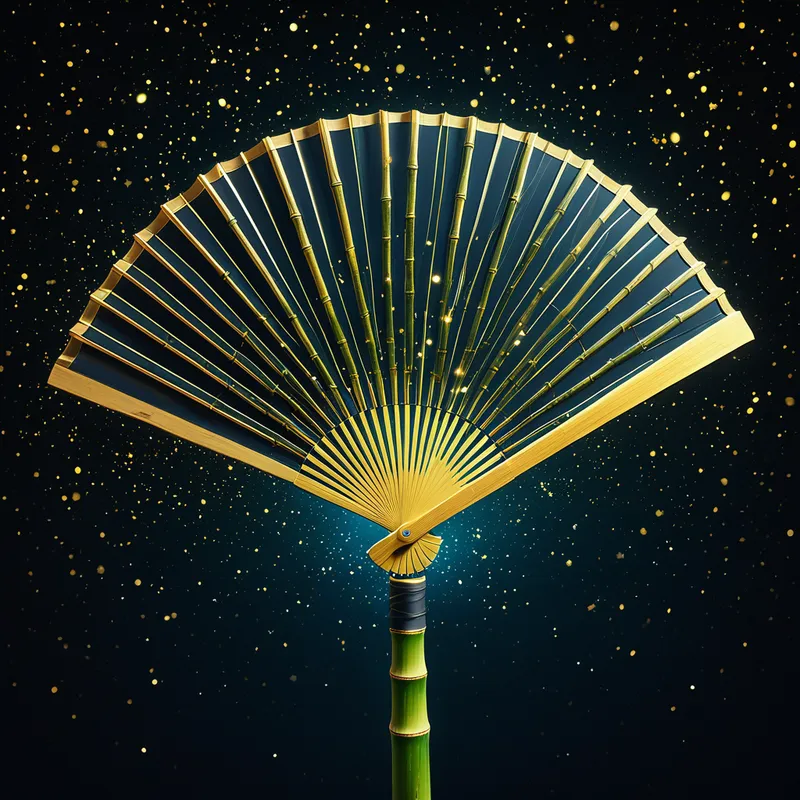
Li Tieguai represents the archetypal Senex, the wise old man who emerges from the psyche when the conscious mind is humbled and ready to learn. The elixir is not a literal potion, but the symbolic achievement of psychic wholeness. The key is that Zhongli Quan must contribute his “regret”—his conscious acknowledgment and integration of his shadow, his failures and flaws—as the essential ingredient. This transforms the potion from a mere external reward into an emblem of earned wisdom. His magical fan, which can grant life or wither it, symbolizes the enlightened individual’s mastery over their own psychic energies: the ability to nurture growth (conscious expansion) and to dissolve fixations (outworn attitudes).
The Dreamer’s Resonance
When the pattern of Zhongli Quan stirs in the modern dreamer, it often signals a profound crisis of identity. One may dream of a crumbling office (the modern battlefield), of losing all badges of rank or status, or of wandering lost in a stark, beautiful landscape. The somatic sensation is often one of heavy weight dissolving into a strange lightness—the literal feeling of the persona’s armor falling away.
Psychologically, this dream motif indicates the ego’s confrontation with its own limitations and the beginning of a numinous encounter with the Self. The appearance of a mysterious guide (a teacher, an unknown elder, even an animal with knowing eyes) marks the psyche’s innate healing intelligence activating. The dreamer is in the “mountain hut” phase: the old life has ended, but the new consciousness has not yet been forged. There is a palpable tension between despair and potential. This dream is an invitation to stop trying to rebuild the old fortress and instead, to sit patiently at the hearth of the soul and attend to the subtle, transformative fire now kindled within.

Alchemical Translation
The journey of Zhongli Quan provides a flawless model for the Jungian process of individuation. His initial state is one of inflation: identified entirely with the powerful persona of the general. His defeat is the necessary mortificatio—the alchemical “killing” or humiliation of the base metal of the ego. This painful dissolution (solutio) is not the end, but the precondition for purification.
His meeting with Li Tieguai represents the connection to the transcendent function, the psychic process that mediates between opposites and generates a new, third position. The instruction he receives is the disciplina of inner work—learning to circulate and refine one’s own psychic energy (Qi or libido).
Enlightenment is not the absence of leaden failure, but the discovery of the philosopher’s stone within it.
The crucial act of offering his regret is the coniunctio oppositorum—the sacred marriage of conscious acknowledgment (the general) and unconscious shadow material (the failure). This integration produces the lapis philosophorum, the Philosopher’s Stone, symbolized by the elixir. The result is not a perfect being, but a whole one: Zhongli Quan the Immortal. He retains his formidable presence but is now governed by wisdom, not ambition. His fan signifies the achieved state where one can consciously engage with the cycles of life and death within the psyche—nurturing new growth and consciously letting old patterns die—without being identified with or victimized by either pole. For the modern individual, the myth teaches that our most profound transformations are catalyzed not by our victories, but by our willingness to consciously and alchemically work with the raw material of our defeats.
Associated Symbols
Explore related symbols from the CaleaDream lexicon: