Yokai Myth Meaning & Symbolism
Yokai are the animated spirits of Japan, born from nature's awe and human anxiety, dwelling in the liminal spaces between the seen and the unseen world.
The Tale of Yokai
Listen, and let the hour grow late. The world you know is but the thinnest of rice-paper screens. Beyond it, in the deepening blue of twilight, in the sigh of the wind through bamboo, in the silent moment between one heartbeat and the next, the other world stirs.
It is the hour of tasogare, the “who-hour,” when shapes lose their certainty. The old wood of the bridge groans, not from weight, but from the passage of the kappa, its dish-shaped head filled with life-water, seeking to challenge the unwary to a sumo match and steal their soul-jewel. In the attic, a forgotten tea-kettle begins to sprout a tanuki’s tail and paws, tapping a cheerful, mischievous rhythm. Down the abandoned mountain path, a beautiful woman in a tattered kimono weeps—but do not offer your shoulder, for her neck will stretch like rubber to peer into your soul with her single, enormous eye.
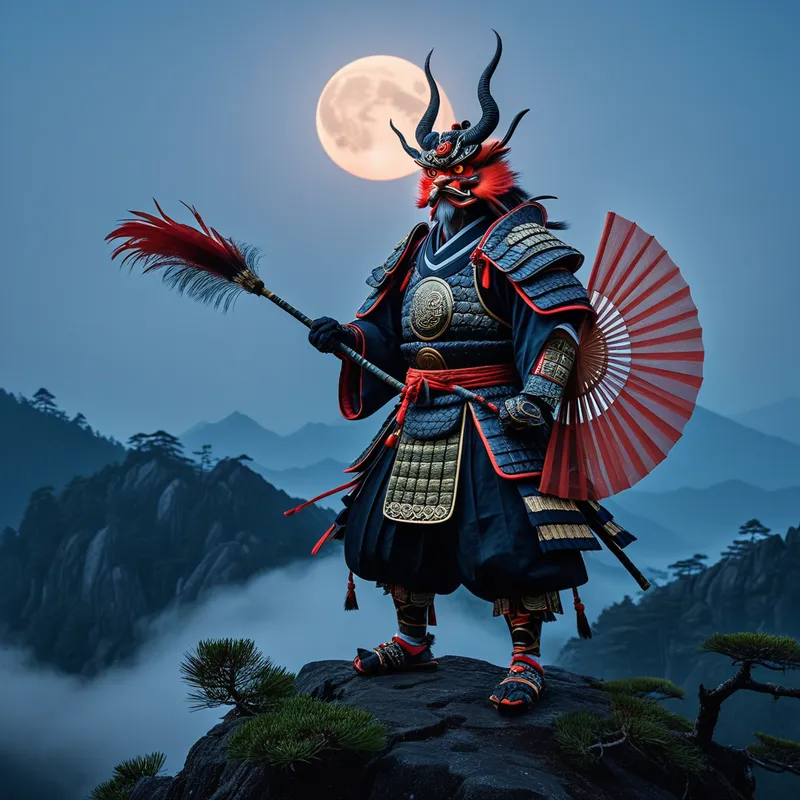
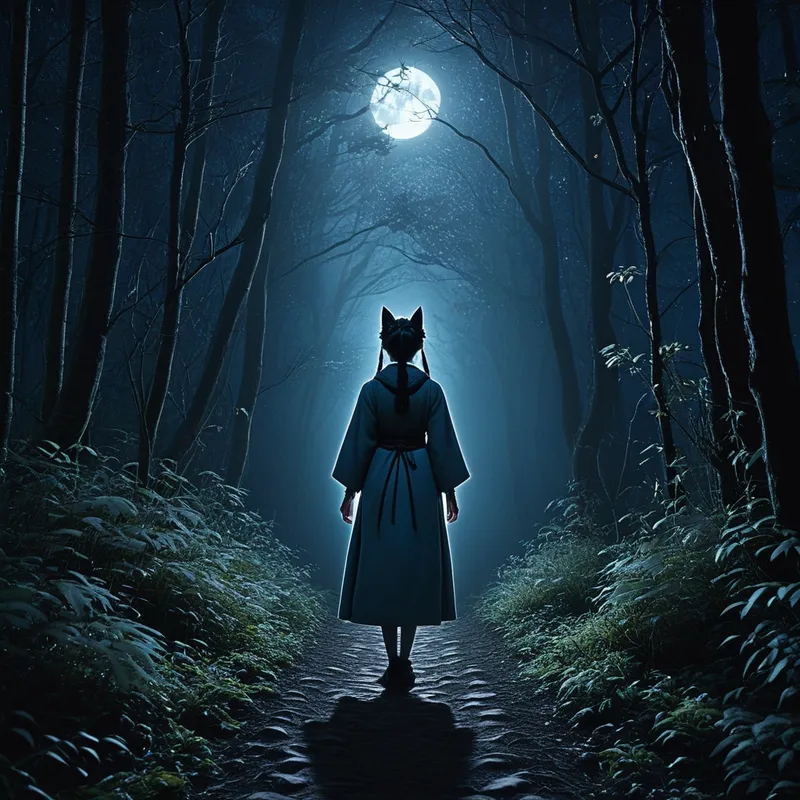
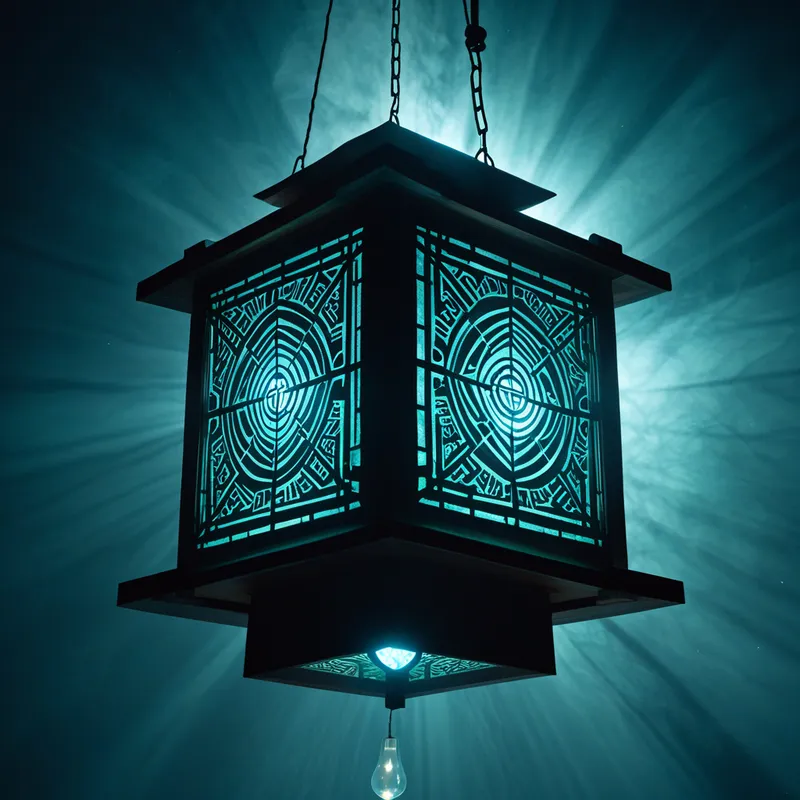
These are the yokai. They are the fox-wife who brings prosperity until her true form is glimpsed. They are the mountain tengu who tests the pride of warriors, whisking them away to a realm where time flows like syrup. They are the countless henge who walk among us, and the tsukumogami—the worn-out sandal, the cracked umbrella, the old lantern—that rise on their hundredth birthday, animated by a poignant, sometimes vengeful, gratitude for being remembered, or fury for being discarded.
Their world is not one of epic battles for celestial thrones, but of intimate, unsettling encounters. A conflict arises in a moment of human carelessness: a broken promise to a fox, a pollution of a sacred stream, a glance at the wrong moment. The rising action is a chill down the spine, a shape in the peripheral vision that should not be there. The resolution is rarely victory, but often survival through cunning, respect, or appeasement—a correctly given cucumber for the kappa, a clever riddle to outwit the fox, or simply the blessed, terrifying arrival of dawn, which sends them scattering back into the cracks of the world.
Cultural Origins & Context
The yokai are not a single, codified myth, but a vast, living folklore ecosystem that evolved over centuries. Their roots are in ancient Shinto animism, where every rock, tree, and stream possessed a spirit, a kami. Some of these kami were benevolent, others capricious or dangerous—the raw, untamed voice of nature itself. As Buddhism arrived, it brought concepts of karma, hungry ghosts (gaki), and hells, which merged with indigenous beliefs to form more complex spirits of sorrow and attachment.
For most of history, yokai lore was an oral tradition, told by villagers around hearths and by travelers in inns. They were explanations for the inexplicable: the strange sound in the night was a Akaname; a sudden illness, the work of a possessing fox. In the Edo period, artists like Toriyama Sekien cataloged them in illustrated bestiaries, giving form to the formless and standardizing their appearances, transforming local folktales into a shared national mythology. They served as societal cautionary tales, enforcing community norms, warning against wandering at night, polluting nature, or breaking social contracts.
Symbolic Architecture
Yokai are the psychological and ecological shadow of Japan. They represent all that is pushed to the margins of consciousness and culture.
The yokai is the embodied question mark in the landscape of the known. It is the thing that goes bump in the psyche, demanding to be seen.
They symbolize the return of the repressed. The Kuchisake-onna is the eruption of silenced female rage and beauty standards turned monstrous. The Kasa-obake is the guilt of waste in a culture of respect for objects. They are the personification of liminality, inhabiting thresholds: riverbanks (kappa), forest edges (tengu), the hour of dusk (tasogare). Psychologically, they dwell in our own liminal states—between sleep and waking, sanity and madness, the ego and the unconscious.
Most profoundly, they represent the animation of the environment by the psyche. They show a world where mind and matter are not separate. A human’s intense emotion—jealousy, loneliness, pride—can literally spawn a yokai. The landscape itself is conscious, and our inner state resonates with it, calling forth corresponding forms from the collective unconscious.
The Dreamer’s Resonance
When yokai patterns haunt modern dreams, the dreamer is navigating a psychic landscape where the boundaries of identity and reality have become porous. It is not a dream of classical monsters, but of animated peculiarities.
To dream of a zashiki-warashi, a child spirit in one’s home, may signal the emergence of a playful, innocent, or trickster-like complex from the personal unconscious, one that promises change if welcomed. Dreaming of being pursued by a faceless noppera-bō often coincides with feelings of anonymity, loss of self, or encountering the “blank face” of a depersonalized society or relationship.
The somatic experience is key: the dreamer often reports a feeling of weighted strangeness, a chilling certainty that the rules have changed. This is the psyche’s way of simulating a confrontation with the numinous and the uncanny. The dream yokai is an autonomous complex making itself known, often representing a forgotten trauma, a repressed talent, or an aspect of the environment (a job, a relationship) that has taken on a life of its own and now demands recognition.
Alchemical Translation
The journey with the yokai is the alchemy of the orphan archetype—the part of us that feels cast out, strange, or disconnected from the mainstream world of the conscious ego. The myth models a path of psychic transmutation that is not about slaying the monster, but about relating to the anomaly.
Individuation is not a war against the shadow, but a long conversation with the strange guests at the threshold of your awareness.
The first step is acknowledgment. The hero in a yokai tale survives by first accepting that the strange phenomenon is real. Psychologically, this is the courage to admit, “This disturbing thought, this irrational fear, this quirky obsession, is part of my psychic landscape.” One must name the gaki of one’s own insatiable hunger, or the Yuki-onna of one’s emotional coldness.
The second is engagement under new rules. You do not fight a kappa with a sword; you bow, and it must bow back, spilling the water of its life-force. This is the act of engaging the complex on its own symbolic terms—through art, active imagination, or dialogue—rather than through rational suppression. You answer the riddle of the fox, you offer the cucumber of a specific sacrifice to appease a psychic demand.
The final transmutation is integration or respectful distance. Some yokai, like the protective zashiki-warashi, can be integrated, bringing their unique energy into the household of the self. Others, like the vengeful onryō, must be laid to rest through understanding and release of the original grievance. And some, like the majestic, untamable tengu of the mountain, are never integrated. They remain as powerful, external archetypes—reminders of the wild, transcendent forces that exist beyond the ego’s control, to be respected and visited, but never owned. In making peace with the yokai within and without, we do not banish the mystery of the world; we learn to dwell, meaningfully, in the tasogare, the beautiful, haunted threshold where the self meets the soul of all things.
Associated Symbols
Explore related symbols from the CaleaDream lexicon: