Yagan and the Spirit World Myth Meaning & Symbolism
A myth of a hero who journeys to the spirit world to restore balance, embodying the eternal dialogue between the living and the ancestral Dreaming.
The Tale of Yagan and the Spirit World
Listen. In the time before time, when the world was soft and the Dreaming still hummed close to the earth, there lived a man named Yagan. He was of the Noongar people, a man whose spirit was as strong as the jarrah tree and whose heart held the rhythm of the land. He walked the red earth, knew the secret paths of the kangaroo, and spoke to the wind. But a shadow fell upon his people. A sickness of spirit, a forgetting of the songs that tied them to the waterholes and the stars. The land grew thirsty, the animals wary, and a cold silence settled where laughter once lived.
Yagan felt this rupture in his own bones. He heard the land weeping. One evening, as the sun bled into the horizon, he went to the elders. “The thread is fraying,” he said, his voice low. “The Ancestors in the Spirit World are turning their faces from us. I must go to them. I must cross over and learn the song again.”
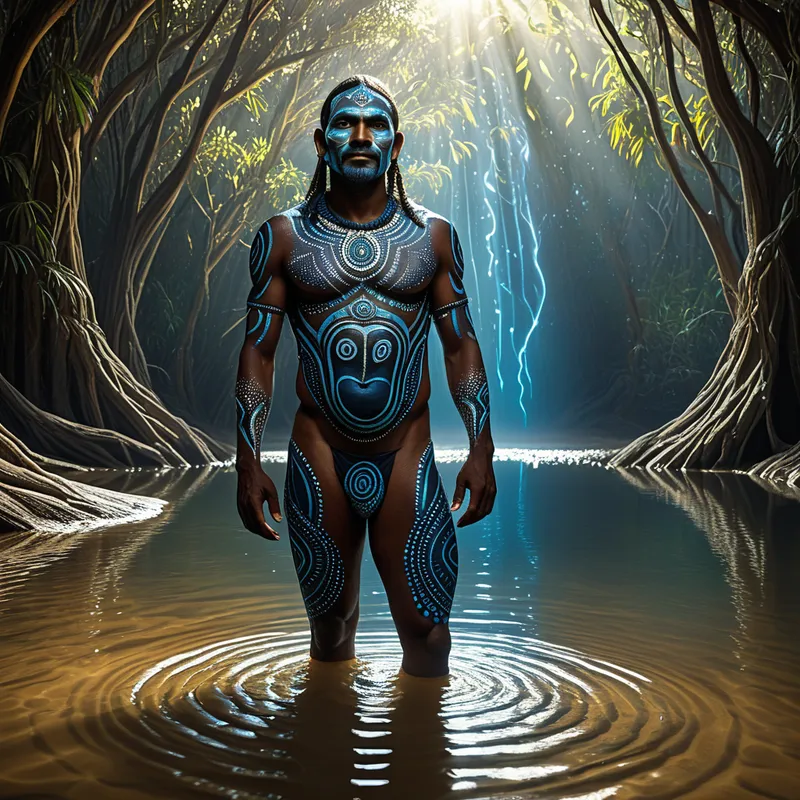
The elders warned him. The path to the Spirit World was not for the living. It was a journey through the Shadow of the world, a descent into the country of the dead. But Yagan’s resolve was a fire that could not be quenched. He was painted with ochre, lines connecting him to the Songlines. With a spear of hardened wood and a heart full of his people’s hope, he walked to the most ancient of places: a deep, still waterhole, a mirror to the sky, known to be a Door.
He did not dive into the water. He knelt beside it, placed his hands upon the cool mud, and began to sing. He sang the song of his mother’s country, of [the first sunrise](/myths/the-first-sunrise “Myth from Filipino culture.”/), of the rain’s promise. He sang until his voice was a whisper, and then he sang with his spirit alone. The water did not ripple. Instead, it grew utterly still, then impossibly deep, revealing not a reflection of the sky above, but of a sky below—a world of shimmering, inverted stars and ghostly gum trees.
Yagan stepped into that reflection. The water was not wet, but a membrane of cold light. He fell, or was pulled, down the root of the world. He passed through layers of memory—the cries of extinct beasts, the laughter of children long turned to dust, the silent watchfulness of the first Ancestors who shaped the mountains with their dreams. He arrived in a land of luminous twilight. Here, the Ancestors moved like constellations given form. A great Serpent, its scales the color of the rainbow, coiled around the heart of this world.
“Why has a living man walked the path of the dead?” the Serpent hissed, its voice the sound of wind through canyon rocks.
“To remember what my people have forgotten,” Yagan replied, his courage a small, bright flame in that vast place. “To bring back the song that heals the land.”
The Serpent was silent. Then it spoke of the price. To carry a song from the Spirit World back to the living world, a vessel must be broken and remade. Yagan would have to surrender his life as he knew it. He would have to let his physical body die on the earth, so his spirit, now infused with the ancestral song, could return not as a man, but as a force—a presence in the wind, a knowing in the rock, a resilience in the people.
Yagan did not hesitate. He offered his life. In the Spirit World, the Ancestors gathered. They placed their hands upon him, and he felt not pain, but a vast unraveling. His story, his love, his struggles were woven into a new, potent pattern—a healing Songline. As his consciousness merged with this pattern, he felt a final, powerful pull.
Back at the waterhole, under the watch of his grieving kin, Yagan’s body lay still. But as the first star appeared, a warm wind rose from the waterhole, carrying the scent of rain and eucalyptus. It touched every person, every tree, every stone. The land sighed, and the sickness of spirit lifted. Yagan was gone, yet more present than ever. He was in the Dreaming, now a part of it, a Spirit Guide who had bridged the worlds to make his people whole again.
Cultural Origins & Context
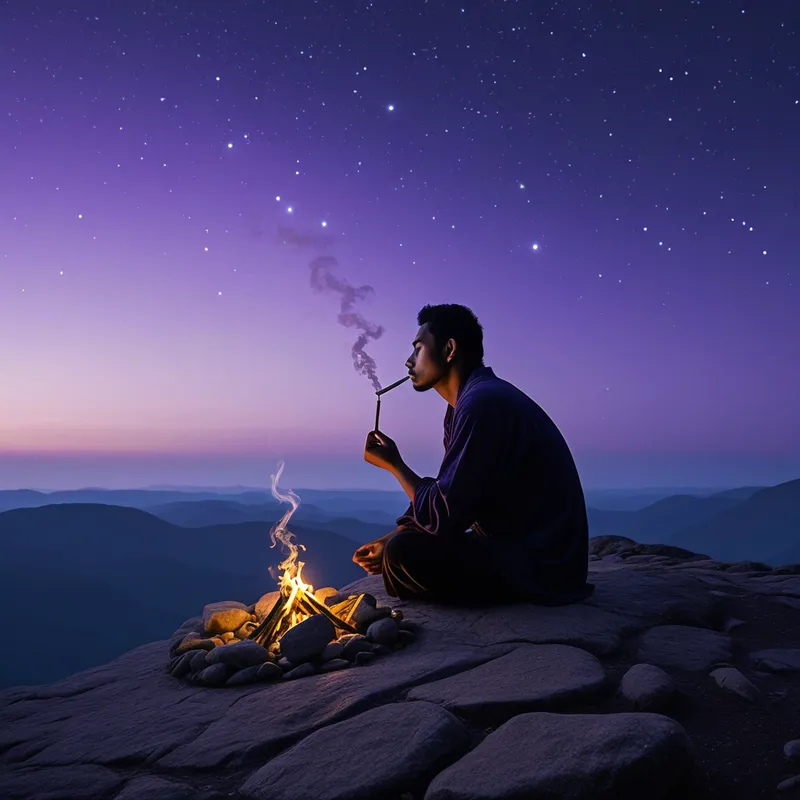
This narrative pattern, embodied in figures like Yagan, is not a singular, frozen myth but a living archetype within many Aboriginal Australian song cycles and oral histories. It belongs to the Noongar peoples of the southwest of Western Australia, though its themes resonate across the continent. The story was not written but sung, danced, and painted—passed down through generations as part of a vast, interconnecting web of Songlines that encode law, history, and ecology.
Its custodians were the elders, who told it not as mere entertainment but as a foundational truth of existence. The myth functioned as a societal anchor, explaining the proper relationship between the living community and the ancestral Spirit World. It taught that individual sacrifice for communal continuity is the highest law, and that death is not an end but a transformation and a deepening of connection to country. The story of Yagan’s journey served as a spiritual map, showing that in times of profound crisis—drought, conflict, spiritual malaise—the solution lies not in fleeing, but in courageously engaging with the deeper, sacred reality of the Dreaming.
Symbolic Architecture
At its core, this myth is a masterful depiction of the psyche’s [journey](/symbols/journey “Symbol: A journey in dreams typically signifies adventure, growth, or a significant life transition.”/) to its own [depths](/symbols/depths “Symbol: Represents the subconscious, hidden emotions, or foundational aspects of the self, often linked to primal fears or profound truths.”/) to retrieve what is lost. Yagan represents the conscious ego that recognizes a sickness in its world—a feeling of disconnection, meaninglessness, or collective [despair](/symbols/despair “Symbol: A profound emotional state of hopelessness and loss, often signaling a need for transformation or surrender to deeper truths.”/). The arid land is the [symbol](/symbols/symbol “Symbol: A symbol can represent an idea, concept, or belief, serving as a powerful tool for communication and understanding.”/) of a parched [soul](/symbols/soul “Symbol: The soul represents the essence of a person, encompassing their spirit, identity, and connection to the universe.”/), a [life](/symbols/life “Symbol: The symbol of ‘Life’ represents a journey of growth, interconnectedness, and existential meaning, encompassing both the joys and challenges that define human experience.”/) devoid of the nourishing waters of the unconscious and the ancestral wisdom stored there.
The journey to the Spirit World is never a flight from responsibility, but a descent into the ultimate source of responsibility—the Self.
The [Door](/symbols/door “Symbol: A door symbolizes transition, opportunity, and choices, representing thresholds between different states of being or experiences.”/) of the waterhole is the threshold of the unconscious. Yagan does not force his way; he sings his way in, indicating that approach to the deep Self requires acknowledgment, respect, and the offering of one’s own authentic “song.” The [Serpent](/symbols/serpent “Symbol: A powerful symbol of transformation, wisdom, and primal energy, often representing hidden knowledge, healing, or temptation.”/) of the [Spirit World](/symbols/spirit-world “Symbol: A realm beyond the physical, inhabited by spirits, ancestors, or supernatural beings, often representing the unconscious, afterlife, or mystical connection.”/) is the archetypal [guardian](/symbols/guardian “Symbol: A protector figure representing safety, authority, and guidance, often embodying parental, societal, or spiritual oversight.”/) and the transformative power of the unconscious itself. It demands the ultimate price: the [death](/symbols/death “Symbol: Symbolizes transformation, endings, and new beginnings; often associated with fear of the unknown.”/) of the old [identity](/symbols/identity “Symbol: Identity represents the sense of self, encompassing personal beliefs, cultural background, and social roles.”/). Psychologically, this is the [death](/symbols/death “Symbol: Symbolizes transformation, endings, and new beginnings; often associated with fear of the unknown.”/) of the ego’s illusion of separateness and control. Yagan’s [agreement](/symbols/agreement “Symbol: A harmonious arrangement in artistic collaboration, symbolizing unity, shared vision, and creative consensus.”/) symbolizes the crucial [moment](/symbols/moment “Symbol: The symbol of a ‘moment’ embodies the significance of transient experiences that encapsulate emotional depth or pivotal transformations in life.”/) of surrender, where the individual will aligns with a transpersonal [purpose](/symbols/purpose “Symbol: Purpose signifies direction, meaning, and intention in life, often reflecting personal ambitions and core values.”/). His return not as a man, but as a pervasive [spirit](/symbols/spirit “Symbol: Spirit symbolizes the essence of life, vitality, and the spiritual journey of the individual.”/), signifies the [outcome](/symbols/outcome “Symbol: Outcome symbolizes the results of actions or decisions, often reflecting hopes, fears, and the consequences of choices.”/) of true individuation: the ego is not destroyed, but radically re-contextualized within the larger, eternal psyche. He becomes a function of the Dreaming—aligned with the Self.

The Dreamer’s Resonance
When this mythic pattern stirs in the modern dreamer, it often manifests as dreams of profound journeys or tasks. One might dream of being tasked with delivering a vital message but finding the path blocked by a chasm or a guardian beast. There may be dreams of visiting a deceased loved one in a strange, luminous landscape to receive a crucial piece of wisdom or an object like a Stone or a Cup.
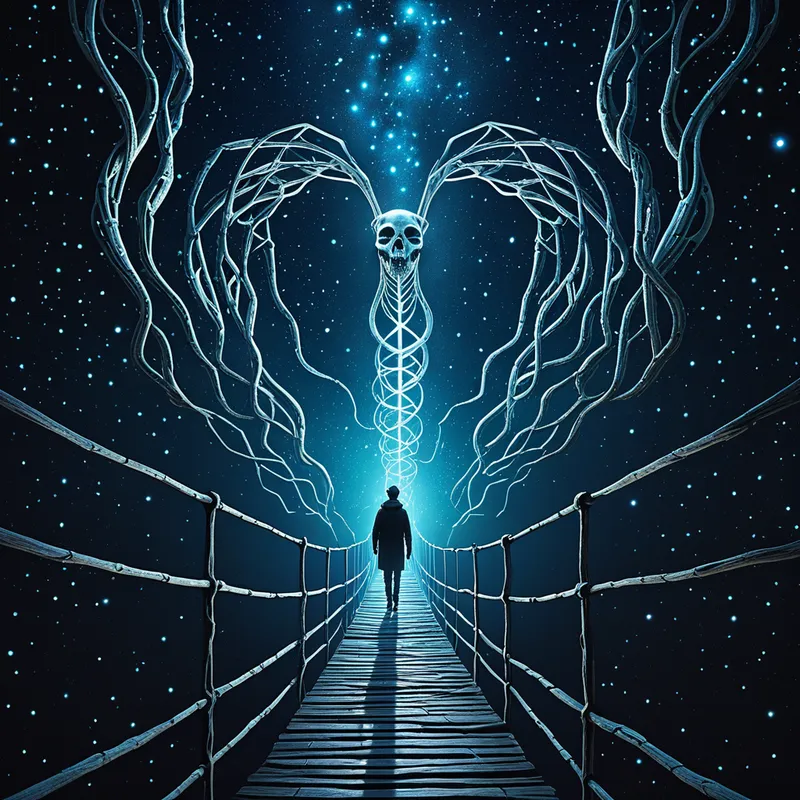
Somatically, this process can feel like a “dark night of the soul”—a period of intense depression, anxiety, or physical lethargy that masks a deep, psychic reorganization. The dreamer is, like Yagan, “in the Spirit World,” their conscious identity disassembled to make room for a new, more authentic configuration. Dreams of bridges, underwater tunnels, or descending into Caves are somatic metaphors for this perilous but necessary transit between states of being. The psyche is performing the ancient ritual: dying to what was, to be remade by what eternally is.
Alchemical Translation
The alchemy here is one of spirit, not of lead to gold, but of isolated consciousness to integrated being. The modern individual’s “land” grows sick when they live solely in the persona, cut off from the instinctual wisdom of the body (the land) and the guiding patterns of the unconscious (the Ancestors). The myth models the process of psychic transmutation with stark clarity.
The first stage (nigredo) is the recognition of the sickness—the feeling of emptiness, the “arid land.” The second (albedo) is the conscious decision to seek the source, to kneel at the waterhole and sing one’s truth, initiating the dialogue with the unconscious. The confrontation with the Serpent is the citrinitas, the daunting encounter with the Shadow and the Self, where one must surrender the ego’s central claim to sovereignty.
The sacrifice demanded is not of your life, but of the lie you have mistaken for your life.
The final stage (rubedo) is the return. This is not a return to the old life, but the integration of the journey’s essence. The individual does not “get their old self back with a new skill.” Instead, like Yagan, they become a vessel for something greater. Their old identity dissolves into a new mode of operation: they become a calming presence, a source of insight, a resilient force within their community and their own psyche. The healed “land” is the newly vitalized relationship between the conscious and unconscious mind, where the Dreaming—the ongoing, creative dialogue with the Self—flows freely once more.
Associated Symbols
Explore related symbols from the CaleaDream lexicon:
- Spirit World — The realm of the Ancestors and the collective unconscious, representing the source of all creative and healing power that must be courageously engaged.
- Sacrifice — The necessary surrender of the ego’s isolated identity to achieve a greater, transpersonal wholeness and heal the collective.
- Journey — The archetypal process of descent into the unconscious to retrieve lost wisdom, representing the core path of individuation.
- Door — The threshold between the conscious world and the Spirit World, symbolizing the moment of choice and transition into deep psychological work.
- Serpent — The transformative guardian of the deep unconscious, embodying death, rebirth, and the potent, often fearsome, energy of psychic change.
- Water — The medium of the unconscious itself and a symbol of life, memory, and emotional depth; the waterhole is the portal to the soul.
- Songline — The sacred pattern of meaning and connection that Yagan retrieves, representing the authentic, guiding narrative of the Self.
- Spirit Guide — Yagan’s ultimate transformation, representing the part of the psyche that, after integration, serves to guide and connect the conscious self to deeper wisdom.
- Dreaming — The eternal, creative ground of being from which all forms emerge and to which they return, the psychological equivalent of the Self.
- Shadow — The unknown and feared aspects of the self and the world that must be traversed on the journey to the Spirit World.
- Bridge — The psychic structure built by courage and sacrifice that allows communication and travel between disparate parts of the self.
- Rebirth — The core outcome of the myth; not a literal new life, but the emergence of a consciousness reconfigured around its connection to the eternal.