World Tree after Ragnarök Myth Meaning & Symbolism
From the ashes of cosmic destruction, the World Tree endures, sheltering new life and symbolizing the indestructible core of existence and the self.
The Tale of World Tree after Ragnarök
Listen, and hear the silence after the scream.
The last echoes of the wolf’s howl have faded into [the wind](/myths/the-wind “Myth from Various culture.”/) that no longer has a name. [The sea](/myths/the-sea “Myth from Greek culture.”/), once a churning grave for the [Jörmungandr](/myths/jrmungandr “Myth from Norse culture.”/), lies still and steaming, its poison slowly sinking into the dark. [The sky](/myths/the-sky “Myth from Persian culture.”/), rent by fire and ice, is now a vast, empty bowl, holding only the memory of stars. All is ash, mud, and the profound, ringing quiet of a world unmade.
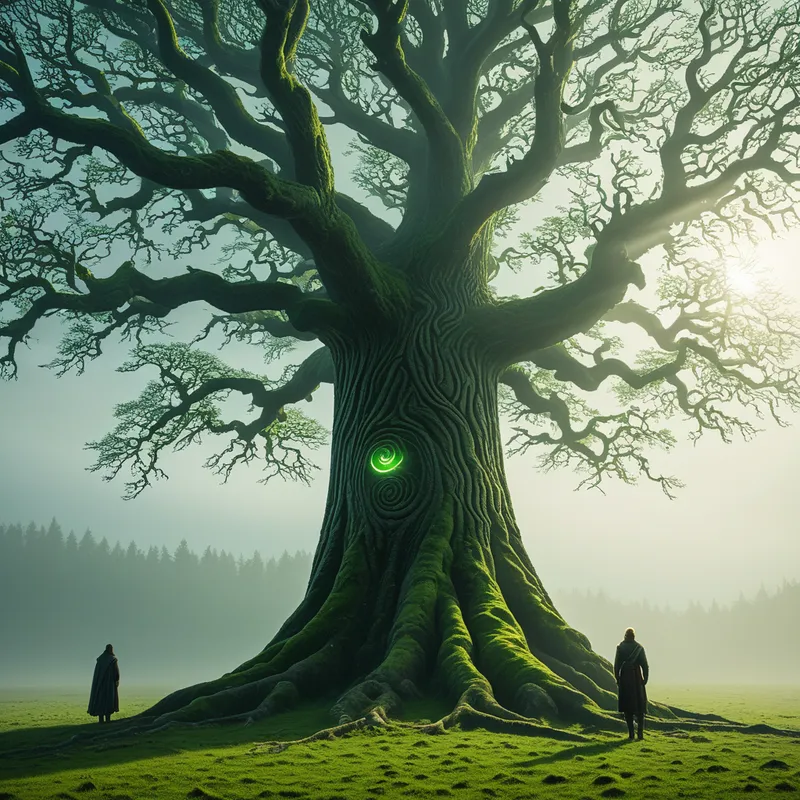
But in the center of this nothing, where [the nine worlds](/myths/the-nine-worlds “Myth from Norse culture.”/) once spun in their intricate dance, a shape endures. It is the [Yggdrasil](/myths/yggdrasil “Myth from Global/Universal culture.”/). The Great Ash. Its trunk, once the axis of all things, is scorched and trembling. The eagle is gone from its highest branch. [The dragon](/myths/the-dragon “Myth from Chinese culture.”/), Níðhöggr, has slithered away into the final cracks. The squirrel of gossip has fallen silent. The tree stands alone, a stark silhouette against the bleeding light of a new sun.
It is wounded. Its bark is peeled back in great strips, weeping a sap clear as tears. Its three great roots, which once drank from the well of fate, [the well of wisdom](/myths/the-well-of-wisdom “Myth from Celtic culture.”/), and the spring of mist, are exposed and raw. Yet, they do not crumble. They clutch the scorched earth with a tenacity that defies the end of time itself. This is not the vibrant, buzzing [tree of life](/myths/tree-of-life “Myth from Kabbalistic culture.”/) it once was; it is the tree of endurance. It is the skeleton of the cosmos, refusing to become dust.
And then… a rustle. Not from the barren branches, but from deep within the tangled, sheltering embrace of its roots. Movement. From [the shadow](/myths/the-shadow “Myth from Jungian culture.”/) of the greatest root, two figures emerge, blinking in the strange new light. They are Líf and Lífþrasir, Life and Life’s Yearning. They hid in the wood of [the World Tree](/myths/the-world-tree “Myth from Celtic culture.”/), cradled in its heartwood as the fire raged above. Their skin is stained with the tree’s essence, their breath is the tree’s slow exhalation. They are its children now.
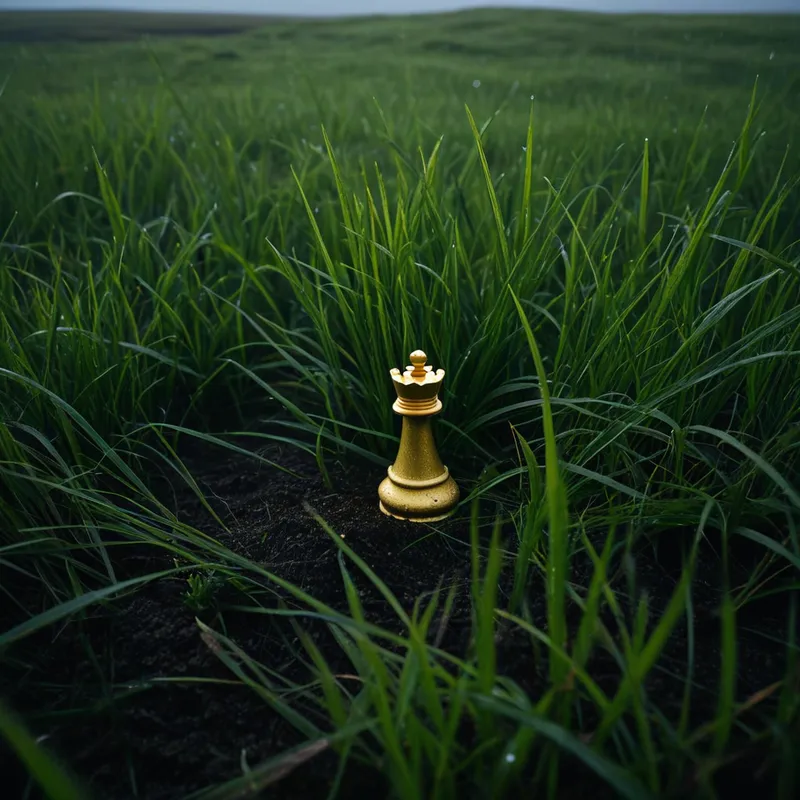
They step onto the plain of Iðavöllr, which is no longer a field of play but a blank slate of damp soil and dew. [The dew](/myths/the-dew “Myth from Alchemical culture.”/) itself is a miracle—the condensation of a world cooling, the first gift of the new order. And there, in the grass, they find them. Gleaming like forgotten memories: the golden gaming pieces of the Æsir. The gods are gone, but the patterns remain.
From the south, from the direction of the surviving fires, other figures come. A few weary, mighty shapes. Vidar, the silent avenger, his leather shoe thick with the wolf’s blood. Váli. Móði and Magni, who now wield their father’s hammer, [Mjölnir](/myths/mjlnir “Myth from Norse culture.”/), not as a weapon, but as a tool. And from the hall of the dead, Hel herself may watch, her realm now irrevocably changed. [Njörðr](/myths/njrr “Myth from Norse culture.”/) returns from the wilds. They gather, not in [triumph](/myths/triumph “Myth from Roman culture.”/), but in a solemn, wordless council. They are the inheritors.
And above them, the Yggdrasil does not burst into sudden, glorious leaf. That is not its way. Instead, from a branch that seemed utterly dead, a single, tender, impossibly green shoot unfurls. It is a promise. It is a testament. The tree held. The axis held. [The world](/myths/the-world “Myth from Tarot culture.”/) did not end; it was stripped to its essential, unkillable core. And from that core, witnessed by the survivors in the dew-heavy silence, the next story begins to breathe.
Cultural Origins & Context
This vision of the enduring [World Tree](/myths/world-tree “Myth from Global culture.”/) is found in the Poetic Edda, specifically in the prophetic poem Völuspá (The Prophecy of the Seeress). It was a narrative preserved and performed by skalds and recited by seeresses, likely in the halls of chieftains during the Viking Age (c. 793–1066 CE). Its function was not merely entertainment but cosmological orientation. For a culture facing a harsh, capricious environment and believing in a cosmos destined for a violent end, the myth served a critical psychological purpose.
It answered the terrifying question: “What happens after the end?” The answer was not a simplistic heavenly reward, but something more profound and stoic: foundation remains. The myth provided a template for resilience. It taught that even after the worst conceivable catastrophe—the death of the gods, [the fall](/myths/the-fall “Myth from Biblical culture.”/) of order—something essential persists. This was a crucial narrative for a seafaring, warrior society familiar with personal and communal loss. The World Tree’s survival was a cosmic analogy for the survival of kinship lines, cultural memory, and the hall itself after a battle. It was a story that acknowledged doom but refused absolute despair, grounding hope not in avoidance, but in the deep, rooted endurance of the world’s structure.
Symbolic Architecture
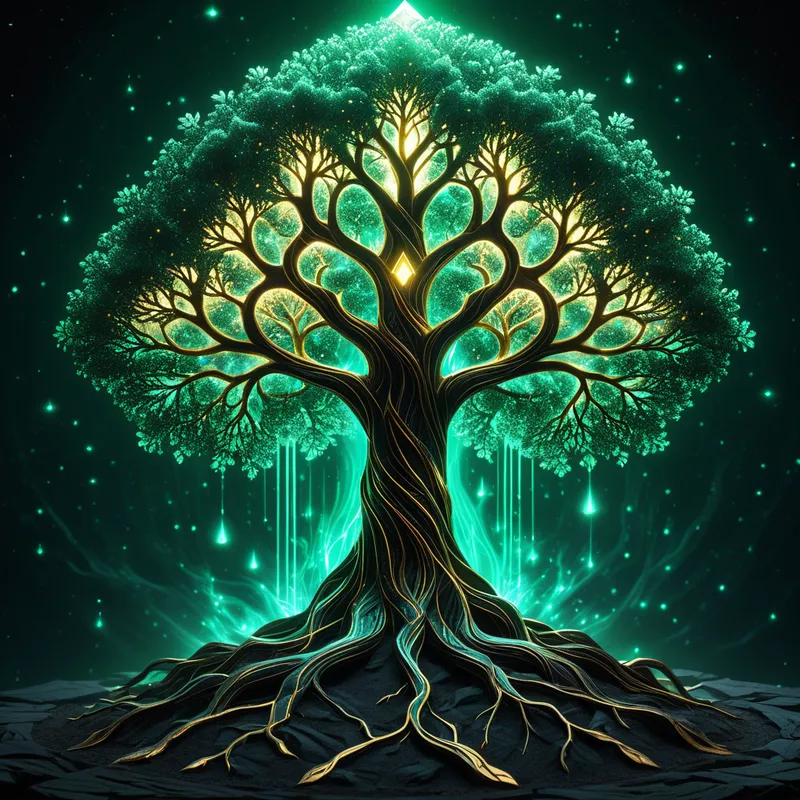
The Yggdrasil after [Ragnarök](/myths/ragnark “Myth from Norse culture.”/) is the ultimate [symbol](/symbols/symbol “Symbol: A symbol can represent an idea, concept, or belief, serving as a powerful tool for communication and understanding.”/) of the [axis](/symbols/axis “Symbol: A central line or principle around which things revolve, representing stability, orientation, and the fundamental structure of reality or consciousness.”/) mundi—the world pillar—that survives its own world. Psychologically, it represents the core Self, in Carl Jung’s terms, which endures the total [disintegration](/symbols/disintegration “Symbol: A symbol of breakdown, loss of form, or fragmentation, often reflecting anxiety about personal identity, control, or stability.”/) of the conscious [personality](/symbols/personality “Symbol: Personality in dreams often symbolizes the traits and characteristics of the dreamer, reflecting how they perceive themselves and how they believe they are perceived by others.”/) (the old gods, the known world).
The tree is not the flourishing ego; it is the scarred, silent Self that remains when all identities are burned away.
Its wounds are not signs of defeat, but of [initiation](/symbols/initiation “Symbol: A symbolic beginning or transition into a new phase, status, or awareness, often involving tests, rituals, or profound personal change.”/). Each scar from the [dragon](/symbols/dragon “Symbol: Dragons are potent symbols of power, wisdom, and transformation, often embodying the duality of creation and destruction.”/), each burn from the fire, is a record of cosmic processes that have now been integrated. The [tree](/symbols/tree “Symbol: In dreams, the tree often symbolizes growth, stability, and the interconnectedness of life.”/) is no longer attacked by these forces; it bears their marks as part of its being. The survivors, Líf and Lífþrasir, symbolize the latent potential for new [life](/symbols/life “Symbol: The symbol of ‘Life’ represents a journey of growth, interconnectedness, and existential meaning, encompassing both the joys and challenges that define human experience.”/) that is always sheltered within the deep, unconscious [structure](/symbols/structure “Symbol: Structure in dreams often symbolizes stability, organization, and the framework of one’s life, reflecting how one perceives their environment and personal life.”/) of [the Self](/myths/the-self “Myth from Jungian culture.”/) (the roots). They are not external saviors; they emerge from the [tree](/symbols/tree “Symbol: In dreams, the tree often symbolizes growth, stability, and the interconnectedness of life.”/). The golden game pieces found in the [grass](/symbols/grass “Symbol: Grass often symbolizes growth, renewal, and a connection to nature, representing both the fragility and resilience of life.”/) signify that the fundamental patterns, laws, and archetypal dynamics (the “game” of existence) persist, ready to be taken up anew by the inheritors.
The Dreamer’s Resonance
When this myth pattern appears in modern dreams, it often manifests during or after a profound psychological “end times”—a devastating loss, the collapse of a career, the death of a foundational relationship, or a deep depression that obliterates one’s sense of self. The dreamer may encounter:
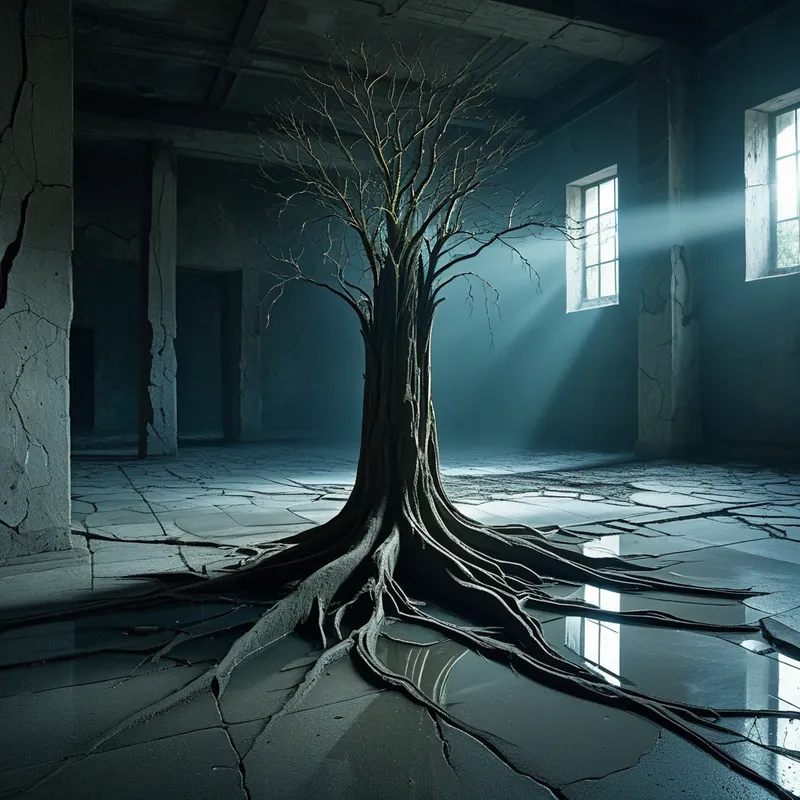
- A single, immense, damaged tree in a vast, empty landscape.
- Finding a hidden, safe chamber within or beneath a great tree during a catastrophe.
- Discovering a simple, precious object (like a chess piece or a seed) in barren soil.
- A profound, somatic feeling of silence and solidity after a period of immense inner turmoil.
These dreams signal that the [psyche](/myths/psyche “Myth from Greek culture.”/) is undergoing the process of “holding.” [The ego](/myths/the-ego “Myth from Jungian culture.”/) is not fighting or flourishing; it is in a state of essential endurance. The dream is an affirmation from the deep unconscious: “You are not destroyed. Your core structure remains. This silence is not death; it is the fertile void from which a new consciousness can be built.” It is the somatic experience of hitting bedrock after freefall.
Alchemical Translation
The alchemical process mirrored here is mortificatio and sublimatio—the reduction to black ash followed by the purification and rising of the essential spirit. Ragnarök is the necessary mortificatio of the psyche: the violent dissolution of outdated, rigid structures (the old gods, the ego’s certainties). The survival of the Yggdrasil represents the discovery of the [lapis philosophorum](/myths/lapis-philosophorum “Myth from Alchemical culture.”/), [the philosopher’s stone](/myths/the-philosophers-stone “Myth from Alchemical culture.”/)—not as a magical object, but as the indestructible, foundational substance of the Self.
Individuation is not about building a perfect personality, but about discovering what in you cannot be burned, drowned, or broken—and making a home there.
For the modern individual, the myth models the journey from total collapse to grounded renewal. One must first endure the fire, must allow the old “gods” (our driving ambitions, cherished self-images, compulsive behaviors) to fall. Then, in the devastating quiet that follows, one must seek the “World Tree”—the felt sense of an enduring core, often accessed through the body, deep memory, or nature. From that rooted place, one can finally emerge, like Líf and Lífþrasir, not to rebuild the old world, but to begin a new game on a cleansed plain, using the ancient, golden patterns in a new way. The new shoot on the old tree symbolizes a consciousness that is no longer naive, but resilient; a life that has integrated its own destruction and now grows, consciously, from its scars.
Associated Symbols
Explore related symbols from the CaleaDream lexicon: