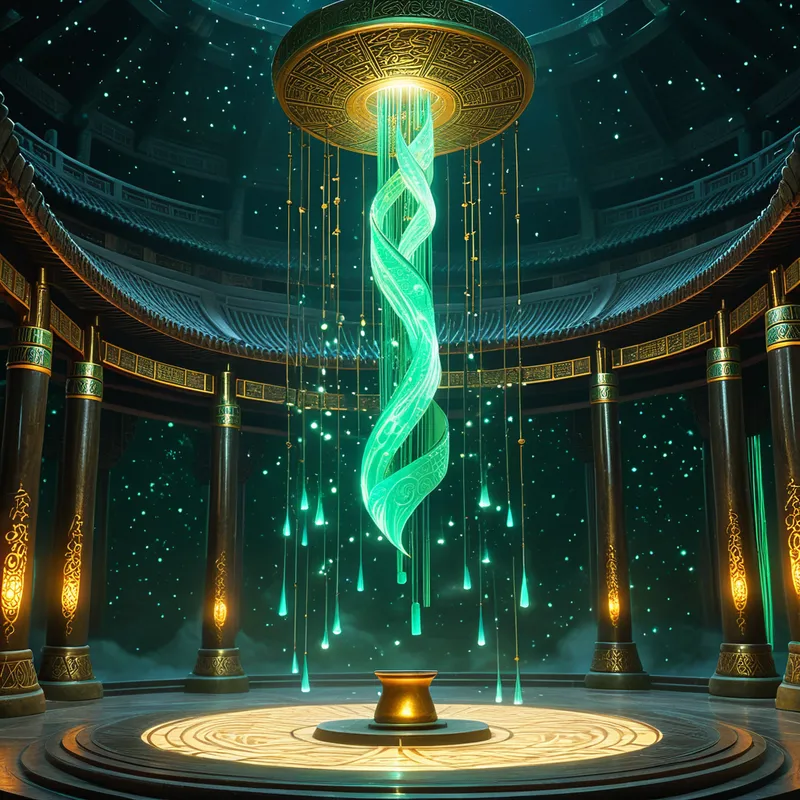
Wind Chimes in Feng Shui Myth Meaning & Symbolism
A tale of celestial artisans forging chimes to translate the whispers of the wind, bridging the seen and unseen worlds to guide and protect humanity.
The Tale of Wind Chimes in Feng Shui
Listen, and let the story settle in the space between your breaths. In the time when the mountains were still learning their shapes and the rivers their songs, [the world](/myths/the-world “Myth from Tarot culture.”/) was a tapestry of visible form and invisible breath—the Qi. The Celestial Bureaucracy, under the watchful eye of the [Jade Emperor](/myths/jade-emperor “Myth from Chinese culture.”/), governed this flow with meticulous care. Yet, a murmur of discord troubled the heavens. Humanity, dwelling in the Middle Kingdom, was deaf to the subtle language of the winds. They built their homes where Sha Qi—the killing breath—gathered, and they missed the gentle caress of Sheng Qi. Misfortune bloomed like a weed in their courtyards, and they knew not why.
The Emperor summoned his most gifted artisans, the Shen of Metal and Air. “You must forge a tongue for [the wind](/myths/the-wind “Myth from Various culture.”/),” he commanded, his voice like distant thunder. “A voice that can translate the unseen into the heard, to guide the children of earth away from harm and toward harmony.”
The Shen descended to the Kunlun Mountains, where the primal winds are born. They mined ore that remembered the first stars and kindled a forge with fire borrowed from the sun’s heart. Their hammers did not merely shape bronze; they captured the very notes of cosmic motion—the tone of planetary orbits, the chime of shifting seasons, the resonant hum of a balanced mind. They crafted hollow tubes and tuned tongues, each a vessel for a specific aspect of the wind’s secret speech.
The first chime was hung at the mouth of a valley where Sha Qi raced like a dagger. When the hostile wind came, it did not pass silently. The chime sang out—a clear, sharp, warning note that pierced the air, scattering the malicious intent, turning the blade of bad energy into harmless dust. In a scholar’s quiet garden, where Sheng Qi pooled like morning mist, another chime was placed. The gentle breeze stirred it, and it answered with a soft, complex melody of five perfect notes, mirroring the [Wu Xing](/myths/wu-xing “Myth from Chinese Philosophy culture.”/). The sound seemed to pull the benevolent energy deeper into the home, blessing [the hearth](/myths/the-hearth “Myth from Norse culture.”/).
Thus, the wind chimes became the translators of the world’s breath. They were the ears of the deaf, the voice of the mute air. They taught humanity to listen with more than their ears—to feel the landscape’s pulse, to converse with the invisible, and to find their place within the great, breathing organism of the world. Harmony was no longer a silent hope, but a song hanging in the doorway, waiting for the wind.
Cultural Origins & Context
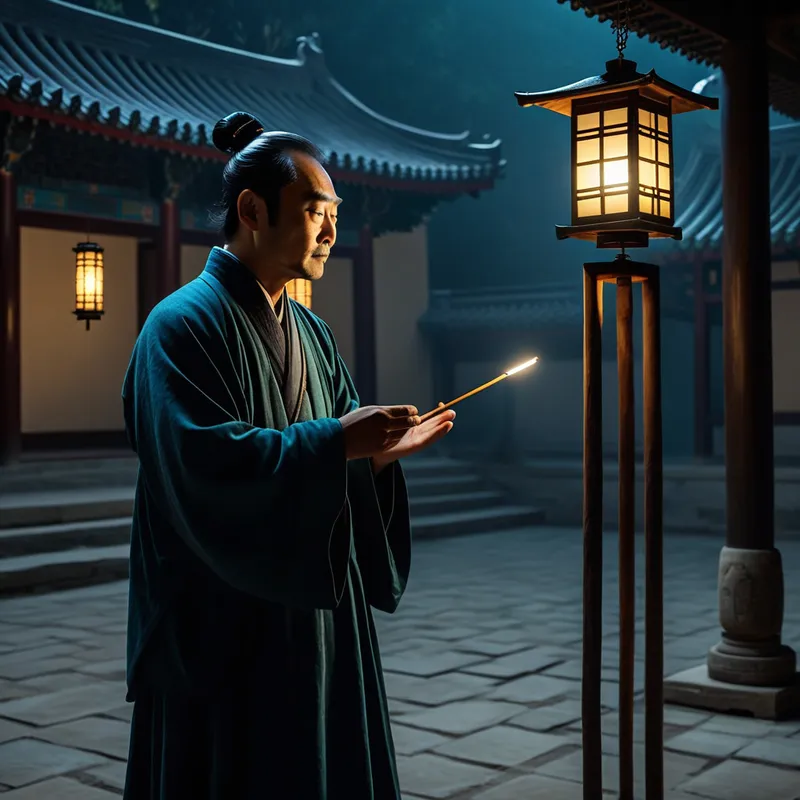
This narrative is not a single, codified myth from a canonical text like the Jingdian, but a living folklore that crystallized around the practical art of [Feng Shui](/myths/feng-shui “Myth from Chinese culture.”/). Its origins are woven into the fabric of agrarian and scholarly life in ancient China. The story was passed down not by epic poets, but by [Feng Shui](/myths/feng-shui “Myth from Chinese culture.”/) Xiansheng ([Feng Shui](/myths/feng-shui “Myth from Chinese culture.”/) masters), craftsmen, and grandmothers. It functioned as a pedagogical myth, a way to encode complex environmental principles into a memorable and resonant form.
The societal function was deeply pragmatic and spiritual. In a culture that viewed the cosmos as an interconnected web of visible form (Xing) and invisible energy (Qi), the wind chime myth provided a tangible bridge. It explained why a simple object could influence fortune, health, and peace. It gave agency to individuals, suggesting that through mindful placement and attentive listening, one could actively participate in cultivating harmony, rather than being a passive victim of unseen forces. The myth democratized a aspect of cosmic interaction, placing a tool of celestial dialogue into the hands of common people.
Symbolic Architecture
At its core, the myth of the [wind chimes](/symbols/wind-chimes “Symbol: Wind chimes in dreams often symbolize harmony, communication, and the importance of one’s voice in shaping experiences and relationships.”/) is about [translation](/symbols/translation “Symbol: The process of converting meaning from one form or language to another, representing communication, adaptation, and the bridging of differences.”/) and [boundary](/symbols/boundary “Symbol: A conceptual or physical limit defining separation, protection, or identity between entities, spaces, or states of being.”/)-making. The [chime](/symbols/chime “Symbol: A musical instrument that produces clear, resonant tones, often symbolizing messages, transitions, or spiritual presence.”/) itself is an alchemical [vessel](/symbols/vessel “Symbol: A container or structure that holds, transports, or protects something essential, representing the self, emotions, or life journey.”/) where the intangible (wind, Qi, [intention](/symbols/intention “Symbol: Intention represents the clarity of purpose and direction in one’s life and can symbolize motivation and commitment within a dream context.”/)) is transmuted into the tangible (sound, perceived meaning, directed [energy](/symbols/energy “Symbol: Energy symbolizes vitality, motivation, and the drive that fuels actions and ambitions.”/)).
The chime does not create the wind; it gives it a voice. It does not stop energy; it initiates a conversation with it.
The wind represents the raw, unfiltered flow of [life](/symbols/life “Symbol: The symbol of ‘Life’ represents a journey of growth, interconnectedness, and existential meaning, encompassing both the joys and challenges that define human experience.”/) force, circumstance, and change—both benevolent and challenging. It is the external world, [fate](/symbols/fate “Symbol: Fate represents the belief in predetermined outcomes, suggesting that some aspects of life are beyond human control.”/), and the unconscious [psyche](/myths/psyche “Myth from Greek culture.”/) all in one. The bronze of the chime symbolizes the [human](/symbols/human “Symbol: The symbol of a human represents individuality, complexity of emotions, and social relationships.”/) vessel—the [body](/symbols/body “Symbol: The body in dreams often symbolizes the dreamer’s self-identity, personal health, and the relationship they have with their physical existence.”/), the mind, the crafted ego—that must be tuned and hollowed out (through wisdom, discipline, or suffering) to become a resonant [instrument](/symbols/instrument “Symbol: An instrument symbolizes creativity, communication, and the means by which one expresses oneself or influences the world.”/). The clapper or striker is the point of contact, the [moment](/symbols/moment “Symbol: The symbol of a ‘moment’ embodies the significance of transient experiences that encapsulate emotional depth or pivotal transformations in life.”/) of [awareness](/symbols/awareness “Symbol: Conscious perception of self, surroundings, or internal states. Often signifies awakening, insight, or heightened sensitivity.”/) where “other” impacts “self.”
Psychologically, the myth maps the process of developing an observing ego. The warning note of Sha Qi is the psyche’s [capacity](/symbols/capacity “Symbol: A measure of one’s potential, limits, or ability to contain, process, or achieve something, often reflecting self-assessment or external demands.”/) to sense [danger](/symbols/danger “Symbol: The symbol of ‘Danger’ often indicates a sense of threat or instability, calling for caution and awareness.”/), [dissonance](/symbols/dissonance “Symbol: A lack of harmony or agreement in musical tones or artistic elements, often representing internal conflict, unresolved tension, or societal discord.”/), or the approach of a toxic influence (a harmful [relationship](/symbols/relationship “Symbol: A representation of connections we have with others in our lives, often reflecting our emotional state.”/), a draining [situation](/symbols/situation “Symbol: The ‘situation’ symbolizes the junction between the subconscious and conscious realms, often reflecting the current challenges or dynamics in the dreamer’s waking life.”/)). The harmonious [melody](/symbols/melody “Symbol: A melody symbolizes emotion, memory, and communication, often representing the subconscious expressing itself through sound.”/) of Sheng Qi is the [capacity](/symbols/capacity “Symbol: A measure of one’s potential, limits, or ability to contain, process, or achieve something, often reflecting self-assessment or external demands.”/) to recognize, attract, and amplify what is nourishing, creative, and life-affirming. The chime is the [symbol](/symbols/symbol “Symbol: A symbol can represent an idea, concept, or belief, serving as a powerful tool for communication and understanding.”/) of a [consciousness](/symbols/consciousness “Symbol: Consciousness represents the state of awareness and perception, encompassing thoughts, feelings, and experiences.”/) that does not merely endure the winds of fate but engages with them, interprets them, and uses their force to define its own sacred [space](/symbols/space “Symbol: Dreaming of ‘Space’ often symbolizes the vastness of potential, personal freedom, or feelings of isolation and exploration in one’s life.”/).
The Dreamer’s Resonance
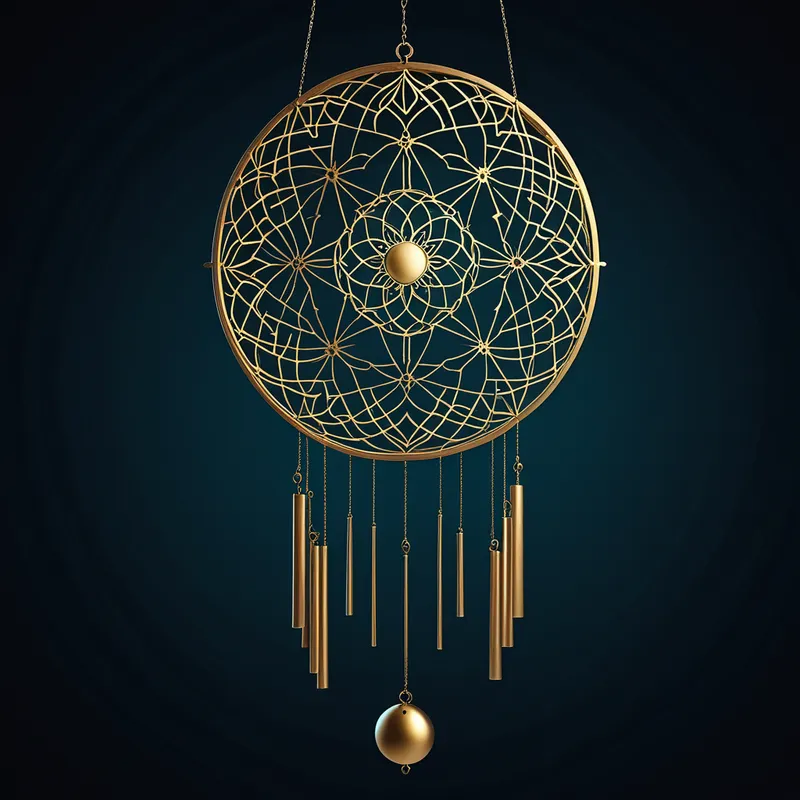
When the imagery of mythic wind chimes appears in modern dreams, it often signals a process of psychic sensitization. The dreamer is becoming aware of subtle energies they have previously ignored or been numb to.
The somatic experience might be one of tingling anticipation or a feeling of being “tuned.” The dream chimes may be silent in a howling gale, indicating a feeling of being overwhelmed by external chaos without the internal mechanism to process it. Conversely, they may ring violently in still air, suggesting internal turmoil (repressed emotions, anxiety) that is so potent it vibrates the very fabric of the dreamer’s perceived reality. A dream of carefully hanging or adjusting a chime points to an active, conscious effort to establish better boundaries, to create a “sacred space” within the psyche, or to seek a clearer signal from one’s intuition. The dream is the soul practicing the art of listening to its own weather.

Alchemical Translation
The individuation journey modeled here is the transformation from a passive entity buffeted by unconscious complexes (the untranslated winds of Sha and Sheng Qi) into an active, resonant self that dialogues with the totality of its experience.
The initial state is one of psychic deafness—living in misalignment, feeling cursed by unexplained misfortune or unable to grasp sustained joy. The “call to adventure” is the first stirring of awareness that there is a language to the unseen forces at play. The forging of the chime is the hard, conscious work of self-cultivation: therapy, meditation, artistic practice, or any discipline that hollows out [the ego](/myths/the-ego “Myth from Jungian culture.”/)‘s rigidities and tunes the soul to its own authentic pitch.
The alchemy occurs in the moment of resonance, where an external event strikes the tuned self and produces not merely reaction, but meaningful sound—insight.
Hanging the chime in the correct place is the act of conscious positioning—choosing which aspects of life one will engage with deeply, setting boundaries against psychic predators, and orienting one’s life toward sources of nourishment. The ultimate [triumph](/myths/triumph “Myth from Roman culture.”/) is not control over the wind, but mastery of one’s own resonance. The individuated self becomes like the perfected chime: a stable, beautifully crafted form through which the winds of the cosmos can blow, not to destroy, but to create an ever-changing, harmonious song that is uniquely and authentically one’s own. The goal is to become an instrument of translation, turning the raw material of existence into the music of a coherent life.
Associated Symbols
Explore related symbols from the CaleaDream lexicon: